Vídeo | Is AI about to make education worse?
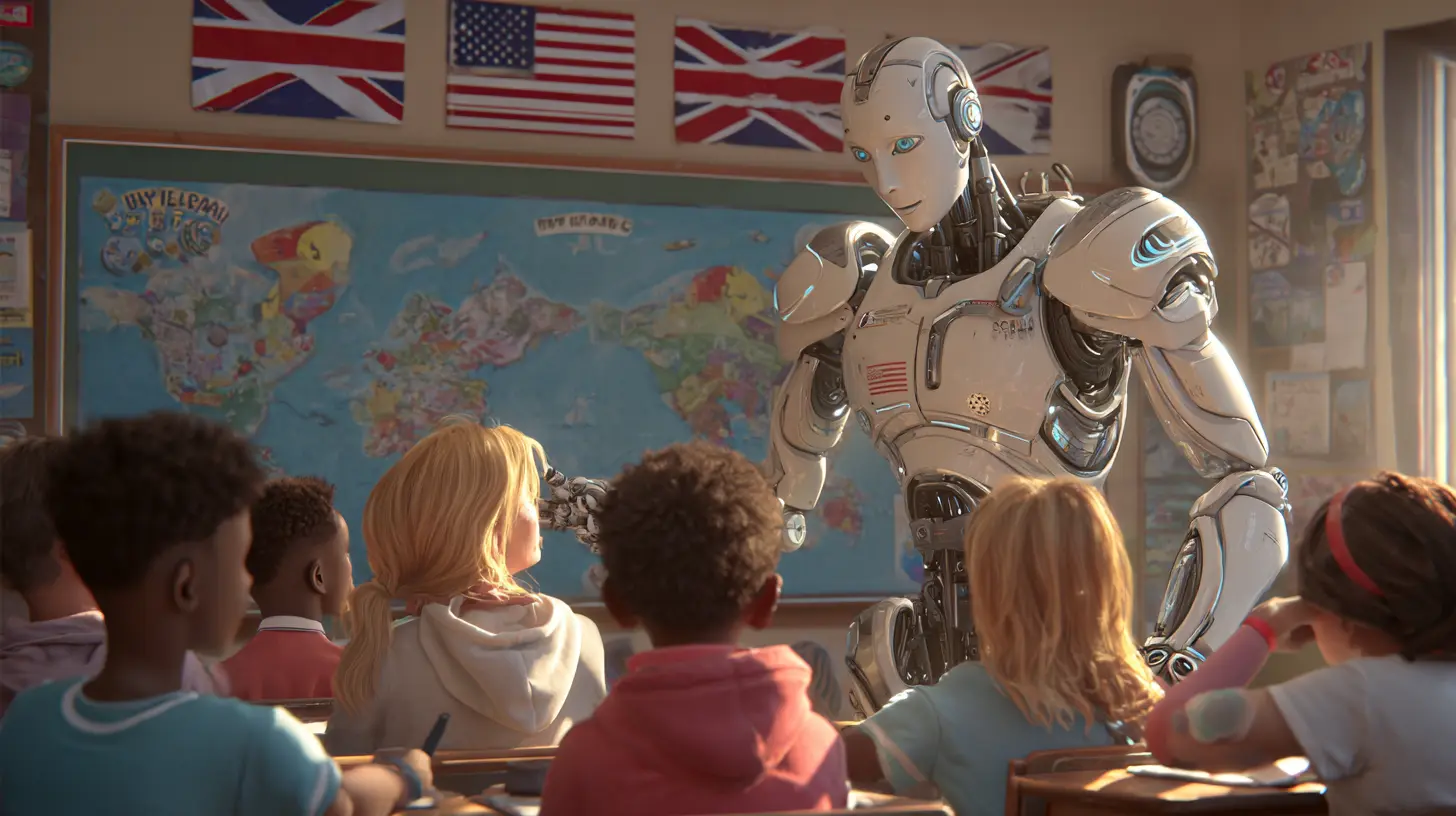
Nesta reflexão profunda sobre o futuro do ensino, o autor questiona se a inteligência artificial será usada apenas para automatizar modelos educacionais falhos ou se servirá como o catalisador de uma verdadeira revolução pedagógica. Ao confrontar o tradicional método de “escada” — rígido, linear e movido pela ansiedade dos testes — com uma abordagem “circular” baseada em exploração, input massivo e curiosidade natural, o vídeo explora como ferramentas como a Perplexity e o ChatGPT podem finalmente alinhar a educação ao funcionamento real do cérebro humano. Entre os desafios da avaliação e o risco do uso superficial da tecnologia, surge um convite para repensar a escola: menos como uma sequência de obstáculos e mais como uma trilha de descobertas onde o aprendizado é, acima de tudo, uma fonte de prazer e dopamina.
| Audio | |
|---|---|
Normal | Slow |
| English Transcript | Tradução |
| Is AI about to make education worse? | A IA está a ponto de tornar a educação pior? |
| The desire to learn things is essential to us as human beings, and we need to make sure that education—the way formal education is structured—actually encourages that basic desire in human beings and doesn't discourage it by introducing anxiety. Today, I wanna talk about AI and whether AI can save education or, at least, make education more effective, more powerful. | O desejo de aprender coisas é essencial para nós como seres humanos, e precisamos garantir que a educação — a forma como a educação formal é estruturada — realmente incentive esse desejo básico nos seres humanos e não o desencoraje ao introduzir ansiedade. Hoje, eu quero falar sobre IA e se a IA pode salvar a educação ou, pelo menos, tornar a educação mais eficaz, mais poderosa. |
| And obviously, AI is here to stay in different fields. People are looking at how they can make their field—medicine or office management or whatever it might be—more effective using AI. The problem is: those people who are in education, do they recognize that their model is ineffective? And if they apply AI to a model that doesn't work very well, it's not gonna make that model much more effective. | E, obviamente, a IA veio para ficar em diferentes áreas. As pessoas estão observando como podem tornar sua área — medicina ou gestão de escritório ou o que quer que seja — mais eficaz usando a IA. O problema é: essas pessoas que estão na educação reconhecem que o modelo delas é ineficaz? E se elas aplicarem a IA a um modelo que não funciona muito bem, isso não vai tornar esse modelo muito mais eficaz. |
| And that's basically the subject of my video today. So, I was listening to an audiobook and reading on my Kindle an audiobook called "The Most Beautiful History of Intelligence" by Stanislas Dehaene, Yann LeCun and, I think it was, Jacques Girardon. Stanislas Dehaene is a person who writes about the brain—how the brain learns. Yann LeCun was the head of AI at Meta and is a professor and a very well-known expert, and has many awards for his work on AI. Jacques Girardon, as I understand it, is a journalist in the scientific field. | E esse é basicamente o assunto do meu vídeo de hoje. Então, eu estava ouvindo um audiolivro e lendo no meu Kindle um audiolivro chamado "A Mais Bela História da Inteligência" de Stanislas Dehaene, Yann LeCun e, eu acho que era, Jacques Girardon. Stanislas Dehaene é uma pessoa que escreve sobre o cérebro — como o cérebro aprende. Yann LeCun foi o chefe de IA na Meta e é um professor e um especialista muito conhecido, e tem muitos prêmios por seu trabalho em IA. Jacques Girardon, pelo que entendi, é um jornalista na área científica. |
| So as a book, it popularizes the subject of how we learn, AI, and so forth and so on. Even a book that is popularized and therefore perhaps a little superficial—I don't fully understand it, but it gets me going in the subject and I may later read something that's easier or more difficult on the same subject—but I start to gain a bit of a hold on the subject. And that form of learning has always been my approach to language learning; so, I don't try to nail anything down. | Portanto, como livro, ele populariza o assunto de como aprendemos, IA e assim por diante. Mesmo um livro que é popularizado e, portanto, talvez um pouco superficial — eu não o entendo totalmente, mas ele me faz avançar no assunto e eu posso ler mais tarde algo que seja mais fácil ou mais difícil sobre o mesmo tema — mas eu começo a ganhar um pouco de domínio sobre o assunto. E essa forma de aprender sempre foi a minha abordagem para o aprendizado de línguas; então, eu não tento fixar nada definitivamente. |
| I don't use the sort of "ladder approach," which is more of the traditional approach in education. You go to step one, you learn certain basic concepts; then, armed with those basic concepts which you are tested on, and if you pass, you move to the next level and the next level. And even at Duolingo, they force you to pass. As I remember in my brief exposure to Duolingo, you have to go to this first stage before you can go to the next stage, whereas I have always had the approach that I would rather wander around exploring—sometimes things that are more difficult or else going back to things that are easier. | Eu não uso o tipo de "abordagem em escada", que é mais a abordagem tradicional na educação. Você vai para o passo um, aprende certos conceitos básicos; então, armado com esses conceitos básicos sobre os quais você é testado, e se passar, você vai para o próximo nível e o próximo nível. E mesmo no Duolingo, eles te forçam a passar. Pelo que me lembro da minha breve exposição ao Duolingo, você tem que ir para esta primeira fase antes de poder ir para a próxima fase, enquanto eu sempre tive a abordagem de que preferiria andar por aí explorando — às vezes coisas que são mais difíceis ou então voltando para coisas que são mais fáceis. |
| And again, I went to AI, Perplexity, and asked about, you know, my experience of language learning and whether this has application in education more generally. And they said it does, and that the brain prefers to learn things, go back to something that the brain learned before, go over the ground again, and in the end, it learns better in this way. | E, novamente, fui à IA, Perplexity, e perguntei sobre, sabe, minha experiência de aprendizado de línguas e se isso tem aplicação na educação de forma mais geral. E eles disseram que sim, e que o cérebro prefere aprender as coisas, voltar a algo que o cérebro aprendeu antes, repassar o terreno novamente e, no final, aprende melhor dessa maneira. |
| So my feeling is—as was the case with online learning—I saw online language instruction get going on YouTube and elsewhere. And yet, a lot of what was offered was essentially the same old way of teaching languages, just online. Whereas with online text and audio and MP3 files, there was an opportunity to do something different based on how the brain learns, which is through massive input. | Então, meu sentimento é — como foi o caso do aprendizado on-line — eu vi o ensino de línguas on-line começar no YouTube e em outros lugares. E, no entanto, muito do que era oferecido era essencialmente a mesma maneira antiga de ensinar línguas, apenas on-line. Enquanto que com texto on-line e áudio e arquivos MP3, havia uma oportunidade de fazer algo diferente baseado em como o cérebro aprende, que é através de input massivo. |
| So the concern here is: is AI simply gonna reinforce the established sort of ladder approach to education? Or is it gonna enable this other approach where we kind of wander around this mountain on the mountain trail and we come across something which we notice, and we kind of tuck that away for later, and then we come back again in a different context and we see the same thing? And through dealing with content that's more difficult or less difficult and encountering some of the same either facts or bits of information or structures in the language, we gradually learn them and we don't need to demonstrate at each point that we have mastered anything. So that's more of a circular approach to learning as opposed to the ladder approach. | Portanto, a preocupação aqui é: a IA vai simplesmente reforçar a abordagem estabelecida de tipo escada para a educação? Ou ela vai permitir essa outra abordagem onde meio que vagamos por essa montanha na trilha da montanha e nos deparamos com algo que notamos, e meio que guardamos aquilo para depois, e então voltamos novamente em um contexto diferente e vemos a mesma coisa? E através do contato com conteúdo que é mais difícil ou menos difícil e encontrando alguns dos mesmos fatos ou pedaços de informação ou estruturas na língua, nós gradualmente os aprendemos e não precisamos demonstrar em cada ponto que dominamos qualquer coisa. Então, isso é mais uma abordagem circular de aprendizado em oposição à abordagem de escada. |
| But I asked AI again—Perplexity, I think, or Claude—"What are teachers, how are educators planning to use AI?" And as I kind of suspected, at least according to Perplexity, the education establishment is hoping to use AI to develop better quizzes to improve their curriculum. But again, all based on the ladder vertical approach to education. I saw no evidence that they were planning to use AI in order to develop, for example, in math or in social science—not to mention language learning—different varieties, different formats of the same basic content so that learners can experiment with, let's say, a podcast or a video or a simpler version or a more difficult version of the same basic material that has to be learned. | Mas perguntei à IA novamente — Perplexity, eu acho, ou Claude — "O que os professores, como os educadores estão planejando usar a IA?". E, como eu meio que suspeitava, pelo menos de acordo com a Perplexity, o sistema educacional espera usar a IA para desenvolver testes melhores para melhorar seu currículo. Mas, novamente, tudo baseado na abordagem vertical de escada para a educação. Eu não vi nenhuma evidência de que eles estivessem planejando usar a IA para desenvolver, por exemplo, em matemática ou em ciências sociais — para não mencionar o aprendizado de línguas — diferentes variedades, diferentes formatos do mesmo conteúdo básico para que os alunos possam experimentar, digamos, um podcast ou um vídeo ou uma versão mais simples ou uma versão mais difícil do mesmo material básico que tem que ser aprendido. |
| And if they were to explore in this way, they would come back to the same material again and have an easier time of understanding it because they will then already have broken ground; they will already have some concept of what it's about. And rather than trying to sock something in, nail something down, or master something, the assumption is: "I won't master anything; I'll just keep exploring and at some point, more and more of the sediments of information will settle in my brain." | E se eles explorassem dessa maneira, voltariam ao mesmo material novamente e teriam mais facilidade de entendê-lo porque já teriam preparado o terreno; já teriam algum conceito do que se trata. E, em vez de tentar enfiar algo à força, fixar algo ou dominar algo, a premissa é: "Eu não vou dominar nada; eu vou apenas continuar explorando e, em algum momento, mais e mais sedimentos de informação vão se assentar no meu cérebro". |
| Now, all of this sounds fine, and I've mentioned this before in my videos—my approach to learning things—and of course, the question I always get is: "So what about testing? We need to test. Parents want tests, educators want tests. How much has the student learned?" Well, at least when it comes to language learning, I don't think that really matters because, as I've said, in the Canadian school system, kids learning French in the English language school system are tested all the time, and at the end of their 10 years of learning French, they can't speak French. So the testing really doesn't prove much. | Agora, tudo isso parece bom, e eu já mencionei isso antes em meus vídeos — minha abordagem para aprender as coisas — e, claro, a pergunta que sempre recebo é: "Então, e quanto aos testes? Precisamos testar. Os pais querem testes, os educadores querem testes. Quanto o aluno aprendeu?". Bem, pelo menos quando se trata de aprendizado de línguas, eu não acho que isso realmente importe porque, como eu disse, no sistema escolar canadense, as crianças aprendendo francês no sistema escolar de língua inglesa são testadas o tempo todo e, ao final de seus 10 anos de aprendizado de francês, elas não conseguem falar francês. Portanto, o teste realmente não prova muito. |
| But at some level, in other subjects, you do need to have some form of trying to evaluate what the learner knows. But there again, my instinct was that based on my experience, say in France, where we had, you know, oral questions in addition to written writing—you know, essays, answers to questions on an exam—we also had this situation where we were confronted with a question and we had to marshal our information. We had to think it through, we had to structure an answer in a period of 10 minutes, and then we had to speak for five or 10 minutes. And that kind of—which again, AI apparently calls "regenerative testing," where you're forced to recreate based on all the things that you know—recreate an answer is more effective than short tests and quizzes, which are not natural and not as engaging for the learners. | Mas, em algum nível, em outros assuntos, você precisa ter alguma forma de tentar avaliar o que o aluno sabe. Mas, aí de novo, meu instinto foi que, baseado na minha experiência, digamos, na França, onde tínhamos, sabe, perguntas orais além da redação escrita — sabe, ensaios, respostas a perguntas em um exame — nós também tínhamos essa situação onde éramos confrontados com uma pergunta e tínhamos que organizar nossa informação. Tínhamos que pensar a respeito, tínhamos que estruturar uma resposta em um período de 10 minutos e então tínhamos que falar por cinco ou 10 minutos. E esse tipo de coisa — que novamente a IA aparentemente chama de "teste regenerativo", onde você é forçado a recriar com base em todas as coisas que você sabe — recriar uma resposta é mais eficaz do que testes curtos e questionários, que não são naturais e não são tão envolventes para os alunos. |
| So here again, I think the AI, if it's done properly, can not only help us create these varied forms of the same content to enable us to learn these better and to explore them (sometimes more difficult, sometimes less difficult), but also a format for demonstrating what we know by answering oral questions, which either could be put to us by a teacher or could be put to us by an AI bot, and then we would have to record our answer. | Então, aqui novamente, eu acho que a IA, se for feita corretamente, pode não apenas nos ajudar a criar essas formas variadas do mesmo conteúdo para nos permitir aprendê-las melhor e explorá-las (às vezes mais difícil, às vezes menos difícil), mas também um formato para demonstrar o que sabemos ao responder perguntas orais, que poderiam ser feitas a nós por um professor ou poderiam ser feitas por um bot de IA, e então teríamos que gravar nossa resposta. |
| It may be that doing this in written format would also work, but I just wonder whether somehow the students would be able to cheat the system. Just as when we talk about creating different, you know, sort of more superficial or easy summaries of certain material to hopefully induce the learner then to have, or make it easier for the learner to study more difficult material—if the learner stops with the summary and never does the more difficult reading, that of course will be very detrimental to their education. And there's already evidence that university students are using AI summaries rather than doing the actual reading that's required, and the net result is that they do poorly on their exams. | Pode ser que fazer isso em formato escrito também funcionasse, mas eu apenas me pergunto se, de alguma forma, os alunos seriam capazes de burlar o sistema. Assim como quando falamos sobre criar diferentes, sabe, resumos mais superficiais ou fáceis de certo material para, esperançosamente, induzir o aluno então a ter, ou tornar mais fácil para o aluno, estudar material mais difícil — se o aluno parar no resumo e nunca fizer a leitura mais difícil, isso, claro, será muito prejudicial para a educação deles. E já há evidências de que estudantes universitários estão usando resumos de IA em vez de fazer a leitura real que é exigida, e o resultado líquido é que eles vão mal em seus exames. |
| So I always feel if there's an opportunity for people to abuse a system, they will abuse the system. So it's very important that if we do use AI—either to generate a variety of content to help us do this sort of circular learning as opposed to the traditional ladder vertical learning approach, but also if we use AI as a means of testing learners on what they know in language or in other subjects—it's very important that we make sure this cannot be abused in some way. | Portanto, eu sempre sinto que, se houver uma oportunidade para as pessoas abusarem de um sistema, elas abusarão do sistema. Por isso, é muito importante que, se usarmos a IA — seja para gerar uma variedade de conteúdo para nos ajudar a fazer esse tipo de aprendizado circular em oposição à abordagem tradicional de aprendizado vertical em escada, mas também se usarmos a IA como um meio de testar os alunos sobre o que eles sabem em línguas ou em outros assuntos — é muito importante que garantamos que isso não possa ser abusado de alguma forma. |
| Anyway, those are just some of my random thoughts on AI and education, and why I think this is an opportunity to rethink how education is structured and how AI could enable us to overcome certain bottlenecks that may have existed before and which made the sort of traditional approach to education the only way to go. | De qualquer forma, esses são apenas alguns dos meus pensamentos aleatórios sobre IA e educação, e por que eu acho que esta é uma oportunidade para repensar como a educação é estruturada e como a IA poderia nos permitir superar certos gargalos que podem ter existido antes e que tornaram o tipo de abordagem tradicional da educação o único caminho a seguir. |
| Now, I think with AI, we have a number of other pathways we can pursue to make education more effective. And in that regard, one of the things that is pointed out in "The Most Beautiful History of Intelligence" by Dehaene and others is that the desire to learn things is essential to us as human beings. And there are rewards in the brain triggering dopamine responses—a whole bunch of reasons why education is a fundamental desire in human beings. And we need to make sure that education, the way formal education is structured, actually encourages that basic desire in human beings and doesn't discourage it by introducing anxiety or discouraging exploration. | Agora, eu acho que com a IA, temos uma série de outros caminhos que podemos seguir para tornar a educação mais eficaz. E, nesse sentido, uma das coisas que é apontada em "A Mais Bela História da Inteligência" por Dehaene e outros é que o desejo de aprender coisas é essencial para nós como seres humanos. E existem recompensas no cérebro disparando respostas de dopamina — um monte de razões pelas quais a educação é um desejo fundamental nos seres humanos. E precisamos garantir que a educação, da maneira como a educação formal é estruturada, realmente incentive esse desejo básico nos seres humanos e não o desencoraje ao introduzir ansiedade ou desencorajar a exploração. |
| Thank you. I look forward to your comments. | Obrigado. Aguardo seus comentários. |
Contagem de palavras
A tabela abaixo exibe as palavras encontradas neste vídeo, bem como o número de vezes em que aparecem.
Veja também: Para que serve esta tabela?
| Freq. | Palavra | Freq. | Palavra | Freq. | Palavra |
|---|---|---|---|---|---|
| 75 | to | 69 | the | 63 | and |
| 43 | of | 39 | is | 38 | that |
| 34 | in | 28 | I | 27 | we |
| 26 | a | 23 | ai | 21 | or |
| 20 | it | 18 | more | 18 | education |
| 16 | on | 15 | you | 14 | they |
| 14 | so | 14 | not | 13 | this |
| 13 | have | 13 | are | 12 | as |
| 12 | approach | 11 | my | 11 | do |
| 10 | learning | 10 | at | 10 | an |
| 9 | us | 9 | make | 9 | difficult |
| 8 | with | 8 | was | 8 | same |
| 8 | language | 8 | for | 8 | but |
| 8 | again | 7 | will | 7 | which |
| 7 | what | 7 | way | 7 | think |
| 7 | things | 7 | something | 7 | some |
| 7 | learn | 7 | if | 7 | how |
| 7 | had | 7 | by | 7 | be |
| 7 | about | 6 | use | 6 | then |
| 6 | their | 6 | know | 6 | go |
| 6 | does | 6 | can | 6 | brain |
| 6 | basic | 5 | would | 5 | very |
| 5 | there | 5 | system | 5 | sort |
| 5 | need | 5 | ladder | 5 | just |
| 5 | human | 5 | has | 5 | effective |
| 5 | different | 5 | desire | 5 | beings |
| 4 | where | 4 | testing | 4 | subject |
| 4 | other | 4 | online | 4 | learner |
| 4 | kind | 4 | easier | 4 | content |
| 4 | before | 4 | based | 4 | back |
| 4 | always | 4 | also | 4 | all |
| 3 | work | 3 | whether | 3 | were |
| 3 | well | 3 | traditional | 3 | through |
| 3 | those | 3 | than | 3 | tests |
| 3 | sure | 3 | reading | 3 | rather |
| 3 | questions | 3 | people | 3 | opportunity |
| 3 | next | 3 | much | 3 | model |
| 3 | may | 3 | material | 3 | level |
| 3 | least | 3 | learns | 3 | learners |
| 3 | learned | 3 | information | 3 | here |
| 3 | gonna | 3 | going | 3 | french |
| 3 | enable | 3 | dehaene | 3 | could |
| 3 | come | 3 | certain | 3 | better |
| 3 | anything | 3 | answer | 3 | already |
| 2 | yann | 2 | written | 2 | why |
| 2 | who | 2 | whereas | 2 | when |
| 2 | want | 2 | wander | 2 | video |
| 2 | vertical | 2 | version | 2 | using |
| 2 | understand | 2 | trying | 2 | today |
| 2 | time | 2 | these | 2 | them |
| 2 | tested | 2 | talk | 2 | summaries |
| 2 | students | 2 | structured | 2 | stanislas |
| 2 | stage | 2 | speak | 2 | sometimes |
| 2 | school | 2 | say | 2 | saw |
| 2 | said | 2 | really | 2 | quizzes |
| 2 | question | 2 | put | 2 | point |
| 2 | planning | 2 | perplexity | 2 | pass |
| 2 | our | 2 | oral | 2 | opposed |
| 2 | only | 2 | one | 2 | now |
| 2 | nail | 2 | mountain | 2 | most |
| 2 | minutes | 2 | master | 2 | less |
| 2 | lecun | 2 | later | 2 | jacques |
| 2 | introducing | 2 | intelligence | 2 | important |
| 2 | history | 2 | help | 2 | ground |
| 2 | girardon | 2 | get | 2 | format |
| 2 | formal | 2 | form | 2 | explore |
| 2 | experience | 2 | evidence | 2 | even |
| 2 | essential | 2 | end | 2 | encourages |
| 2 | either | 2 | educators | 2 | duolingo |
| 2 | down | 2 | doing | 2 | discourage |
| 2 | develop | 2 | course | 2 | concepts |
| 2 | circular | 2 | cannot | 2 | book |
| 2 | because | 2 | beautiful | 2 | audiobook |
| 2 | asked | 2 | around | 2 | anxiety |
| 2 | abuse | 1 | youtube | 1 | your |
| 1 | yet | 1 | years | 1 | writingyou |
| 1 | writes | 1 | worse | 1 | wonder |
| 1 | whole | 1 | whatever | 1 | went |
| 1 | wanna | 1 | videosmy | 1 | variety |
| 1 | varieties | 1 | varied | 1 | university |
| 1 | understanding | 1 | tuck | 1 | try |
| 1 | triggering | 1 | trail | 1 | thoughts |
| 1 | thingsand | 1 | thing | 1 | therefore |
| 1 | thank | 1 | text | 1 | test |
| 1 | teaching | 1 | teachers | 1 | teacher |
| 1 | suspected | 1 | superficiali | 1 | superficial |
| 1 | summary | 1 | subjectsit | 1 | subjects |
| 1 | subjectbut | 1 | study | 1 | student |
| 1 | structures | 1 | structuredactually | 1 | structure |
| 1 | stops | 1 | step | 1 | stay |
| 1 | start | 1 | sounds | 1 | somehow |
| 1 | sock | 1 | social | 1 | situation |
| 1 | simply | 1 | simpler | 1 | short |
| 1 | settle | 1 | see | 1 | sediments |
| 1 | scientific | 1 | sciencenot | 1 | save |
| 1 | rewards | 1 | rethink | 1 | result |
| 1 | responsesa | 1 | required | 1 | remember |
| 1 | reinforce | 1 | regenerative | 1 | regard |
| 1 | recreate | 1 | record | 1 | recognize |
| 1 | reasons | 1 | read | 1 | random |
| 1 | pursue | 1 | prove | 1 | properly |
| 1 | professor | 1 | problem | 1 | prefers |
| 1 | powerful | 1 | popularizes | 1 | popularized |
| 1 | poorly | 1 | pointed | 1 | podcast |
| 1 | person | 1 | period | 1 | perhaps |
| 1 | pathways | 1 | parents | 1 | overcome |
| 1 | over | 1 | out | 1 | others |
| 1 | order | 1 | old | 1 | ofwhich |
| 1 | office | 1 | offered | 1 | obviously |
| 1 | number | 1 | notice | 1 | no |
| 1 | never | 1 | net | 1 | natural |
| 1 | mp | 1 | move | 1 | might |
| 1 | meta | 1 | mentioned | 1 | mention |
| 1 | means | 1 | me | 1 | matters |
| 1 | math | 1 | materialif | 1 | mastered |
| 1 | massive | 1 | marshal | 1 | many |
| 1 | management | 1 | made | 1 | lot |
| 1 | looking | 1 | look | 1 | little |
| 1 | listening | 1 | let | 1 | learningi |
| 1 | learningdifferent | 1 | languages | 1 | knows |
| 1 | knowrecreate | 1 | known | 1 | kindle |
| 1 | kids | 1 | keep | 1 | journalist |
| 1 | isas | 1 | instruction | 1 | instinct |
| 1 | input | 1 | ineffective | 1 | induce |
| 1 | improve | 1 | hoping | 1 | hopefully |
| 1 | hold | 1 | his | 1 | head |
| 1 | gradually | 1 | gets | 1 | generate |
| 1 | generally | 1 | gain | 1 | fundamental |
| 1 | fully | 1 | france | 1 | forward |
| 1 | forth | 1 | forms | 1 | formats |
| 1 | forced | 1 | force | 1 | five |
| 1 | first | 1 | fine | 1 | files |
| 1 | fields | 1 | fieldmedicine | 1 | field |
| 1 | feeling | 1 | feel | 1 | facts |
| 1 | exposure | 1 | exploringsometimes | 1 | exploring |
| 1 | exploration | 1 | expert | 1 | experiment |
| 1 | existed | 1 | examwe | 1 | exams |
| 1 | example | 1 | evaluate | 1 | establishment |
| 1 | established | 1 | essentially | 1 | essays |
| 1 | english | 1 | engaging | 1 | encountering |
| 1 | elsewhere | 1 | else | 1 | educationthe |
| 1 | easy | 1 | each | 1 | dopamine |
| 1 | done | 1 | discouraging | 1 | detrimental |
| 1 | demonstrating | 1 | demonstrate | 1 | dealing |
| 1 | curriculum | 1 | creating | 1 | create |
| 1 | context | 1 | confronted | 1 | concern |
| 1 | concept | 1 | comments | 1 | comes |
| 1 | claude | 1 | cheat | 1 | case |
| 1 | canadian | 1 | calls | 1 | called |
| 1 | bunch | 1 | broken | 1 | brief |
| 1 | brainhow | 1 | bottlenecks | 1 | bot |
| 1 | bits | 1 | bit | 1 | bemore |
| 1 | been | 1 | basically | 1 | away |
| 1 | awards | 1 | audio | 1 | assumption |
| 1 | armed | 1 | apply | 1 | application |
| 1 | apparently | 1 | anyway | 1 | answers |
| 1 | answering | 1 | aieither | 1 | againperplexity |
| 1 | addition | 1 | actually | 1 | actual |
| 1 | across | 1 | according | 1 | abused |
| 1 | able |