
Learning Strategies | Why we’re so good at learning languages (vídeo)
Neste fascinante mergulho nos bastidores da mente, a cientista cognitiva computacional Jennifer Hu revela como a linguagem funciona como o verdadeiro “superpoder” humano. Ao comparar o aprendizado de bebês com o treinamento de modelos de inteligência artificial, a apresentação mostra como a IA se tornou um laboratório vivo para decifrar nossos processos mentais, destacando tanto as conquistas surpreendentes do aprendizado por associação quanto a capacidade única do cérebro humano de criar infinitos significados com uma fração dos dados.
| Audio | |
|---|---|
Normal | Slow |
| English Transcript | Tradução |
| Why we’re so good at learning languages (according to AI) | Porque somos tão bons para aprender idiomas (segundo a Inteligência Artificial) |
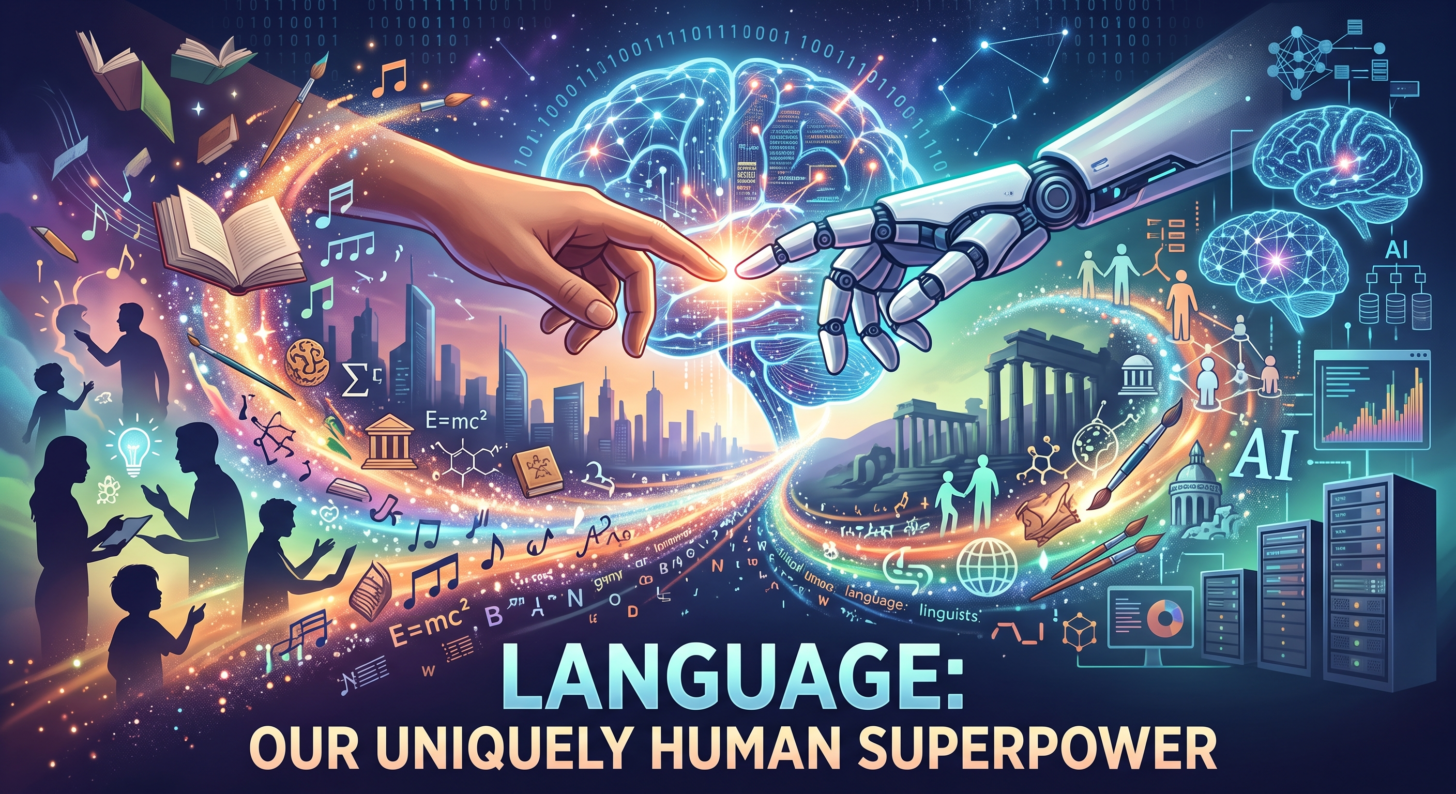
| There's an idea in my head right now that I want to share with you. And so, I'm moving my mouth and making these sounds, and somehow, you can take these sounds, which are just vibrations in the air, and understand the meanings and ideas that I'm trying to convey. You are all mind readers, and language is our uniquely human superpower. | Existe uma ideia na minha cabeça agora mesmo que eu quero compartilhar com vocês. E, por isso, estou movendo minha boca e fazendo estes sons, e de alguma forma vocês podem pegar estes sons — que são apenas vibrações no ar — e entender os significados e ideias que estou tentando transmitir. Vocês todos são leitores de mentes, e a linguagem é nosso superpoder unicamente humano. |
| I am a computational cognitive scientist, and the question that I ask in my research is: how does language work in the human mind? Even though language is so fundamental to our daily lives and to the human experience, we as scientists know surprisingly little about it. Part of that is because it's just really hard to study how language works. I mean, think about it: we can't do a truly controlled experiment because we would need to isolate humans from outside language influences from birth. We can make progress through controlled experiments in laboratory settings, but these can't get at the full richness of how we use and learn language in the real world. | Eu sou uma cientista cognitiva computacional, e a pergunta que faço em minha pesquisa é: como a linguagem funciona na mente humana? Mesmo que a linguagem seja tão fundamental para nossas vidas diárias e para a experiência humana, nós, como cientistas, sabemos surpreendentemente pouco sobre ela. Parte disso é porque é realmente muito difícil estudar como a linguagem funciona. Quero dizer, pense nisso: não podemos fazer um experimento verdadeiramente controlado porque precisaríamos isolar humanos de influências externas de linguagem desde o nascimento. Podemos fazer progressos por meio de experimentos controlados em ambientes de laboratório, mas estes não conseguem capturar toda a riqueza de como usamos e aprendemos a linguagem no mundo real. |
| Now, what a lot of other sciences do in this situation is turn to animal models. But unfortunately, I hate to break it to you, animals aren't writing sonnets or learning French anytime soon. So, we're limited in our human experiments and we can't do animal experiments. But in recent years, there's been a new alternative for us to experiment with: artificial intelligence, or AI. | Agora, o que muitas outras ciências fazem nesta situação é recorrer a modelos animais. Mas infelizmente — odeio estragar o prazer de vocês — os animais não vão escrever sonetos ou aprender francês tão cedo. Então, estamos limitados em nossos experimentos humanos e não podemos fazer experimentos com animais. Mas, nos últimos anos, surgiu uma nova alternativa para experimentarmos: a inteligência artificial, ou IA. |
| So, instead of "in vivo" experimentation, which uses live model organisms, in my research we do experiments "in silico", meaning in computers. | Portanto, em vez da experimentação *in vivo*, que usa organismos modelos vivos, em minha pesquisa fazemos experimentos *in silico*, ou seja, em computadores. |
| So, what does it even mean to study how language works? Well, let me put the question another way: what does it mean for you to know a language like English? You might be thinking about things like the grammar rules that you were taught in grade school, like "never end a sentence with a preposition," for example. But despite what your teacher said, these are just rules that people made up. You can break these rules and still be speaking English. I mean, we do it all the time! | Então, o que significa afinal estudar como a linguagem funciona? Bem, deixe-me colocar a questão de outra forma: o que significa para você saber uma língua como o inglês? Você pode estar pensando em coisas como as regras gramaticais que lhe foram ensinadas no ensino fundamental — como "nunca termine uma frase com uma preposição", por exemplo. Mas, apesar do que seu professor disse, estas são apenas regras que as pessoas inventaram. Você pode quebrar essas regras e ainda estar falando inglês. Quero dizer, nós fazemos isso o tempo todo! |
| So then, what does it mean to know a language? For me, knowing a language means having a grasp of the underlying rules and structures that allow us to create and understand an infinite number of sentences in that language, including sentences that we've never heard before. | Então, o que significa saber uma língua? Para mim, saber uma língua significa ter a compreensão das regras e estruturas subjacentes que nos permitem criar e entender um número infinito de frases nessa língua — incluindo frases que nunca ouvimos antes. |
| Take this example sentence: "The green walrus sneezed the foam off my matcha latte." | Tome esta frase de exemplo: *"O morsa verde espirrou a espuma do meu matcha latte."* |
| You've probably never heard this exact set of words before, right? But right away, two amazing things happen. First, you know that it's a well-formed English sentence, so the subject, the verb, and the object are all in the right place. But second, you have a vivid sense of what it means. How can you understand a sentence that you've never heard before in your life, that maybe no human has ever even written down before? | Você provavelmente nunca ouviu esse conjunto exato de palavras antes, certo? Mas, imediatamente, duas coisas incríveis acontecem. Primeiro, você sabe que é uma frase bem formada em inglês, de modo que o sujeito, o verbo e o objeto estão todos no lugar certo. Mas, em segundo lugar, você tem uma sensação vívida do que ela significa. Como você pode entender uma frase que nunca ouviu antes em sua vida, que talvez nenhum humano jamais tenha escrito antes? |
| Well, you know what the individual words mean, like "green" and "walrus," and you know how to combine the meanings of words into the meanings of phrases. So, you know what a "green walrus" is, even if you've never seen that phrase before. And you know how to combine the meanings of phrases into the meaning of a sentence, so you know what it would mean for a green walrus to sneeze foam off of a matcha latte, even if you've never seen that sentence before. | Bem, você sabe o que as palavras individuais significam, como "verde" e "morsa", e sabe como combinar os significados das palavras nos significados das frases. Assim, você sabe o que é uma "morsa verde", mesmo que nunca tenha visto essa frase antes. E você sabe como combinar os significados das frases no significado de uma oração, de modo que sabe o que significaria para uma morsa verde espirrar espuma de um matcha latte, mesmo que nunca tenha visto essa frase antes. |
| Now, contrast that with the same exact sentence, but reversed: "Latte matcha my foam the sneezed walrus green." | Agora, contraste isso com a mesma frase exata, mas invertida: *"Latte matcha meu espuma o espirrou morsa verde."* |
| Again, if you're like most people, you've probably never heard this exact combination of words before. But here, you know right away that it's not a proper English sentence. And more importantly, you can't make meaning out of it because you can't apply the rules and the structures of English here. | Novamente, se você é como a maioria das pessoas, provavelmente nunca ouviu essa combinação exata de palavras antes. Mas aqui, você sabe imediatamente que não é uma frase adequada em inglês. E mais importante, você não consegue extrair significado dela porque não pode aplicar as regras e as estruturas do inglês aqui. |
| Now, you might not be thinking about these structures consciously every time you interpret a sentence, but under the surface, language is a system of structures and rules that allow us to combine meanings, concepts, and thoughts together in a very systematic way. | Agora, você pode não estar pensando nessas estruturas conscientemente toda vez que interpreta uma frase, mas, sob a superfície, a linguagem é um sistema de estruturas e regras que nos permite combinar significados, conceitos e pensamentos de uma forma muito sistemática. |
| This might seem kind of technical, but if you think about it, it's incredible. This is our superpower, because these structures are what allow us to create and understand an infinity of sentences, even though our brains have a finite set of resources. And what's even more amazing is that, even though all languages around the world seem different on the surface, they can often be described by the same underlying structures. | Isso pode parecer meio técnico, mas se você pensar a respeito, é incrível. Este é o nosso superpoder, porque essas estruturas são o que nos permite criar e entender uma infinidade de frases, mesmo que nossos cérebros tenham um conjunto finito de recursos. E o que é ainda mais incrível é que, embora todas as línguas do mundo pareçam diferentes na superfície, elas frequentemente podem ser descritas pelas mesmas estruturas subjacentes. |
| That's actually how I got fascinated by language in the first place. Growing up, I was exposed to multiple different languages, and the more languages I encountered, the more curious I became about what all languages must have in common under the surface. After years of studying math and computer science at Harvard, it finally clicked for me that I should bring the tools and precision of mathematics to study the messiness of the inner workings of the human mind. And that's how I stumbled across the field of computational cognitive science. | Foi assim, na verdade, que me fascinor pela linguagem em primeiro lugar. Crescendo, fui exposta a várias línguas diferentes, e quanto mais línguas eu encontrava, mais curiosa ficava sobre o que todas as línguas deveriam ter em comum sob a superfície. Após anos estudando matemática e ciência da computação em Harvard, finalmente caiu a ficha para mim de que eu deveria trazer as ferramentas e a precisão da matemática para estudar a bagunça do funcionamento interno da mente humana. E foi assim que me deparei com o campo da ciência cognitiva computacional. |
| Now, I'm not just interested in describing what the structures of language look like. My ultimate goal is to establish a mathematical account for how they work. How does the human mind process these structures, and how do we learn them in the first place? | Agora, não estou apenas interessada em descrever como são as estruturas da linguagem. Meu objetivo final é estabelecer uma explicação matemática para como elas funcionam. Como a mente humana processa essas estruturas e como as aprendemos em primeiro lugar? |
| For example, when babies learn language, we don't sit them down and tell them, "These are the rules for how verbs and nouns combine." I mean, try doing that with a one-year-old and you'll see why! Instead, we learn language by observing the people around us use language. From the time they're born, babies are super tuned to the patterns and regularities in the language they hear around them. | Por exemplo, quando os bebês aprendem a linguagem, não os sentamos e dizemos: "Estas são as regras de como verbos e substantivos se combinam." Quero dizer, tente fazer isso com uma criança de um ano e você verá o porquê! Em vez disso, aprendemos a linguagem observando as pessoas ao nosso redor usá-la. Desde o momento em que nascem, os bebês estão super sintonizados com os padrões e regularidades da linguagem que ouvem ao seu redor. |
| In other words, a key part of how we learn language is through associations. One way of studying how people learn through association is by investigating how people learn made-up languages in controlled, laboratory-kind of experiments. But these can't tell us how people learn through associations with real language data, and they also can't tell us about the limitations of what is possible to learn through associations. To do that, we need to study how structured associations work at scale. And in my lab, that's exactly where AI models come in. | Em outras palavras, uma parte fundamental de como aprendemos a linguagem é por meio de associações. Uma maneira de estudar como as pessoas aprendem por associação é investigando como elas aprendem línguas inventadas em experimentos do tipo controlados em laboratório. Mas estes não podem nos dizer como as pessoas aprendem por meio de associações com dados de linguagem real, e também não podem nos dizer sobre as limitações do que é possível aprender por meio de associações. Para fazer isso, precisamos estudar como as associações estruturadas funcionam em escala. E no meu laboratório, é exatamente aí que entram os modelos de IA. |
| So, here's the recipe: first, we take an artificial deep neural network model and we train it on a large dataset of natural text, like books or news articles on the internet. These models are really good at learning statistical patterns, so they see all the sentences in their training data and use that information to predict patterns in future sentences, kind of like autocomplete on your phone. Then, we run experiments on these models to try to figure out what kind of structures they've learned. | Então, aqui está a receita: primeiro, pegamos um modelo de rede neural profunda artificial e o treinamos em um grande conjunto de dados de texto natural, como livros ou artigos de notícias na internet. Esses modelos são muito bons em aprender padrões estatísticos, então eles veem todas as frases em seus dados de treinamento e usam essa informação para prever padrões em frases futuras — tipo o texto intuitivo do seu celular. Depois, executamos experimentos nesses modelos para tentar descobrir que tipo de estruturas eles aprenderam. |
| For example, if a model sees the word "green" during training and it sees the word "walrus" during training, but it never sees those two words together, we can test whether the model can learn to structurally combine those words in a meaningful way. And remember that the models are blank slates, so there's nothing inside of them that's explicitly enforcing that they need to be learning those kinds of structures. Whatever kinds of structures they do learn, they're learning purely through association. | Por exemplo, se um modelo vê a palavra "verde" durante o treinamento e vê a palavra "morsa" durante o treinamento, mas nunca vê essas duas palavras juntas, podemos testar se o modelo consegue aprender a combinar estruturalmente essas palavras de uma forma significativa. E lembre-se de que os modelos são folhas em branco, então não há nada dentro deles que exija explicitamente que eles aprendam esses tipos de estruturas. Quaisquer tipos de estruturas que eles aprendem, estão aprendendo puramente por associação. |
| Now, what's exciting about this recipe is that whether models succeed or fail at learning the right structures, we as scientists can learn something new about how language might work in the human mind. | Agora, o que é empolgante nessa receita é que, quer os modelos tenham sucesso ou falhem em aprender as estruturas corretas, nós, como cientistas, podemos aprender algo novo sobre como a linguagem pode funcionar na mente humana. |
| In my own research, we've shown that AI models are surprisingly good at learning many kinds of complex structures in language and beyond. This suggests that many of the structures that we think of as signatures of human intelligence can, in fact, be learned through association. But models also fail to learn structure in other important ways, and these failures can tell us about the limitations of what can be learned through association. | Em minha própria pesquisa, mostramos que os modelos de IA são surpreendentemente bons em aprender muitos tipos de estruturas complexas na linguagem e além. Isso sugere que muitas das estruturas que consideramos marcas da inteligência humana podem, de fato, ser aprendidas por associação. Mas os modelos também falham em aprender a estrutura de outras maneiras importantes, e essas falhas podem nos dizer sobre as limitações do que pode ser aprendido por associação. |
| For example, let's say you ask an AI model to generate an image of a green walrus sneezing the foam off a matcha latte. One thing a model might do is give you an image of a brown walrus with a green matcha latte. And why is that? The model's failure suggests that it's relying too heavily on associations and it hasn't learned the right structure. | Por exemplo, digamos que você peça a um modelo de IA para gerar uma imagem de uma morsa verde espirrando a espuma de um matcha latte. Uma coisa que o modelo pode fazer é lhe dar uma imagem de uma morsa marrom com um matcha latte verde. E por que isso acontece? A falha do modelo sugere que ele está se apoiando excessivamente em associações e não aprendeu a estrutura correta. |
| Remember that the model was trained on a dataset from the internet, and on the internet, you see a lot of brown walruses and a lot of green matcha. So, the model learns to associate the color brown with walrus, and green with matcha. When you ask the model for a green walrus, it doesn't know what to do; it just relies on the strongest associations that it's learned. | Lembre-se de que o modelo foi treinado em um conjunto de dados da internet, e na internet você vê muitas morsas marrons e muito matcha verde. Assim, o modelo aprende a associar a cor marrom com morsa e verde com matcha. Quando você pede ao modelo uma morsa verde, ele não sabe o que fazer; ele apenas se apóia nas associações mais fortes que aprendeu. |
| But if the model had been able to learn the right structures from associations, the same kind of structures that you use to understand what a green walrus is, then the model would have no problem creating the image that you asked for. In this case, the model's failure can tell us about the limitations of depending only on associations to learn structure. This also suggests that humans might have a bias for learning structure on top of the tendency to learn from associations. | Mas se o modelo tivesse sido capaz de aprender as estruturas corretas a partir de associações — o mesmo tipo de estruturas que você usa para entender o que é uma morsa verde —, então o modelo não teria problemas para criar a imagem que você pediu. Neste caso, a falha do modelo pode nos dizer sobre as limitações de depender apenas de associações para aprender a estrutura. Isso também sugere que os humanos podem ter uma predisposição para aprender estruturas além da tendência de aprender por associações. |
| But AI models don't give us all the answers about how the human mind works. One major wrinkle is the sheer amount of data these models need to be trained on. It's estimated that humans encounter about 100 million words by the time they're 10 years old, and by that time, they've mastered their native language. So sure, a 10-year-old might not be writing a novel, but a 10-year-old knows the structures of their language and can use it fluently and effortlessly. | Mas os modelos de IA não nos dão todas as respostas sobre como a mente humana funciona. Um grande problema é a quantidade enorme de dados em que esses modelos precisam ser treinados. Estima-se que os humanos encontrem cerca de 100 milhões de palavras até os 10 anos de idade, e a essa altura já dominaram sua língua nativa. Claro, uma criança de 10 anos pode não estar escrevendo um romance, mas sabe as estruturas de sua língua e pode usá-la de forma fluente e sem esforço. |
| By contrast, a model like GPT-3, which was one of the first language models to really master human language, was trained on 200 billion tokens. In other words, GPT-3 got exposure to the equivalent of 20,000 human years of text data. | Em contraste, um modelo como o GPT-3, que foi um dos primeiros modelos de linguagem a realmente dominar a linguagem humana, foi treinado em 200 bilhões de tokens. Em outras palavras, o GPT-3 teve exposição ao equivalente a 20.000 anos humanos de dados de texto. |
| Now, it's true that GPT-3 can do a lot of things a 10-year-old can't do, like write a professional email, for example. But think of the incredible power of a 10-year-old's mind: the infinity of sentences it can understand and produce, the worlds it can create, the fantastical places it can go that no human has ever gone before. All this is achieved with a tiny fraction of the data and the resources that it would take for an AI model to even begin to use language fluently. | Agora, é verdade que o GPT-3 pode fazer muitas coisas que uma criança de 10 anos não pode, como escrever um e-mail profissional, por exemplo. Mas pense no poder incrível da mente de uma criança de 10 anos: a infinidade de frases que ela pode entender e produzir, os mundos que ela pode criar, os lugares fantásticos a que ela pode ir onde nenhum humano jamais esteve. Tudo isso é alcançado com uma pequena fração dos dados e dos recursos que seriam necessários para um modelo de IA começar a usar a linguagem com fluência. |
| So, even if AI models are surprisingly good at learning complicated structures through associations, humans seem to be getting more from less. AI is giving us an unprecedented tool and opportunity for studying what makes us uniquely human. And now that AI is embedded everywhere in our daily lives, I hope you don't just take it to be a magical oracle or black box. | Portanto, mesmo que os modelos de IA sejam surpreendentemente bons em aprender estruturas complicadas por meio de associações, os humanos parecem estar obtendo mais com menos. A IA está nos dando uma ferramenta e uma oportunidade sem precedentes para estudar o que nos torna unicamente humanos. E agora que a IA está inserida em todos os lugares de nossas vidas diárias, espero que você não a aceite apenas como um oráculo mágico ou uma caixa preta. |
| Instead, the next time you interact with AI, whether it's a chatbot or an assistant, try asking yourself: | Em vez disso, da próxima vez que você interagir com a IA — seja um chatbot ou um assistente —, tente se perguntar: |
| — What about the model's behavior feels like human intelligence? | — O que no comportamento do modelo parece com a inteligência humana? |
| — How did the model learn these behaviors? | — Como o modelo aprendeu esses comportamentos? |
| — What can this learning process tell us about the model's biases and limitations? | — O que esse processo de aprendizado pode nos dizer sobre os vieses e limitações do modelo? |
| Keep asking these questions, and you might learn something new about your own mind along the way. Thank you. | Continue fazendo essas perguntas e você poderá aprender algo novo sobre sua própria mente ao longo do caminho. Obrigada. |
Contagem de palavras
A tabela abaixo exibe as palavras encontradas neste vídeo, bem como o número de vezes em que aparecem.
Veja também: Para que serve esta tabela?
| Freq. | Palavra | Freq. | Palavra | Freq. | Palavra |
|---|---|---|---|---|---|
| 95 | the | 58 | of | 54 | and |
| 50 | a | 47 | to | 45 | that |
| 40 | is | 39 | you | 38 | in |
| 33 | it | 27 | language | 23 | we |
| 22 | what | 21 | how | 18 | structures |
| 18 | model | 18 | learn | 18 | can |
| 17 | I | 17 | for | 17 | but |
| 17 | are | 16 | these | 16 | so |
| 16 | about | 15 | human | 15 | do |
| 14 | us | 14 | have | 13 | on |
| 12 | this | 12 | they | 12 | models |
| 12 | green | 11 | with | 11 | walrus |
| 11 | like | 11 | know | 11 | be |
| 11 | ai | 10 | not | 10 | learning |
| 10 | even | 10 | associations | 10 | an |
| 9 | words | 9 | through | 9 | sentence |
| 9 | my | 8 | right | 8 | now |
| 8 | never | 8 | mind | 8 | might |
| 8 | mean | 8 | cannot | 8 | before |
| 8 | at | 8 | all | 7 | rules |
| 7 | matcha | 7 | if | 7 | from |
| 7 | by | 6 | use | 6 | understand |
| 6 | time | 6 | tell | 6 | sentences |
| 6 | people | 6 | our | 6 | or |
| 6 | old | 6 | languages | 6 | just |
| 6 | experiments | 6 | example | 6 | does |
| 5 | year | 5 | way | 5 | them |
| 5 | take | 5 | one | 5 | more |
| 5 | meanings | 5 | learned | 5 | latte |
| 5 | kind | 5 | first | 5 | english |
| 5 | data | 5 | combine | 4 | your |
| 4 | years | 4 | would | 4 | work |
| 4 | was | 4 | think | 4 | study |
| 4 | structure | 4 | other | 4 | need |
| 4 | lot | 4 | limitations | 4 | humans |
| 4 | heard | 4 | good | 4 | foam |
| 4 | because | 4 | association | 4 | am |
| 3 | works | 3 | why | 3 | which |
| 3 | whether | 3 | well | 3 | up |
| 3 | try | 3 | training | 3 | trained |
| 3 | though | 3 | those | 3 | things |
| 3 | there | 3 | then | 3 | their |
| 3 | surprisingly | 3 | surface | 3 | suggests |
| 3 | studying | 3 | sees | 3 | seem |
| 3 | see | 3 | same | 3 | research |
| 3 | really | 3 | place | 3 | patterns |
| 3 | off | 3 | no | 3 | new |
| 3 | meaning | 3 | me | 3 | &mdash |
| 3 | kinds | 3 | internet | 3 | intelligence |
| 3 | instead | 3 | image | 3 | here |
| 3 | has | 3 | gpt | 3 | exact |
| 3 | create | 3 | controlled | 3 | brown |
| 3 | ask | 3 | as | 3 | around |
| 3 | also | 3 | allow | 2 | writing |
| 2 | world | 2 | word | 2 | when |
| 2 | uniquely | 2 | underlying | 2 | under |
| 2 | two | 2 | together | 2 | thinking |
| 2 | text | 2 | superpower | 2 | sounds |
| 2 | something | 2 | sneezed | 2 | set |
| 2 | seen | 2 | scientists | 2 | science |
| 2 | resources | 2 | remember | 2 | recipe |
| 2 | real | 2 | question | 2 | process |
| 2 | probably | 2 | phrases | 2 | part |
| 2 | own | 2 | out | 2 | means |
| 2 | many | 2 | make | 2 | made |
| 2 | lives | 2 | let | 2 | laboratory |
| 2 | into | 2 | infinity | 2 | incredible |
| 2 | got | 2 | give | 2 | fluently |
| 2 | failure | 2 | fail | 2 | experiment |
| 2 | ever | 2 | during | 2 | down |
| 2 | different | 2 | dataset | 2 | daily |
| 2 | contrast | 2 | computational | 2 | cognitive |
| 2 | break | 2 | been | 2 | babies |
| 2 | away | 2 | asking | 2 | artificial |
| 2 | animal | 2 | amazing | 1 | yourself |
| 1 | written | 1 | write | 1 | wrinkle |
| 1 | worlds | 1 | workings | 1 | will |
| 1 | where | 1 | whatever | 1 | were |
| 1 | ways | 1 | want | 1 | walruses |
| 1 | vivo | 1 | vivid | 1 | vibrations |
| 1 | very | 1 | verbs | 1 | verb |
| 1 | uses | 1 | unprecedented | 1 | unfortunately |
| 1 | ultimate | 1 | turn | 1 | tuned |
| 1 | trying | 1 | truly | 1 | true |
| 1 | train | 1 | top | 1 | tools |
| 1 | tool | 1 | too | 1 | tokens |
| 1 | tiny | 1 | thoughts | 1 | thing |
| 1 | thank | 1 | test | 1 | tendency |
| 1 | technical | 1 | teacher | 1 | taught |
| 1 | systematic | 1 | system | 1 | sure |
| 1 | super | 1 | succeed | 1 | subject |
| 1 | stumbled | 1 | structured | 1 | structurally |
| 1 | strongest | 1 | still | 1 | statistical |
| 1 | speaking | 1 | soon | 1 | sonnets |
| 1 | somehow | 1 | sneezing | 1 | sneeze |
| 1 | slates | 1 | situation | 1 | sit |
| 1 | silico | 1 | signatures | 1 | shown |
| 1 | should | 1 | sheer | 1 | share |
| 1 | settings | 1 | sense | 1 | second |
| 1 | scientist | 1 | sciences | 1 | school |
| 1 | scale | 1 | say | 1 | said |
| 1 | run | 1 | richness | 1 | reversed |
| 1 | relying | 1 | relies | 1 | regularities |
| 1 | recent | 1 | readers | 1 | re |
| 1 | questions | 1 | put | 1 | purely |
| 1 | proper | 1 | progress | 1 | professional |
| 1 | produce | 1 | problem | 1 | preposition |
| 1 | predict | 1 | precision | 1 | power |
| 1 | possible | 1 | places | 1 | phrase |
| 1 | phone | 1 | outside | 1 | organisms |
| 1 | oracle | 1 | opportunity | 1 | only |
| 1 | often | 1 | observing | 1 | object |
| 1 | number | 1 | novel | 1 | nouns |
| 1 | nothing | 1 | next | 1 | news |
| 1 | neural | 1 | network | 1 | natural |
| 1 | native | 1 | must | 1 | multiple |
| 1 | moving | 1 | mouth | 1 | most |
| 1 | million | 1 | messiness | 1 | meaningful |
| 1 | maybe | 1 | mathematics | 1 | mathematical |
| 1 | math | 1 | mastered | 1 | master |
| 1 | making | 1 | makes | 1 | major |
| 1 | magical | 1 | look | 1 | live |
| 1 | little | 1 | limited | 1 | life |
| 1 | less | 1 | learns | 1 | large |
| 1 | lab | 1 | knows | 1 | knowing |
| 1 | key | 1 | keep | 1 | isolate |
| 1 | investigating | 1 | interpret | 1 | interested |
| 1 | interact | 1 | inside | 1 | inner |
| 1 | information | 1 | influences | 1 | infinite |
| 1 | individual | 1 | including | 1 | importantly |
| 1 | important | 1 | ideas | 1 | idea |
| 1 | hope | 1 | heavily | 1 | hear |
| 1 | head | 1 | having | 1 | hate |
| 1 | harvard | 1 | hard | 1 | happen |
| 1 | had | 1 | growing | 1 | grasp |
| 1 | grammar | 1 | grade | 1 | gone |
| 1 | goal | 1 | go | 1 | giving |
| 1 | getting | 1 | get | 1 | generate |
| 1 | future | 1 | fundamental | 1 | full |
| 1 | french | 1 | fraction | 1 | formed |
| 1 | finite | 1 | finally | 1 | figure |
| 1 | field | 1 | feels | 1 | fascinated |
| 1 | fantastical | 1 | failures | 1 | fact |
| 1 | exposure | 1 | exposed | 1 | explicitly |
| 1 | experimentation | 1 | experience | 1 | exciting |
| 1 | exactly | 1 | everywhere | 1 | every |
| 1 | estimated | 1 | establish | 1 | equivalent |
| 1 | enforcing | 1 | end | 1 | encountered |
| 1 | encounter | 1 | embedded | 1 | |
| 1 | effortlessly | 1 | doing | 1 | did |
| 1 | despite | 1 | describing | 1 | described |
| 1 | depending | 1 | deep | 1 | curious |
| 1 | creating | 1 | convey | 1 | consciously |
| 1 | concepts | 1 | computers | 1 | computer |
| 1 | complicated | 1 | complex | 1 | common |
| 1 | come | 1 | combination | 1 | color |
| 1 | clicked | 1 | chatbot | 1 | case |
| 1 | bring | 1 | brains | 1 | box |
| 1 | born | 1 | books | 1 | blank |
| 1 | black | 1 | birth | 1 | billion |
| 1 | biases | 1 | bias | 1 | beyond |
| 1 | behaviors | 1 | behavior | 1 | begin |
| 1 | became | 1 | autocomplete | 1 | associate |
| 1 | assistant | 1 | asked | 1 | articles |
| 1 | apply | 1 | anytime | 1 | answers |
| 1 | another | 1 | animals | 1 | amount |
| 1 | alternative | 1 | along | 1 | air |
| 1 | again | 1 | after | 1 | actually |
| 1 | across | 1 | achieved | 1 | account |
| 1 | according | 1 | able |