Vídeo | The Impossible Journey of a Scientific Outcast
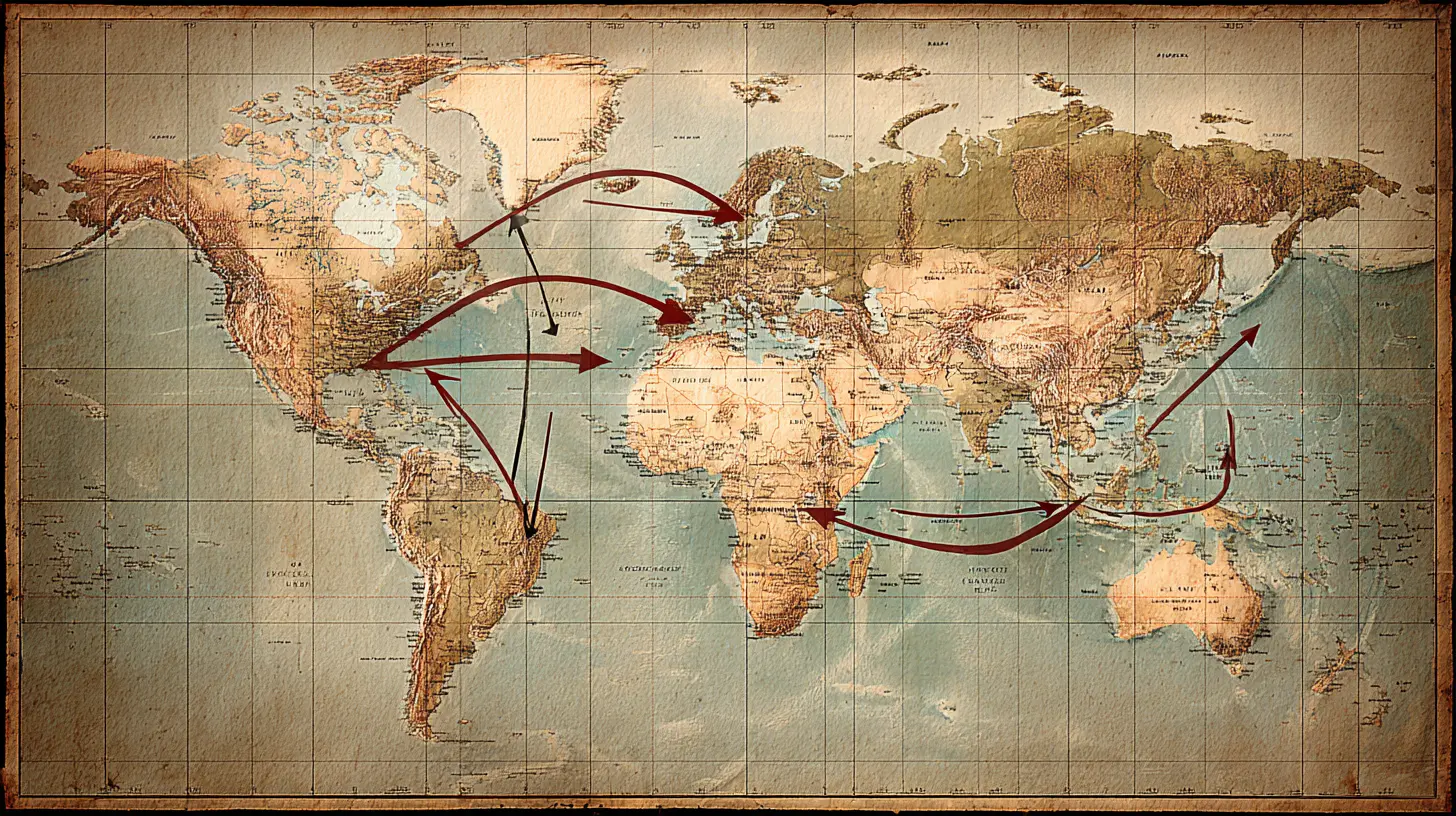
Descubra a fascinante história de Alfred Wegener, o meteorologista que ousou desafiar os gigantes da geologia com uma ideia que parecia loucura: a de que os continentes estão em constante movimento. De um simples olhar para o encaixe perfeito entre a América do Sul e a África até uma expedição fatal nos gelos da Groenlândia, acompanhe a trajetória de um homem que enxergou o que ninguém mais via e previu a dinâmica da Pangeia. Este é o relato de uma revolução científica que transformou nossa compreensão da Terra, provando que, às vezes, o maior erro da ciência é ignorar quem pensa fora da caixa.
| Audio | |
|---|---|
Normal | Slow |
| English Transcript | Tradução |
| The Impossible Journey of a Scientific Outcast | A Jornada Impossível de um Pária da Ciência |
| Have you ever looked closely at a world map? Well, if you have, you might have noticed something quite peculiar. The eastern coastline of South America seems to nestle perfectly into the western coastline of Africa. They look like two giant puzzle pieces that were once connected but have since drifted apart. | Você já olhou de perto para um mapa-múndi? Bem, se olhou, pode ter notado algo bastante peculiar. A costa leste da América do Sul parece se encaixar perfeitamente na costa oeste da África. Elas parecem duas peças gigantes de um quebra-cabeça que estiveram conectadas outrora, mas que, desde então, se afastaram. |
| This simple observation, a curious thought that many might have dismissed, was the seed of a revolutionary idea. It was a visual whisper from the earth's deep past. A hint that the solid ground beneath our feet was not always as it is today. This single powerful image sparked the imagination of a man who would challenge the very foundations of geology. | Esta observação simples, um pensamento curioso que muitos poderiam ter descartado, foi a semente de uma ideia revolucionária. Era um sussurro visual do passado profundo da Terra. Um indício de que o solo sólido sob nossos pés nem sempre foi como é hoje. Esta imagem única e poderosa despertou a imaginação de um homem que desafiaria os próprios alicerces da geologia. |
| That man was Alfred Veer. Born in Germany in 1880, Veagener was not a geologist by trade. His primary fields were meteorology and geoysics. In the year 1912, Veger stood before the scientific community and proposed a bold and to many an outrageous concept. He declared that all the continents we see today were once joined together in a single colossal landmass. | Aquele homem era Alfred Wegener. Nascido na Alemanha em 1880, Wegener não era geólogo de profissão. Seus campos primários eram a meteorologia e a geofísica. No ano de 1912, Wegener apresentou-se diante da comunidade científica e propôs um conceito audacioso e, para muitos, ultrajante. Ele declarou que todos os continentes que vemos hoje estiveram unidos anteriormente em uma única e colossal massa de terra. |
| He gave this groundbreaking idea a name, continental drift. Veaganner's idea suggested a world in constant slow motion transformation. When a superc continent which he later called pangia dominated the globe, this massive continent began to fracture, the pieces, our modern continents, started to slowly float away from each other, plowing through the ocean basins over immense geological time scales. | Ele deu a esta ideia inovadora um nome: deriva continental. A ideia de Wegener sugeria um mundo em constante transformação em câmera lenta. Quando um supercontinente, que ele mais tarde chamou de Pangeia, dominava o globo, este continente massivo começou a se fraturar; as peças, nossos continentes modernos, começaram a flutuar lentamente para longe umas das outras, avançando pelas bacias oceânicas ao longo de imensas escalas de tempo geológico. |
| Alfred Veagener did not base his radical theory on a single observation. Instead, he meticulously gathered evidence from various scientific disciplines. The most intuitive piece of evidence was the remarkable jigsaw puzzle fit of the continents beyond South America and Africa to North America, Greenland, and Europe. | Alfred Wegener não baseou sua teoria radical em uma única observação. Em vez disso, ele reuniu meticulosamente evidências de várias disciplinas científicas. A peça de evidência mais intuitiva era o notável ajuste de quebra-cabeça dos continentes além da América do Sul e África, estendendo-se à América do Norte, Groenlândia e Europa. |
| Next, he turned to the fossil record. Messasaurus in Brazil and South Africa and nowhere else. Glossopterus spread across continents now separated by oceans. Mountain chains aligned across the Atlantic, one torn belt carried apart. Paleoclimatology showed glaciers and tropics and coal and cold lands, evidence that continents moved. | Em seguida, ele recorreu ao registro fóssil. *Mesosaurus* no Brasil e na África do Sul e em nenhum outro lugar. *Glossopteris* espalhada por continentes agora separados por oceanos. Cadeias de montanhas alinhadas através do Atlântico, como um cinturão rasgado e separado. A paleoclimatologia mostrava geleiras nos trópicos e carvão em terras geladas, evidências de que os continentes se moveram. |
| Despite the weight of his assembled evidence, his theory of continental drift was met with fierce and widespread opposition. In 1915, he published the origin of continents and oceans. A few scientists were intrigued, but the vast majority of geologists reacted with scorn and derision. They were deeply invested in a prevailing idea. | Apesar do peso de suas evidências reunidas, sua teoria da deriva continental foi recebida com oposição feroz e generalizada. Em 1915, ele publicou *A Origem dos Continentes e Oceanos*. Alguns cientistas ficaram intrigados, mas a vasta maioria dos geólogos reagiu com desprezo e escárnio. Eles estavam profundamente investidos em uma ideia predominante. |
| A static earth, fixed continents, sinking land bridges used to explain fossil distributions. Veaganner's proposal threatened their life's work. The single greatest weakness critics attacked. No plausible mechanism. He could show continents had likely moved, but he could not explain how. centrifugal force from Earth's rotation, tidal forces from the sun and the moon. | Uma Terra estática, continentes fixos, pontes terrestres submersas usadas para explicar a distribuição de fósseis. A proposta de Wegener ameaçava o trabalho de suas vidas. A maior fraqueza que os críticos atacavam era a falta de um mecanismo plausível. Ele conseguia mostrar que os continentes provavelmente se moveram, mas não conseguia explicar como. Força centrífuga da rotação da Terra, forças de maré do sol e da lua. |
| Physicists calculated these forces were far too weak to overcome the immense friction of continents plowing through the ocean floor. Criticism turned personal. He was mocked as an amateur meteorologist accused of cherry-picking. Through it all, he revised his book, gathered new evidence, and kept debating. | Físicos calcularam que essas forças eram fracas demais para superar a imensa fricção dos continentes avançando pelo fundo do oceano. As críticas tornaram-se pessoais. Ele foi ridicularizado como um meteorologista amador e acusado de selecionar dados de forma tendenciosa. Apesar de tudo, ele revisou seu livro, reuniu novas evidências e continuou debatendo. |
| Alfred Vegner was more than just a theoretical scientist. He was a man of action. A pioneering meteorologist and glaciologist, he chased data across Greenland's ice cap. He balanced field risk with rigorous measurement, ice motion and thickness, Arctic weather. In 1930, he set out to establish three interior stations for a year of observations. | Alfred Wegener era mais do que apenas um cientista teórico. Ele era um homem de ação. Um meteorologista e glaciologista pioneiro, ele perseguiu dados através da calota de gelo da Groenlândia. Ele equilibrava o risco de campo com medições rigorosas de movimento e espessura do gelo e clima ártico. Em 1930, ele partiu para estabelecer três estações no interior para um ano de observações. |
| A late start and brutal storms delayed vital supplies to the central station, Icemitta. Fearing for the men there, Veaganner and Villimson led a desperate resupply dash. They reached Ice Mida in late October, spent a brief rest, and on his 50th birthday, Veaganner and Villimson set off for the coast. It was the last time they were seen alive. | Um início tardio e tempestades brutais atrasaram suprimentos vitais para a estação central, Eismitte. Temendo pelos homens lá, Wegener e Villumsen lideraram uma corrida desesperada de reabastecimento. Eles chegaram a Eismitte no final de outubro, tiveram um breve descanso e, no seu 50º aniversário, Wegener e Villumsen partiram para a costa. Foi a última vez que foram vistos vivos. |
| Alfred Veger's body was found the following spring, carefully buried by Villimson, who was lost to the ice. He died pursuing science and exploration, his theory still dismissed. After World War II, new tools mapped the seafloor in unprecedented detail. Scientists discovered mid ocean ridges and crust that grows younger toward them. | O corpo de Alfred Wegener foi encontrado na primavera seguinte, cuidadosamente enterrado por Villumsen, que se perdeu no gelo. Ele morreu buscando a ciência e a exploração, com sua teoria ainda descartada. Após a Segunda Guerra Mundial, novas ferramentas mapearam o fundo do mar em detalhes sem precedentes. Cientistas descobriram cordilheiras meso-oceânicas e uma crosta que se torna mais jovem em direção a elas. |
| Hess and Deets proposed seafloor spreading. The missing mechanism continents don't plow the seafloor. Plates carry them. Plate tectonics was born. It explained quakes, volcanoes, and mountain ranges. Today, Veger is hailed as a visionary. | Hess e Dietz propuseram a expansão do fundo do mar. O mecanismo que faltava: continentes não aram o fundo do mar, placas os carregam. A tectônica de placas nasceu. Ela explicou terremotos, vulcões e cordilheiras montanhosas. Hoje, Wegener é aclamado como um visionário. |
Contagem de palavras
A tabela abaixo exibe as palavras encontradas neste vídeo, bem como o número de vezes em que aparecem.
Veja também: Para que serve esta tabela?
| Freq. | Palavra | Freq. | Palavra | Freq. | Palavra |
|---|---|---|---|---|---|
| 36 | the | 25 | and | 25 | a |
| 16 | of | 15 | he | 14 | was |
| 11 | to | 11 | in | 10 | continents |
| 7 | were | 7 | that | 7 | his |
| 5 | not | 5 | it | 5 | have |
| 5 | from | 5 | evidence | 4 | veaganner |
| 4 | this | 4 | they | 4 | single |
| 4 | idea | 4 | ice | 4 | alfred |
| 3 | you | 3 | world | 3 | with |
| 3 | villimson | 3 | veger | 3 | today |
| 3 | through | 3 | theory | 3 | south |
| 3 | seafloor | 3 | scientific | 3 | ocean |
| 3 | man | 3 | for | 3 | earth |
| 3 | by | 3 | but | 3 | as |
| 3 | america | 3 | africa | 3 | across |
| 2 | year | 2 | who | 2 | veagener |
| 2 | turned | 2 | time | 2 | them |
| 2 | set | 2 | scientists | 2 | puzzle |
| 2 | proposed | 2 | plowing | 2 | pieces |
| 2 | our | 2 | once | 2 | on |
| 2 | oceans | 2 | observation | 2 | new |
| 2 | moved | 2 | mountain | 2 | motion |
| 2 | might | 2 | meteorologist | 2 | mechanism |
| 2 | many | 2 | late | 2 | is |
| 2 | immense | 2 | greenland | 2 | gathered |
| 2 | fossil | 2 | forces | 2 | explain |
| 2 | drift | 2 | dismissed | 2 | could |
| 2 | continental | 2 | continent | 2 | coastline |
| 2 | born | 2 | apart | 2 | an |
| 2 | all | 1 | younger | 1 | would |
| 1 | work | 1 | widespread | 1 | whisper |
| 1 | which | 1 | when | 1 | western |
| 1 | well | 1 | weight | 1 | weather |
| 1 | weakness | 1 | weak | 1 | we |
| 1 | war | 1 | volcanoes | 1 | vital |
| 1 | visual | 1 | visionary | 1 | very |
| 1 | vegner | 1 | veer | 1 | vast |
| 1 | various | 1 | used | 1 | unprecedented |
| 1 | two | 1 | tropics | 1 | transformation |
| 1 | trade | 1 | toward | 1 | torn |
| 1 | tools | 1 | too | 1 | together |
| 1 | tidal | 1 | three | 1 | threatened |
| 1 | thought | 1 | thickness | 1 | these |
| 1 | there | 1 | theoretical | 1 | their |
| 1 | than | 1 | th | 1 | tectonics |
| 1 | supplies | 1 | superc | 1 | sun |
| 1 | suggested | 1 | storms | 1 | stood |
| 1 | still | 1 | stations | 1 | station |
| 1 | static | 1 | started | 1 | start |
| 1 | spring | 1 | spreading | 1 | spread |
| 1 | spent | 1 | sparked | 1 | something |
| 1 | solid | 1 | slowly | 1 | slow |
| 1 | sinking | 1 | since | 1 | simple |
| 1 | showed | 1 | show | 1 | separated |
| 1 | seen | 1 | seems | 1 | seed |
| 1 | see | 1 | scorn | 1 | scientist |
| 1 | science | 1 | scales | 1 | rotation |
| 1 | risk | 1 | rigorous | 1 | ridges |
| 1 | revolutionary | 1 | revised | 1 | resupply |
| 1 | rest | 1 | remarkable | 1 | record |
| 1 | reacted | 1 | reached | 1 | ranges |
| 1 | radical | 1 | quite | 1 | quakes |
| 1 | pursuing | 1 | published | 1 | proposal |
| 1 | primary | 1 | prevailing | 1 | powerful |
| 1 | plow | 1 | plausible | 1 | plates |
| 1 | plate | 1 | pioneering | 1 | piece |
| 1 | picking | 1 | physicists | 1 | personal |
| 1 | perfectly | 1 | peculiar | 1 | past |
| 1 | pangia | 1 | paleoclimatology | 1 | overcome |
| 1 | over | 1 | outrageous | 1 | outcast |
| 1 | out | 1 | other | 1 | origin |
| 1 | opposition | 1 | one | 1 | off |
| 1 | october | 1 | observations | 1 | nowhere |
| 1 | now | 1 | noticed | 1 | north |
| 1 | no | 1 | next | 1 | nestle |
| 1 | name | 1 | most | 1 | more |
| 1 | moon | 1 | modern | 1 | mocked |
| 1 | missing | 1 | mida | 1 | mid |
| 1 | meticulously | 1 | meteorology | 1 | met |
| 1 | messasaurus | 1 | men | 1 | measurement |
| 1 | massive | 1 | mapped | 1 | map |
| 1 | majority | 1 | lost | 1 | looked |
| 1 | look | 1 | likely | 1 | like |
| 1 | life | 1 | led | 1 | later |
| 1 | last | 1 | lands | 1 | landmass |
| 1 | land | 1 | kept | 1 | just |
| 1 | journey | 1 | joined | 1 | jigsaw |
| 1 | invested | 1 | intuitive | 1 | intrigued |
| 1 | into | 1 | interior | 1 | instead |
| 1 | impossible | 1 | imagination | 1 | image |
| 1 | ii | 1 | if | 1 | icemitta |
| 1 | how | 1 | hint | 1 | hess |
| 1 | hailed | 1 | had | 1 | grows |
| 1 | groundbreaking | 1 | ground | 1 | greatest |
| 1 | glossopterus | 1 | globe | 1 | glaciologist |
| 1 | glaciers | 1 | giant | 1 | germany |
| 1 | geoysics | 1 | geology | 1 | geologists |
| 1 | geologist | 1 | geological | 1 | gave |
| 1 | friction | 1 | fracture | 1 | foundations |
| 1 | found | 1 | force | 1 | following |
| 1 | floor | 1 | float | 1 | fixed |
| 1 | fit | 1 | fierce | 1 | fields |
| 1 | field | 1 | few | 1 | feet |
| 1 | fearing | 1 | far | 1 | exploration |
| 1 | explained | 1 | ever | 1 | europe |
| 1 | establish | 1 | else | 1 | eastern |
| 1 | each | 1 | drifted | 1 | dominated |
| 1 | do | 1 | distributions | 1 | discovered |
| 1 | disciplines | 1 | died | 1 | did |
| 1 | detail | 1 | despite | 1 | desperate |
| 1 | derision | 1 | delayed | 1 | deets |
| 1 | deeply | 1 | deep | 1 | declared |
| 1 | debating | 1 | data | 1 | dash |
| 1 | curious | 1 | crust | 1 | critics |
| 1 | criticism | 1 | constant | 1 | connected |
| 1 | concept | 1 | community | 1 | colossal |
| 1 | cold | 1 | coast | 1 | coal |
| 1 | closely | 1 | cherry | 1 | chased |
| 1 | challenge | 1 | chains | 1 | centrifugal |
| 1 | central | 1 | carry | 1 | carried |
| 1 | carefully | 1 | cap | 1 | called |
| 1 | calculated | 1 | buried | 1 | brutal |
| 1 | brief | 1 | bridges | 1 | brazil |
| 1 | book | 1 | bold | 1 | body |
| 1 | birthday | 1 | beyond | 1 | beneath |
| 1 | belt | 1 | began | 1 | before |
| 1 | basins | 1 | base | 1 | balanced |
| 1 | away | 1 | attacked | 1 | atlantic |
| 1 | at | 1 | assembled | 1 | arctic |
| 1 | amateur | 1 | always | 1 | alive |
| 1 | aligned | 1 | after | 1 | action |
| 1 | accused |