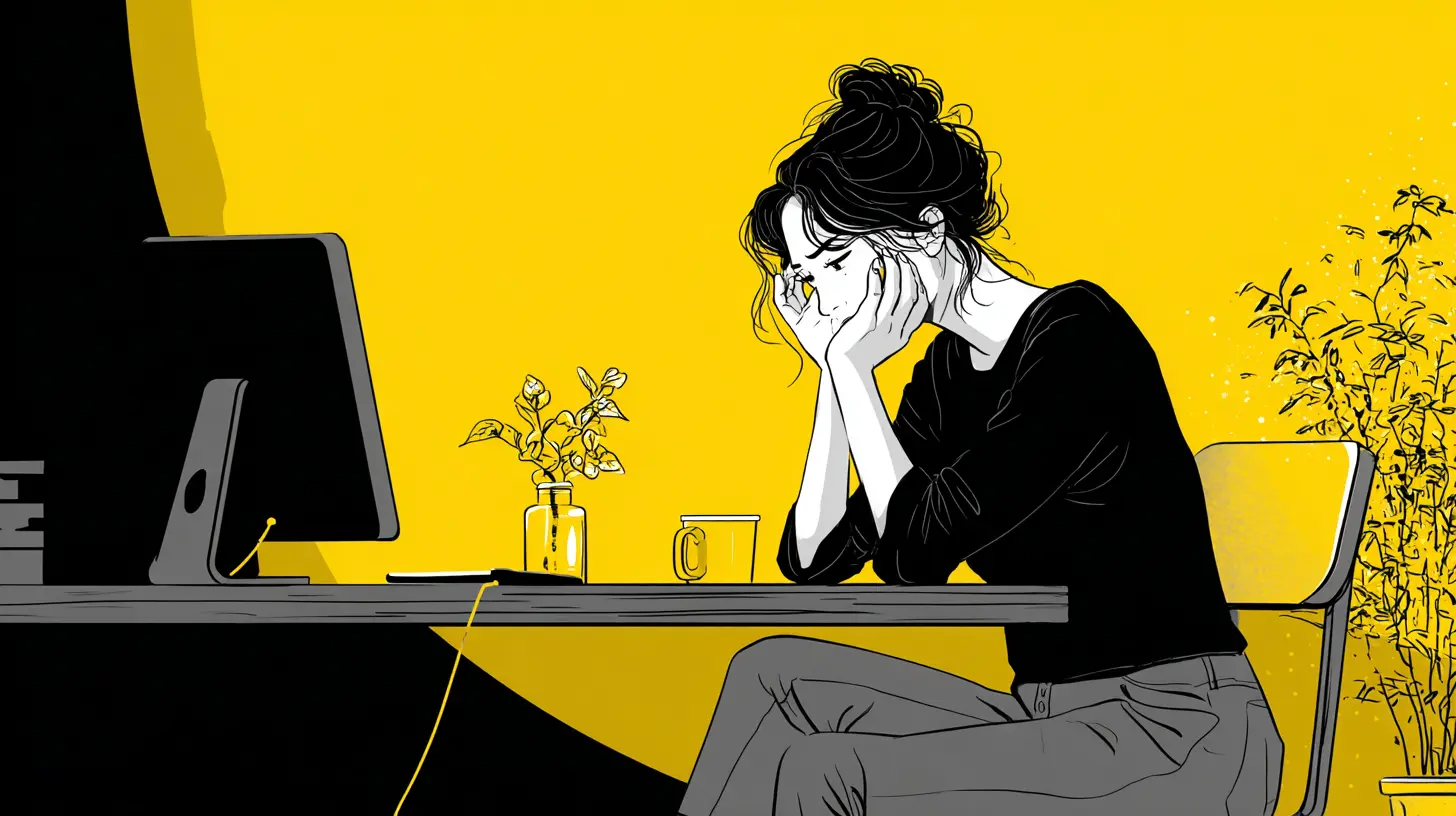
Vídeo | Why sitting is bad for you
O corpo humano foi projetado como uma máquina de movimento contínuo, mas o estilo de vida moderno nos mantém cativos em cadeiras por horas a fio. Este vídeo explora as consequências invisíveis — e muitas vezes graves — do sedentarismo, revelando como o simples ato de sentar impacta desde a saúde da sua coluna e a oxigenação do sangue até a eficiência do seu cérebro e o risco de doenças crônicas. Descubra por que a estagnação é uma ameaça silenciosa à sua longevidade e como pequenas mudanças de hábito podem reativar as funções vitais de um organismo que nasceu para se mexer.
| Audio | |
|---|---|
Normal | Slow |
| English Transcript | Tradução |
| Why Sitting is Bad for You | Por que Sentar é Ruim para Você |
| Right now, you're probably sitting down to watch this video and staying seated for a few minutes to view it is probably okay. But the longer you stay put, the more agitated your body becomes. It sits there counting down the moments until you stand up again and take it for a walk. That may sound ridiculous. | Neste momento, você provavelmente está sentado para assistir a este vídeo e permanecer sentado por alguns minutos para vê-lo provavelmente não tem problema. Mas quanto mais tempo você fica parado, mais agitado seu corpo se torna. Ele fica ali contando os momentos até você se levantar novamente e levá-lo para caminhar. Isso pode parecer ridículo. |
| Our bodies love to sit, right? Not really. Sure, sitting for brief periods can help us recover from stress or recuperate from exercise. But nowadays, our lifestyles make us sit much more than we move around, and our bodies simply aren't built for such a sedentary existence. In fact, just the opposite is true. | Nossos corpos amam sentar, certo? Na verdade, não. Claro, sentar por períodos curtos pode nos ajudar a recuperar do estresse ou a descansar após um exercício. Mas hoje em dia, nossos estilos de vida nos fazem sentar muito mais do que nos movimentamos, e nossos corpos simplesmente não foram feitos para uma existência tão sedentária. Na verdade, ocorre exatamente o oposto. |
| The human body is built to move, and you can see evidence of that in the way it's structured. Inside us are over 360 joints, and about 700 skeletal muscles that enable easy, fluid motion. The body's unique physical structure gives us the ability to stand up straight against the pull of gravity. Our blood depends on us moving around to be able to circulate properly. | O corpo humano foi feito para se mover, e você pode ver evidências disso na maneira como ele é estruturado. Dentro de nós existem mais de 360 articulações e cerca de 700 músculos esqueléticos que permitem movimentos fáceis e fluidos. A estrutura física única do corpo nos dá a capacidade de ficarmos eretos contra a força da gravidade. Nosso sangue depende de nossa movimentação para ser capaz de circular adequadamente. |
| Our nerve cells benefit from movement, and our skin is elastic, meaning it molds to our motions. So if every inch of the body is ready and waiting for you to move, what happens when you just don't? Let's start with the backbone of the problem, literally. Your spine is a long structure made of bones and the cartilage discs that sit between them. | Nossas células nervosas se beneficiam do movimento, e nossa pele é elástica, o que significa que ela se molda aos nossos movimentos. Então, se cada centímetro do corpo está pronto e esperando que você se mova, o que acontece quando você simplesmente não o faz? Vamos começar com a "espinha dorsal" do problema, literalmente. Sua coluna é uma estrutura longa feita de ossos e discos de cartilagem que ficam entre eles. |
| Joints, muscles and ligaments that are attached to the bones hold it all together. A common way of sitting is with a curved back and slumped shoulders, a position that puts uneven pressure on your spine. Over time, this causes wear and tear in your spinal discs, overworks certain ligaments and joints, and puts strain on muscles that stretch to accommodate your back's curved position. | Articulações, músculos e ligamentos que estão presos aos ossos mantêm tudo unido. Uma forma comum de sentar é com as costas curvadas e ombros caídos, uma posição que exerce pressão desigual sobre a sua coluna. Com o tempo, isso causa desgaste nos seus discos espinhais, sobrecarrega certos ligamentos e articulações, e tensiona músculos que se alongam para acomodar a posição curvada das suas costas. |
| This hunched shape also shrinks your chest cavity while you sit, meaning your lungs have less space to expand into when you breath. That's a problem because it temporarily limits the amount of oxygen that fills your lungs and filters into your blood. Around the skeleton are the muscles, nerves, arteries and veins that form the body's soft tissue layers. | Este formato curvado também encolhe sua cavidade torácica enquanto você senta, o que significa que seus pulmões têm menos espaço para se expandirem quando você respira. Isso é um problema porque limita temporariamente a quantidade de oxigênio que preenche seus pulmões e se filtra para o sangue. Ao redor do esqueleto estão os músculos, nervos, artérias e veias que formam as camadas de tecidos moles do corpo. |
| The very act of sitting squashes, pressurizes and compresses, and these more delicate tissues really feel the brunt. Have you ever experienced numbness and swelling in your limbs when you sit? In areas that are the most compressed, your nerves, arteries and veins can become blocked, which limits nerve signaling, causing the numbness, and reduces blood flow in your limbs, causing them to swell. | O próprio ato de sentar esmaga, pressiona e comprime, e esses tecidos mais delicados realmente sentem o impacto. Você já sentiu dormência e inchaço em seus membros quando se senta? Em áreas que são mais comprimidas, seus nervos, artérias e veias podem ficar bloqueados, o que limita a sinalização nervosa, causando a dormência, e reduz o fluxo sanguíneo em seus membros, fazendo com que inchem. |
| Sitting for long periods also temporarily deactivates lipoprotein lipase, a special enzyme in the walls of blood capillaries that breaks down fats in the blood, so when you sit, you're not burning fat nearly as well as when you move around. What effect does all of this stasis have on the brain? Most of the time, you probably sit down to use your brain, but ironically, lengthy periods of sitting actually run counter to this goal. | Sentar por longos períodos também desativa temporariamente a lipoproteína lipase, uma enzima especial nas paredes dos capilares sanguíneos que decompõe gorduras no sangue, então, quando você senta, não está queimando gordura tão bem quanto quando se movimenta. Qual efeito toda essa estase tem no cérebro? Na maioria das vezes, você provavelmente se senta para usar seu cérebro, mas, ironicamente, longos períodos sentado na verdade vão contra esse objetivo. |
| Being stationary reduces blood flow and the amount of oxygen entering your blood stream through your lungs. Your brain requires both of those things to remain alert, so your concentration levels will most likely dip as your brain activity slows. Unfortunately, the ill effects of being seated don't only exist in the short term. | Estar estacionário reduz o fluxo sanguíneo e a quantidade de oxigênio que entra na sua corrente sanguínea através dos pulmões. Seu cérebro requer ambas as coisas para permanecer alerta, então seus níveis de concentração provavelmente cairão conforme sua atividade cerebral diminui. Infelizmente, os efeitos nocivos de estar sentado não existem apenas a curto prazo. |
| Recent studies have found that sitting for long periods is linked with some types of cancers and heart disease and can contribute to diabetes, kidney and liver problems. In fact, researchers have worked out that, worldwide, inactivity causes about 9% of premature deaths a year. That's over 5 million people. | Estudos recentes descobriram que sentar por longos períodos está ligado a alguns tipos de câncer e doenças cardíacas, e pode contribuir para diabetes, problemas renais e hepáticos. Na verdade, pesquisadores calcularam que, no mundo todo, a inatividade causa cerca de 9% das mortes prematuras por ano. Isso são mais de 5 milhões de pessoas. |
| So what seems like such a harmless habit actually has the power to change our health. But luckily, the solutions to this mounting threat are simple and intuitive. When you have no choice but to sit, try switching the slouch for a straighter spine, and when you don't have to be bound to your seat, aim to move around much more, perhaps by setting a reminder to yourself to get up every half hour. | Então, o que parece um hábito tão inofensivo tem, na verdade, o poder de mudar nossa saúde. Mas, felizmente, as soluções para essa ameaça crescente são simples e intuitivas. Quando você não tiver escolha a não ser sentar, tente trocar a postura relaxada por uma coluna mais ereta, e quando não precisar estar preso ao seu assento, tente se movimentar muito mais, talvez definindo um lembrete para si mesmo para levantar a cada meia hora. |
| But mostly, just appreciate that bodies are built for motion, not for stillness. In fact, since the video's almost over, why not stand up and stretch right now? Treat your body to a walk. It'll thank you later. | Mas, principalmente, apenas aprecie que os corpos foram feitos para o movimento, não para a imobilidade. De fato, já que o vídeo está quase acabando, por que não se levantar e se alongar agora mesmo? Presenteie seu corpo com uma caminhada. Ele lhe agradecerá mais tarde. |
Contagem de palavras
A tabela abaixo exibe as palavras encontradas neste vídeo, bem como o número de vezes em que aparecem.
Veja também: Para que serve esta tabela?
| Freq. | Palavra | Freq. | Palavra | Freq. | Palavra |
|---|---|---|---|---|---|
| 33 | the | 27 | and | 26 | to |
| 20 | your | 18 | you | 17 | of |
| 16 | that | 14 | a | 12 | is |
| 11 | in | 11 | for | 9 | are |
| 8 | sitting | 8 | sit | 8 | our |
| 8 | not | 8 | it | 7 | when |
| 7 | have | 7 | blood | 6 | us |
| 6 | this | 6 | but | 6 | body |
| 5 | move | 5 | around | 4 | up |
| 4 | so | 4 | periods | 4 | over |
| 4 | on | 4 | muscles | 4 | more |
| 4 | down | 4 | can | 4 | brain |
| 3 | with | 3 | what | 3 | stand |
| 3 | spine | 3 | right | 3 | probably |
| 3 | most | 3 | lungs | 3 | long |
| 3 | just | 3 | joints | 3 | from |
| 3 | fact | 3 | do | 3 | built |
| 3 | bodies | 3 | as | 2 | will |
| 2 | why | 2 | way | 2 | walk |
| 2 | video | 2 | veins | 2 | time |
| 2 | them | 2 | temporarily | 2 | such |
| 2 | structure | 2 | stretch | 2 | seated |
| 2 | reduces | 2 | really | 2 | puts |
| 2 | problem | 2 | position | 2 | oxygen |
| 2 | numbness | 2 | now | 2 | nerves |
| 2 | nerve | 2 | much | 2 | motion |
| 2 | meaning | 2 | limits | 2 | limbs |
| 2 | ligaments | 2 | into | 2 | flow |
| 2 | every | 2 | discs | 2 | curved |
| 2 | causing | 2 | causes | 2 | bones |
| 2 | being | 2 | be | 2 | back |
| 2 | arteries | 2 | amount | 2 | also |
| 2 | all | 2 | actually | 2 | about |
| 1 | yourself | 1 | year | 1 | worldwide |
| 1 | worked | 1 | while | 1 | which |
| 1 | well | 1 | wear | 1 | we |
| 1 | watch | 1 | walls | 1 | waiting |
| 1 | view | 1 | very | 1 | use |
| 1 | until | 1 | unique | 1 | unfortunately |
| 1 | uneven | 1 | types | 1 | try |
| 1 | true | 1 | treat | 1 | together |
| 1 | tissues | 1 | tissue | 1 | through |
| 1 | threat | 1 | those | 1 | things |
| 1 | these | 1 | there | 1 | thank |
| 1 | than | 1 | term | 1 | tear |
| 1 | take | 1 | switching | 1 | swelling |
| 1 | swell | 1 | sure | 1 | studies |
| 1 | structured | 1 | stress | 1 | stream |
| 1 | strain | 1 | straighter | 1 | straight |
| 1 | stillness | 1 | staying | 1 | stay |
| 1 | stationary | 1 | stasis | 1 | start |
| 1 | squashes | 1 | spinal | 1 | special |
| 1 | space | 1 | sound | 1 | some |
| 1 | solutions | 1 | soft | 1 | slumped |
| 1 | slows | 1 | slouch | 1 | skin |
| 1 | skeleton | 1 | skeletal | 1 | sits |
| 1 | since | 1 | simply | 1 | simple |
| 1 | signaling | 1 | shrinks | 1 | shoulders |
| 1 | short | 1 | shape | 1 | setting |
| 1 | seems | 1 | see | 1 | sedentary |
| 1 | seat | 1 | run | 1 | ridiculous |
| 1 | researchers | 1 | requires | 1 | reminder |
| 1 | remain | 1 | recuperate | 1 | recover |
| 1 | recent | 1 | ready | 1 | put |
| 1 | pull | 1 | properly | 1 | problems |
| 1 | pressurizes | 1 | pressure | 1 | premature |
| 1 | power | 1 | physical | 1 | perhaps |
| 1 | people | 1 | overworks | 1 | out |
| 1 | or | 1 | opposite | 1 | only |
| 1 | okay | 1 | nowadays | 1 | no |
| 1 | nearly | 1 | moving | 1 | movement |
| 1 | mounting | 1 | motions | 1 | mostly |
| 1 | moments | 1 | molds | 1 | minutes |
| 1 | million | 1 | may | 1 | make |
| 1 | made | 1 | luckily | 1 | love |
| 1 | longer | 1 | liver | 1 | literally |
| 1 | lipoprotein | 1 | lipase | 1 | linked |
| 1 | likely | 1 | like | 1 | lifestyles |
| 1 | levels | 1 | let | 1 | less |
| 1 | lengthy | 1 | layers | 1 | later |
| 1 | kidney | 1 | ironically | 1 | intuitive |
| 1 | inside | 1 | inch | 1 | inactivity |
| 1 | ill | 1 | if | 1 | hunched |
| 1 | human | 1 | hour | 1 | hold |
| 1 | help | 1 | heart | 1 | health |
| 1 | has | 1 | harmless | 1 | happens |
| 1 | half | 1 | habit | 1 | gravity |
| 1 | goal | 1 | gives | 1 | get |
| 1 | found | 1 | form | 1 | fluid |
| 1 | filters | 1 | fills | 1 | few |
| 1 | feel | 1 | fats | 1 | fat |
| 1 | experienced | 1 | expand | 1 | existence |
| 1 | exist | 1 | exercise | 1 | evidence |
| 1 | ever | 1 | enzyme | 1 | entering |
| 1 | enable | 1 | elastic | 1 | effects |
| 1 | effect | 1 | easy | 1 | does |
| 1 | disease | 1 | dip | 1 | diabetes |
| 1 | depends | 1 | delicate | 1 | deaths |
| 1 | deactivates | 1 | counting | 1 | counter |
| 1 | contribute | 1 | concentration | 1 | compresses |
| 1 | compressed | 1 | common | 1 | circulate |
| 1 | choice | 1 | chest | 1 | change |
| 1 | certain | 1 | cells | 1 | cavity |
| 1 | cartilage | 1 | capillaries | 1 | cancers |
| 1 | by | 1 | burning | 1 | brunt |
| 1 | brief | 1 | breath | 1 | breaks |
| 1 | bound | 1 | both | 1 | blocked |
| 1 | between | 1 | benefit | 1 | becomes |
| 1 | become | 1 | because | 1 | bad |
| 1 | backbone | 1 | attached | 1 | areas |
| 1 | appreciate | 1 | almost | 1 | alert |
| 1 | aim | 1 | agitated | 1 | against |
| 1 | again | 1 | activity | 1 | act |
| 1 | accommodate | 1 | able | 1 | ability |