Vídeo | Do imaginary friends make you smarter?
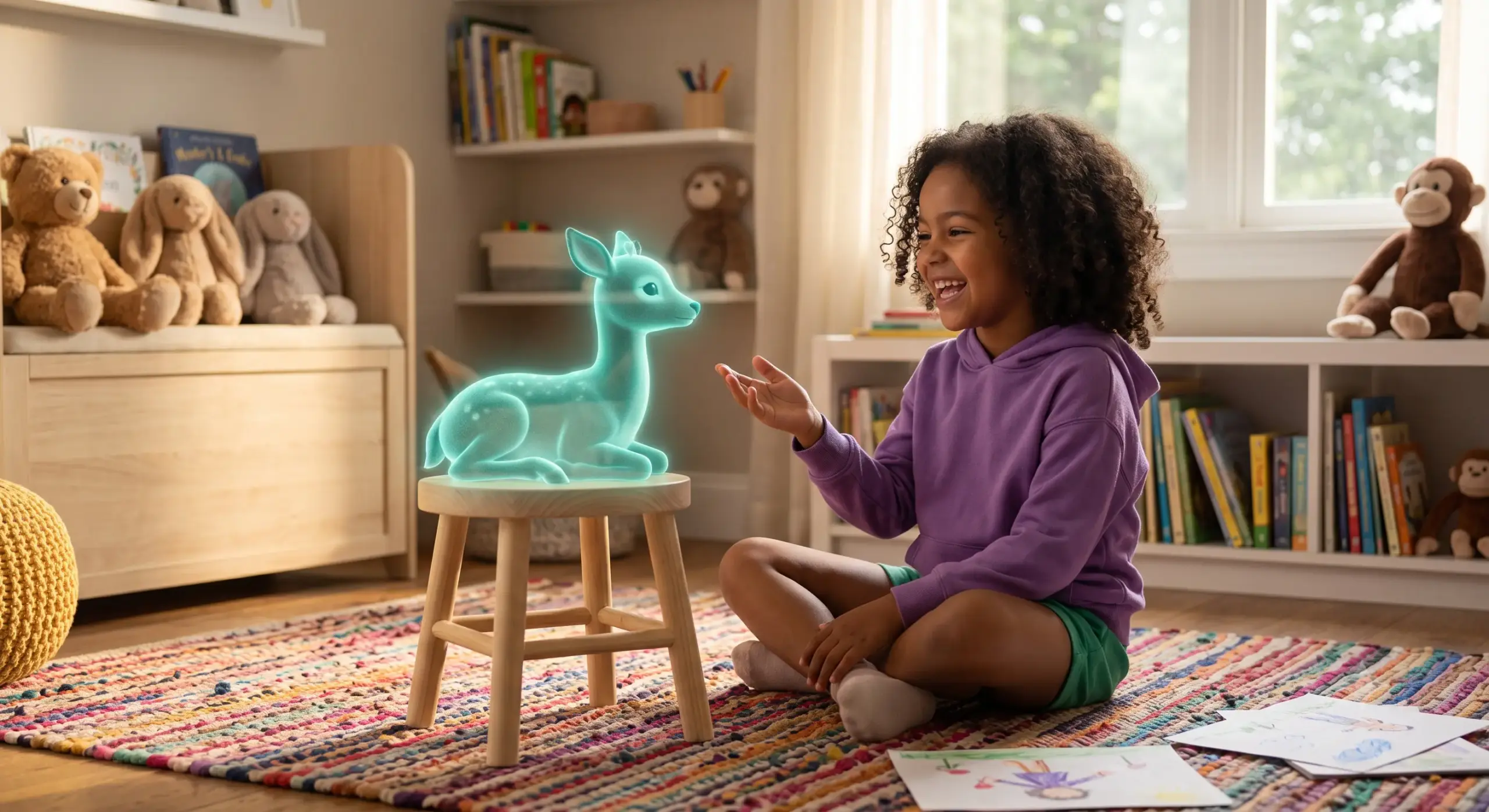
E se aquele “amigo invisível” do seu filho for uma ferramenta secreta de superpotência cognitiva? De reinos imaginários a conversas no chuveiro na vida adulta, a ciência revela o papel surpreendente dos companheiros invisíveis no desenvolvimento infantil. Descubra como essas criações da mente moldam a empatia, a inteligência emocional e a capacidade de resolver problemas, provando que, embora os amigos imaginários não sejam reais, os benefícios de brincar são para a vida toda.
| Audio | |
|---|---|
Normal | Slow |
| English Transcript | Tradução |
| Do imaginary friends make you smarter? | Amigos imaginários te tornam mais esperto? |
| Amiia and her friend Zelba have been inseparable for nearly a year. They share secrets, play games, and rule over imaginary kingdoms. Amiia loves to talk, and Zelba is a great listener. Amiia sometimes has bad ideas, and Zelba goes along with them anyway. Amiia is very real, and Zelba is not. | Amiia e sua amiga Zelba têm sido inseparáveis por quase um ano. Elas compartilham segredos, jogam e governam reinos imaginários. Amiia adora falar, e Zelba é uma ótima ouvinte. Amiia às vezes tem ideias ruins, e Zelba concorda com elas de qualquer maneira. Amiia é muito real, e Zelba não é. |
| Some parents worry about their child having playmates they can't see or hear, but imaginary companions are a normal part of psychological development for many kids. In fact, they even provide a special kind of support real friends can't. | Alguns pais se preocupam com seu filho ter companheiros de brincadeira que não podem ver ou ouvir, mas companheiros imaginários são uma parte normal do desenvolvimento psicológico para muitas crianças. Na verdade, eles até fornecem um tipo especial de apoio que amigos reais não conseguem. |
| But to understand this, we first need to explore what leads certain kids to create these fictional figures. Most often, their inventors are simply looking for someone to play with. Imaginary friends are typically created by children roughly 3 to 4 years old who lack siblings of a similar age. These kids tend to be socially outgoing, they like company, so they invent more of it. And while almost all kids enjoy playing pretend, children with invisible companions are especially fond of make-believe. One study even found these kids were better storytellers, suggesting that imagining friends might help with linguistic and cognitive development. | Mas para entender isso, primeiro precisamos explorar o que leva certas crianças a criar essas figuras ficcionais. Na maioria das vezes, seus inventores estão simplesmente procurando por alguém para brincar. Amigos imaginários são tipicamente criados por crianças de aproximadamente 3 a 4 anos que não têm irmãos de idade similar. Essas crianças tendem a ser socialmente extrovertidas, elas gostam de companhia, então inventam mais dela. E embora quase todas as crianças gostem de brincar de faz de conta, crianças com companheiros invisíveis são especialmente fãs de inventar histórias. Um estudo até descobriu que essas crianças eram melhores contadoras de histórias, sugerindo que imaginar amigos pode ajudar no desenvolvimento linguístico e cognitivo. |
| Outside a love of fantasy and socializing, experts haven't found any meaningful differences in personality, intelligence, or shyness between kids who do and do not have imaginary friends. However, the invisible characters themselves couldn't be more different. They can be animals, real or fictional, or humans of all ages, shapes, and sizes, with features straight out of a fairy tale. Some come alone; others have a gaggle of imaginary friends and family. They can even be what researchers call "personified objects": stuffed animals or toys brought to life by the imagination. | Fora o amor pela fantasia e pela socialização, especialistas não encontraram nenhuma diferença significativa na personalidade, inteligência ou timidez entre crianças que têm e não têm amigos imaginários. No entanto, os próprios personagens invisíveis não poderiam ser mais diferentes. Eles podem ser animais, reais ou ficcionais, ou humanos de todas as idades, formas e tamanhos, com características saídas diretamente de um conto de fadas. Alguns vêm sozinhos; outros têm um bando de amigos e familiares imaginários. Eles podem até ser o que os pesquisadores chamam de "objetos personificados": animais de pelúcia ou brinquedos trazidos à vida pela imaginação. |
| And these manifestations vary from place to place. A 2004 study found roughly 67% of US kids under 8 had invisible companions, while in Japan, personified objects were much more common. | E essas manifestações variam de lugar para lugar. Um estudo de 2004 descobriu que aproximadamente 67% das crianças americanas com menos de 8 anos tinham companheiros invisíveis, enquanto no Japão objetos personificados eram muito mais comuns. |
| These fictional figures don't just look different, they also fill a variety of roles. Many are playmates and confidants, but others are scapegoats, errand buddies, or babies in need of care. This wide range is why researchers typically call them "invisible or imaginary companions," since they're not always friends. In fact, researchers have even reported children who fight with their imaginary companion or are actively afraid of them. | Essas figuras ficcionais não têm apenas aparências diferentes, elas também preenchem uma variedade de papéis. Muitos são companheiros de brincadeira e confidentes, mas outros são bodes expiatórios, parceiros de tarefas ou bebês que precisam de cuidados. Essa ampla variedade é a razão pela qual os pesquisadores tipicamente os chamam de "companheiros invisíveis ou imaginários", já que nem sempre são amigos. Na verdade, pesquisadores até relataram crianças que brigam com seu companheiro imaginário ou têm medo ativo dele. |
| These situations can concern parents. But not only are they totally normal, they highlight the special power of imaginary companions. Each of these characters is designed to fulfill their creator's needs or wants. By creating a scary invisible companion, a child might be experimenting with feeling fear and how to conquer it. Negotiating imaginary disagreements lets kids practice dealing with conflict without real-world consequences. And resolving these arguments can help them explore empathy and caregiving. In these ways and more, invisible companions give developing children the agency to explore emotions and social interactions on their terms. And since research consistently shows children know these characters are imaginary, the kids are always in control, even when it doesn't look like it. | Essas situações podem preocupar os pais. Mas elas não são apenas totalmente normais, elas destacam o poder especial dos companheiros imaginários. Cada um desses personagens é projetado para satisfazer as necessidades ou desejos de seu criador. Ao criar um companheiro invisível assustador, uma criança pode estar experimentando a sensação de medo e como conquistá-lo. Negociar desentendimentos imaginários permite que as crianças pratiquem lidar com conflitos sem consequências no mundo real. E resolver esses argumentos pode ajudá-las a explorar a empatia e o cuidado. Dessas maneiras e mais, companheiros invisíveis dão às crianças em desenvolvimento a autonomia para explorar emoções e interações sociais em seus próprios termos. E como a pesquisa mostra consistentemente que as crianças sabem que esses personagens são imaginários, as crianças estão sempre no controle, mesmo quando não parece assim. |
| Some invisible companions stick around through their creator's teenage and adult years. But generally, as kids start making friends in school around age five or six, they talk about their imaginary companions less and less often. That said, the time they spent with these fictional figures has lifelong benefits. | Alguns companheiros invisíveis permanecem durante os anos de adolescência e vida adulta de seus criadores. Mas, geralmente, conforme as crianças começam a fazer amigos na escola por volta dos cinco ou seis anos, elas falam sobre seus companheiros imaginários cada vez menos. Dito isso, o tempo que passaram com essas figuras ficcionais traz benefícios para a vida toda. |
| Research suggests pretend play strengthens a child's "theory of mind." This is our ability to understand, imagine, and predict other people's mental states, a skill that can help kids develop empathy and build relationships. | Pesquisas sugerem que o faz de conta fortalece a "teoria da mente" da criança. Esta é a nossa capacidade de entender, imaginar e prever os estados mentais de outras pessoas, uma habilidade que pode ajudar as crianças a desenvolver empatia e construir relacionamentos. |
| And while we might stop speaking to our invisible companions, we never stop talking to ourselves. When you rehearse a difficult conversation in the shower or talk through your problems to a pet, you're using the same skills you learned from your imaginary companions: talking through your inner monologue to problem-solve and regulate your mood. | E embora possamos parar de falar com nossos companheiros invisíveis, nunca paramos de falar conosco mesmos. Quando você ensaia uma conversa difícil no chuveiro ou conversa sobre seus problemas com um animal de estimação, você está usando as mesmas habilidades que aprendeu com seus companheiros imaginários: conversando através do seu monólogo interior para resolver problemas e regular seu humor. |
| So, the next time you see a kid chattering to thin air, know that you're watching the beginning of a lifelong conversation. While imaginary friends may not be strictly real, the benefits of play are. | Portanto, da próxima vez que você vir uma criança tagarelando com o ar, saiba que está assistindo ao início de uma conversa para a vida toda. Embora amigos imaginários possam não ser estritamente reais, os benefícios de brincar são. |
| Watch this video to learn more about the science of play, or visit https://ted.com/play to find out how play can lead to brighter minds, braver ideas, and a more imaginative future for everyone. | Assista a este vídeo para saber mais sobre a ciência de brincar, ou visite https://ted.com/play para descobrir como o brincar pode levar a mentes mais brilhantes, ideias mais corajosas e um futuro mais imaginativo para todos. |
Contagem de palavras
A tabela abaixo exibe as palavras encontradas neste vídeo, bem como o número de vezes em que aparecem.
Veja também: Para que serve esta tabela?
| Freq. | Palavra | Freq. | Palavra | Freq. | Palavra |
|---|---|---|---|---|---|
| 26 | and | 21 | to | 19 | of |
| 19 | a | 14 | imaginary | 14 | are |
| 13 | they | 12 | the | 12 | or |
| 11 | these | 11 | kids | 10 | companions |
| 9 | with | 9 | not | 9 | in |
| 9 | friends | 8 | invisible | 7 | their |
| 7 | play | 6 | you | 6 | more |
| 6 | is | 6 | can | 6 | be |
| 5 | real | 5 | have | 5 | even |
| 5 | children | 5 | but | 4 | zelba |
| 4 | your | 4 | while | 4 | this |
| 4 | them | 4 | that | 4 | it |
| 4 | for | 4 | fictional | 4 | do |
| 4 | amiia | 3 | who | 3 | we |
| 3 | through | 3 | talk | 3 | some |
| 3 | researchers | 3 | might | 3 | help |
| 3 | found | 3 | figures | 3 | explore |
| 3 | child | 3 | characters | 3 | by |
| 3 | about | 2 | years | 2 | when |
| 2 | what | 2 | were | 2 | understand |
| 2 | typically | 2 | time | 2 | talking |
| 2 | study | 2 | stop | 2 | special |
| 2 | so | 2 | since | 2 | see |
| 2 | roughly | 2 | research | 2 | pretend |
| 2 | playmates | 2 | place | 2 | personified |
| 2 | parents | 2 | out | 2 | our |
| 2 | others | 2 | often | 2 | objects |
| 2 | normal | 2 | need | 2 | many |
| 2 | make | 2 | look | 2 | like |
| 2 | lifelong | 2 | less | 2 | know |
| 2 | ideas | 2 | how | 2 | has |
| 2 | from | 2 | fact | 2 | empathy |
| 2 | different | 2 | development | 2 | creator |
| 2 | conversation | 2 | companion | 2 | cannot |
| 2 | call | 2 | benefits | 2 | around |
| 2 | animals | 2 | always | 2 | all |
| 2 | age | 1 | year | 1 | worry |
| 1 | world | 1 | without | 1 | wide |
| 1 | why | 1 | ways | 1 | watching |
| 1 | watch | 1 | wants | 1 | visit |
| 1 | video | 1 | very | 1 | vary |
| 1 | variety | 1 | using | 1 | us |
| 1 | under | 1 | toys | 1 | totally |
| 1 | thin | 1 | theory | 1 | themselves |
| 1 | terms | 1 | tend | 1 | teenage |
| 1 | ted | 1 | tale | 1 | support |
| 1 | suggests | 1 | suggesting | 1 | stuffed |
| 1 | strictly | 1 | strengthens | 1 | straight |
| 1 | storytellers | 1 | stick | 1 | states |
| 1 | start | 1 | spent | 1 | speaking |
| 1 | sometimes | 1 | someone | 1 | solve |
| 1 | socially | 1 | socializing | 1 | social |
| 1 | smarter | 1 | skills | 1 | skill |
| 1 | sizes | 1 | six | 1 | situations |
| 1 | simply | 1 | similar | 1 | siblings |
| 1 | shyness | 1 | shows | 1 | shower |
| 1 | share | 1 | shapes | 1 | secrets |
| 1 | science | 1 | school | 1 | scary |
| 1 | scapegoats | 1 | same | 1 | said |
| 1 | rule | 1 | roles | 1 | resolving |
| 1 | reported | 1 | relationships | 1 | rehearse |
| 1 | regulate | 1 | range | 1 | psychological |
| 1 | provide | 1 | problems | 1 | problem |
| 1 | predict | 1 | practice | 1 | power |
| 1 | playing | 1 | pet | 1 | personality |
| 1 | people | 1 | part | 1 | over |
| 1 | outside | 1 | outgoing | 1 | ourselves |
| 1 | other | 1 | only | 1 | one |
| 1 | on | 1 | old | 1 | next |
| 1 | never | 1 | negotiating | 1 | needs |
| 1 | nearly | 1 | much | 1 | most |
| 1 | mood | 1 | monologue | 1 | minds |
| 1 | mind | 1 | mental | 1 | meaningful |
| 1 | may | 1 | manifestations | 1 | making |
| 1 | loves | 1 | love | 1 | looking |
| 1 | listener | 1 | linguistic | 1 | life |
| 1 | lets | 1 | learned | 1 | learn |
| 1 | leads | 1 | lead | 1 | lack |
| 1 | kingdoms | 1 | kind | 1 | kid |
| 1 | just | 1 | japan | 1 | inventors |
| 1 | invent | 1 | interactions | 1 | intelligence |
| 1 | inseparable | 1 | inner | 1 | imagining |
| 1 | imagine | 1 | imaginative | 1 | imagination |
| 1 | humans | 1 | https | 1 | however |
| 1 | highlight | 1 | her | 1 | hear |
| 1 | having | 1 | had | 1 | great |
| 1 | goes | 1 | give | 1 | generally |
| 1 | games | 1 | gaggle | 1 | future |
| 1 | fulfill | 1 | friend | 1 | fond |
| 1 | five | 1 | first | 1 | find |
| 1 | fill | 1 | fight | 1 | feeling |
| 1 | features | 1 | fear | 1 | fantasy |
| 1 | family | 1 | fairy | 1 | experts |
| 1 | experimenting | 1 | everyone | 1 | especially |
| 1 | errand | 1 | enjoy | 1 | emotions |
| 1 | each | 1 | does | 1 | disagreements |
| 1 | difficult | 1 | differences | 1 | developing |
| 1 | develop | 1 | designed | 1 | dealing |
| 1 | creating | 1 | created | 1 | create |
| 1 | could | 1 | control | 1 | consistently |
| 1 | consequences | 1 | conquer | 1 | conflict |
| 1 | confidants | 1 | concern | 1 | company |
| 1 | common | 1 | come | 1 | com |
| 1 | cognitive | 1 | chattering | 1 | certain |
| 1 | caregiving | 1 | care | 1 | build |
| 1 | buddies | 1 | brought | 1 | brighter |
| 1 | braver | 1 | between | 1 | better |
| 1 | believe | 1 | beginning | 1 | been |
| 1 | bad | 1 | babies | 1 | as |
| 1 | arguments | 1 | anyway | 1 | any |
| 1 | also | 1 | along | 1 | alone |
| 1 | almost | 1 | air | 1 | ages |
| 1 | agency | 1 | afraid | 1 | adult |
| 1 | actively | 1 | ability |