
Vídeo | Handwriting Rewires Your Brain for Intelligence
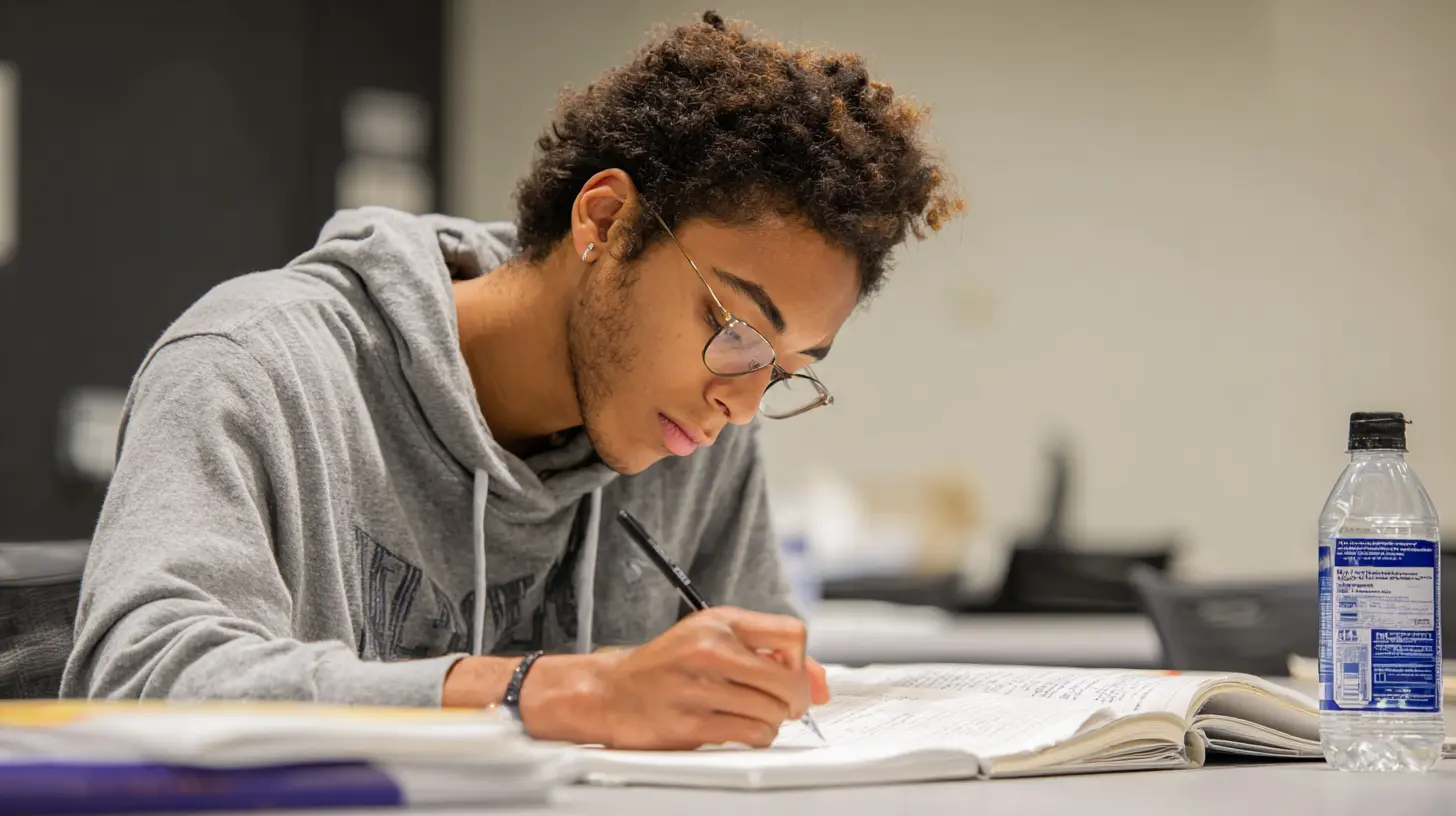
Você já sentiu que, apesar de anotar tudo em uma reunião ou aula, a informação parece desaparecer da sua mente minutos depois? Este vídeo revela por que o seu laptop pode ser o maior inimigo do seu aprendizado e como a “antiga” tecnologia da caneta e do papel ativa circuitos neurais que a digitação simplesmente não consegue alcançar. Ao explorar estudos de Harvard e da UCLA, você descobrirá que escrever à mão não é apenas um hábito nostálgico, mas uma vantagem cognitiva estratégica que aumenta a retenção em 34% e transforma dados brutos em compreensão real. Aprenda a escapar da “ilusão de produtividade” e domine as três táticas práticas usadas por grandes mentes como Bill Gates e Richard Branson para pensar com mais clareza e nunca mais esquecer o que realmente importa.
| Audio | |
|---|---|
Normal | Slow |
| English Transcript | Tradução |
| Handwriting Rewires Your Brain for Intelligence. | Escrever à mão reconfigura o seu cérebro para inteligência |
| What if I told you that this ancient technology — pen and paper — is more powerful for your brain than any app on your phone? | E se eu te dissesse que esta tecnologia antiga, papel e caneta, é mais poderosa para o seu cérebro do que qualquer aplicativo no seu telefone? |
| Imagine you're sitting in an important presentation. The speaker is sharing insights you need to remember. You look around the room: half the people are typing on laptops, fingers flying across keyboards and screens glowing; the other half are writing by hand, slower and more deliberate, pens moving across paper. Everyone's capturing the same information, but if neuroscientists could peer inside their brains right now, they'd see something startling. | Imagine que você está sentado em uma apresentação importante. O palestrante está compartilhando percepções que você precisa lembrar. Você olha ao redor da sala. Metade das pessoas está digitando em laptops, dedos voando sobre teclados, telas brilhando. A outra metade está escrevendo à mão, de forma mais lenta e deliberada, canetas movendo-se sobre o papel. Todos estão capturando a mesma informação, mas se neurocientistas pudessem espiar dentro de seus cérebros agora, veriam algo surpreendente. |
| The laptop users' brains show minimal activity: a small cluster of neurons managing finger movements — that’s it. The rest is quiet. But the handwriters? Their brains are alive, with multiple regions lit up simultaneously and neural pathways communicating in complex patterns across the entire cortex. Same room, same content, radically different brain engagement. | Os usuários de laptop, seus cérebros mostram atividade mínima. Um pequeno aglomerado de neurônios gerenciando os movimentos dos dedos. É só isso. O resto em silêncio. Mas os que escrevem à mão, seus cérebros estão vivos. Múltiplas regiões acesas simultaneamente. Caminhos neurais comunicando-se em padrões complexos por todo o córtex. Mesma sala, mesmo conteúdo, engajamento cerebral radicalmente diferente. |
| And this is exactly what researchers discovered in the lab. We're living in the age of digital everything; the average person types ten times more than they write, and notebooks are becoming obsolete. We've convinced ourselves that faster is better, but here's what nobody tells you: studies from Princeton and UCLA tested students learning the exact same material. Half typed notes, half wrote by hand. The laptop users wrote more — their notes were longer, more detailed, and more complete — yet, when tested on conceptual understanding, they scored 20% lower. They performed 20% worse despite having "better" notes. | E isso é exatamente o que pesquisadores descobriram no laboratório. Estamos vivendo na era do tudo digital. A pessoa média digita 10 vezes mais do que escreve. Cadernos estão se tornando obsoletos. Nós nos convencemos de que mais rápido é melhor. Mas aqui está o que ninguém te conta. Estudos de Princeton e da UCLA testaram alunos aprendendo exatamente o mesmo material. Metade digitou notas, metade escreveu à mão. Os usuários de laptop escreveram mais. Suas notas eram mais longas, mais detalhadas, mais completas. No entanto, quando testados em compreensão conceitual, eles pontuaram 20% menos, 20% pior, apesar de terem notas melhores. |
| The reason? Typing creates what psychologists call the "illusion of learning." Your fingers move, information flows onto the screen, and you feel productive; but your brain is barely engaged. You're collecting data, not processing understanding. And this isn't just about students in classrooms. If you're in meetings, reading books, or trying to master complex ideas, this affects how well you actually learn and remember anything that matters. | O motivo? Digitar cria o que psicólogos chamam de ilusão de aprendizado. Seus dedos se movem. A informação flui para a tela. Você se sente produtivo. Mas seu cérebro, ele está mal engajado. Você está coletando dados, não processando entendimento. E isso não é apenas sobre estudantes em salas de aula. Se você está em reuniões, lendo livros, tentando dominar ideias complexas, isso afeta o quão bem você realmente aprende e lembra de qualquer coisa que importe. |
| So, what's really happening in your brain, and how do you fix it? Let's start with what neuroscience has discovered. Researchers using brain imaging technology found that when you write by hand, three distinct areas of your brain activate simultaneously: your motor cortex controls the precise movement of each letter; your visual processing areas track every curve and stroke you create; and your language circuits engage deeply with the meaning of what you're writing. | Então, o que está realmente acontecendo no seu cérebro? E como você conserta isso? Vamos começar com o que a neurociência descobriu. Pesquisadores usando tecnologia de imagem cerebral descobriram que, quando você escreve à mão, três áreas distintas do seu cérebro ativam simultaneamente. Seu córtex motor controla o movimento preciso de cada letra. Suas áreas de processamento visual rastreiam cada curva e traço que você cria, e seus circuitos de linguagem engajam-se profundamente com o significado do que você está escrevendo. |
| But when you type, only your motor cortex lights up. You're just pressing buttons; the rest of your brain is disengaged. Think about the actual mechanics: when you write the letter "S," your hand creates a unique flowing gesture. The letter "T" demands something different — a vertical line, then a cross. Every letter requires your brain to actively construct its shape. But on a keyboard, every key feels identical. Click, click, click. No cognitive effort required. | Mas quando você digita, apenas seu córtex motor acende. Você está apenas pressionando botões. O resto do seu cérebro está desengajado. Pense sobre a mecânica real. Quando você escreve a letra S, sua mão cria um gesto fluído único. A letra T exige algo diferente. Uma linha vertical, depois uma cruz. Cada letra exige que seu cérebro construa ativamente sua forma. Mas em um teclado, cada tecla parece idêntica. Clique, clique, clique. Nenhum esforço cognitivo necessário. |
| And here's where it gets really interesting. Scientists monitoring brain waves discovered that handwriting produces specific electrical patterns — theta waves and alpha waves — that pulse in harmony across your entire brain. These aren't random signals. Theta waves encode new information and boost your working memory, while alpha waves cement that information into long-term storage. These exact patterns are the signature of deep learning; they don't appear when you type. | E aqui é onde fica realmente interessante. Cientistas monitorando ondas cerebrais descobriram que a caligrafia produz padrões elétricos específicos, ondas theta e ondas alfa, que pulsam em harmonia por todo o seu cérebro. Sinais estes que não são aleatórios. Ondas theta codificam novas informações e impulsionam sua memória de trabalho. Ondas alfa cimentam essa informação no armazenamento de longo prazo. Estes padrões exatos são a assinatura do aprendizado profundo. Eles não aparecem quando você digita. |
| Your brain also has something called the Reticular Activating System. Think of it as your neural attention filter; it decides what information is important enough to actually remember. When you engage your hand, your eyes, and your thinking simultaneously, you're sending a powerful message to this system: "Pay attention. This matters. Store this." | Seu cérebro também tem algo chamado sistema ativador reticular. Pense nele como seu filtro neural de atenção. Ele decide qual informação é importante o suficiente para realmente lembrar. Quando você engaja sua mão, seus olhos e seu pensamento simultaneamente, você está enviando uma mensagem poderosa para este sistema. Preste atenção. Isso importa. Armazene isso. |
| A study from Tokyo University proved the impact: students who wrote notes by hand had 34% better recall one week later compared to those who typed. Not 5% better, not 10%, but 34%. But why such a dramatic difference? Because handwriting forces your brain to do three things typing completely bypasses: | Um estudo da Universidade de Tóquio provou o impacto. Alunos que escreveram notas à mão tiveram uma retenção 34% melhor uma semana depois em comparação com aqueles que digitaram. Não 5% melhor, não 10%, 34%. Mas por que uma diferença tão dramática? Porque a caligrafia força seu cérebro a fazer três coisas que a digitação ignora completamente. |
| 1. Encoding: The slower speed means you can't transcribe word for word. You have to think, select what matters, and rephrase. You're processing, not recording. | 1. Codificação. A velocidade mais lenta significa que você não pode transcrever palavra por palavra. Você tem que pensar, selecionar o que importa e parafrasear. Você está processando, não gravando. |
| 2. Consolidation: The hand-eye-brain coordination creates multiple memory pathways. You remember the visual layout of the page, the motor sensation of writing, and the spatial location of where you wrote something. | 2. Consolidação. A coordenação mão-olho-cérebro cria múltiplos caminhos de memória. Você lembra do layout visual da página, da sensação motora da escrita, da localização espacial de onde escreveu algo. |
| 3. Retrieval: Later, when you need to recall information, your brain has multiple "hooks" to grab onto. You don't just remember the idea; you remember writing it in the top corner, how your hand moved, and how it connected to the point above it. | 3. Recuperação. Mais tarde, quando você precisar recordar a informação, seu cérebro tem múltiplos ganchos para segurar. Você não apenas lembra da ideia. Você lembra de escrevê-la no canto superior, como sua mão se moveu, como ela se conectou ao ponto acima dela. |
| This is exactly what Princeton researchers found. Laptop users transcribed lectures almost word for word, while handwriters were forced to synthesize and summarize. On tests, the handwriters scored 23% higher on conceptual questions. Your brain wasn't designed for keyboards; it was designed for hands. | Isso é exatamente o que os pesquisadores de Princeton descobriram. Usuários de laptop transcreveram palestras quase palavra por palavra. Escritores à mão foram forçados a sintetizar e resumir. Em testes, os escritores à mão pontuaram 23% mais em questões conceituais. Seu cérebro não foi projetado para teclados. Ele foi projetado para as mãos. |
| The Stupidity Traps | As armadilhas da estupidez |
| Now, here's where smart people make critical mistakes. | Agora, aqui é onde pessoas inteligentes cometem erros críticos. |
| Trap number one: Confusing speed with productivity. "I can type 80 words per minute, so I'll capture more information and learn more." But that logic is backwards. When learning is too easy, it doesn't stick. This is what psychologist Robert Bjork calls "desirable difficulty." The effort of handwriting is precisely what makes it effective. | Armadilha número um: Confundir velocidade com produtividade. Eu posso digitar 80 palavras por minuto, então capturarei mais informações e aprenderei mais. Mas essa lógica é invertida. Quando o aprendizado é fácil demais, ele não fixa. Isso é o que o psicólogo Robert Bjork chama de dificuldade desejável. O esforço da caligrafia é precisamente o que a torna eficaz. |
| Trap number two: The multitasking delusion. When you're on a laptop, the temptation is constant — check email, open a tab, look something up. Your attention fragments into pieces. Research shows this divided attention causes a 40% drop in retention. With pen and paper, no notifications and no distractions — just you and the information. | Armadilha número um dois: A ilusão da multitarefa. Quando você está em um laptop, a tentação é constante. Checar e-mail, abrir uma aba, pesquisar algo, sua atenção se fragmenta em pedaços. Pesquisas mostram que essa atenção dividida causa uma queda de 40% na retenção. Com papel e caneta, sem notificações, sem distrações, apenas você e a informação. |
| Trap number three: Overconfidence in your notes. You type pages of detailed notes and think, "I've got this covered." But without proper encoding, there's nothing to retrieve later. You have the information stored externally, but you don't actually own it internally. | Armadilha número três: Excesso de confiança em suas notas. Você digita páginas de notas detalhadas e pensa: "estou com isso coberto", mas sem a codificação adequada, não há nada para recuperar depois. Você tem a informação armazenada externamente, mas você não a possui realmente internamente. |
| Let me tell you about a student who learned this lesson. She was one of the most dedicated students in her class: always early, front row, never missed an assignment. She typed so fast during lectures she could have been a professional transcriptionist, but the information wasn't sticking. Despite having the most complete notes in the class, lectures went in one ear and straight out the other. | Deixe-me contar sobre uma aluna que aprendeu esta lição. Ela era uma das estudantes mais dedicadas em sua classe. Sempre cedo, primeira fila, nunca perdeu uma tarefa. Ela digitava muito rápido durante as palestras. Ela poderia ter sido uma transcritora profissional. Mas a informação não estava fixando. Apesar de ter as notas mais completas da classe, as palestras entravam por um ouvido e saíam direto pelo outro. |
| Her professor suggested one simple change: pick up a pen. The results were immediate. Suddenly, she couldn't transcribe everything; she had to think. She had to choose what mattered, she had to put ideas into her own words. Her comprehension and grades transformed — not because she studied harder, but because she was finally encoding the material properly. | Seu professor sugeriu uma mudança simples. Pegue uma caneta. Os resultados foram imediatos. De repente, ela não podia transcrever tudo, ela tinha que pensar. Ela tinha que escolher o que importava. Ela tinha que colocar as ideias em suas próprias palavras. Sua compreensão e notas se transformaram não porque ela estudou mais, mas porque ela estava finalmente codificando o material adequadamente. |
| The Practical Framework. | A estrutura prática |
| So, what do you actually do with this information? Let me give you three principles that leverage how your brain actually works: | Então o que você realmente faz com essa informação? Deixe-me te dar três princípios que alavancam como seu cérebro realmente funciona. |
| Principle One: Slow down to speed up. | Princípio um, desacelere para acelerar. |
| When you're in a meeting or learning something important, resist the urge to capture everything. Your hand can't write at the speed of speech, and that's the point. Force yourself to listen first, then write only what matters in your own words. Not transcription — translation. This feels slower in the moment, but a week later, you'll remember 30% more than the person who typed frantically. | Quando você estiver em uma reunião ou aprendendo algo importante, resista ao impulso de capturar tudo. Sua mão não pode escrever na velocidade da fala. E esse é o ponto. Force-se a ouvir primeiro, depois escreva apenas o que importa em suas próprias palavras, não transcrição, tradução. Isso parece mais lento no momento, mas uma semana depois, você lembrará 30% mais do que a pessoa que digitou freneticamente. |
| Principle Two: Make it visual, make it yours. | Princípio dois, torne visual, torne seu. |
| Your handwritten notes should look messy and personal. Draw arrows between related ideas, underline what surprises you, put question marks next to things you don't fully understand, and sketch a quick diagram if it helps. These aren't aesthetic choices; they're memory anchors. When you review later, your brain doesn't just see words — it sees a landscape of your thinking. This is why borrowing someone else's handwritten notes rarely works; you're missing the "cognitive fingerprint" that makes them stick. | Suas notas manuscritas devem parecer bagunçadas e pessoais. Desenhe setas entre ideias relacionadas. Sublinhe o que te surpreende. Coloque pontos de interrogação ao lado de coisas que você não entende totalmente. Esboce um diagrama rápido se ajudar. Escolhas estas que não são estéticas, são âncoras de memória. Quando você revisar mais tarde, seu cérebro não vê apenas palavras. Ele vê uma paisagem do seu pensamento. É por isso que pegar emprestado as notas manuscritas de outra pessoa raramente funciona. Você está perdendo a impressão digital cognitiva que as faz fixar. |
| Principle Three: Write to review. | Princípio três, escreva para revisar. |
| Here's what high performers do differently: after a meeting or lecture, they don't just file their notes away. Within 24 hours, they write a brief summary from memory without looking at the original notes first. This retrieval practice is what neuroscience calls the "testing effect." You're not just reviewing information; you're strengthening the exact neural pathways you'll need when it matters. | Aqui está o que pessoas de alto desempenho fazem de diferente. Após uma reunião ou palestra, elas não apenas arquivam suas notas dentro de 24 horas. Elas escrevem um breve resumo de memória sem olhar para as notas originais primeiro. Esta prática de recuperação é o que a neurociência chama de efeito de teste. Você não está apenas revisando informações. Você está fortalecendo os caminhos neurais exatos que precisará quando importar. |
| Richard Branson credits his handwritten notebooks for building Virgin. Bill Gates takes handwritten notes during his famous "think weeks." J.K. Rowling plotted all seven Harry Potter books by hand. These aren't nostalgic habits; they're cognitive advantages. The pattern is clear: high achievers use handwriting for thinking, not just recording. | Richard Branson credita aos seus cadernos manuscritos à construção da Virgin. Bill Gates toma notas manuscritas durante suas famosas semanas de pensamento. JK Rowling planejou todos os sete livros de Harry Potter à mão. Hábitos estes que não são nostálgicos. São vantagens cognitivas. O padrão é claro. Grandes realizadores usam a caligrafia para pensar, não apenas para registrar. |
| The most powerful tool for thinking costs 50 cents and fits in your pocket. Every time you choose handwriting, you're choosing real learning over the illusion of productivity. | A ferramenta mais poderosa para pensar custa 50 centavos e cabe no seu bolso. Toda vez que você escolhe a caligrafia, você está escolhendo o aprendizado real em vez da ilusão de produtividade. |
Contagem de palavras
A tabela abaixo exibe as palavras encontradas neste vídeo, bem como o número de vezes em que aparecem.
Veja também: Para que serve esta tabela?
| Freq. | Palavra | Freq. | Palavra | Freq. | Palavra |
|---|---|---|---|---|---|
| 62 | the | 46 | you | 34 | your |
| 33 | and | 25 | is | 24 | are |
| 22 | not | 21 | to | 20 | a |
| 18 | what | 18 | of | 18 | in |
| 18 | brain | 17 | it | 16 | this |
| 14 | but | 12 | when | 12 | that |
| 12 | notes | 12 | information | 10 | hand |
| 10 | do | 9 | they | 9 | she |
| 9 | more | 9 | for | 8 | just |
| 7 | write | 7 | remember | 7 | on |
| 6 | with | 6 | think | 6 | something |
| 6 | one | 6 | learning | 6 | handwriting |
| 5 | waves | 5 | was | 5 | up |
| 5 | three | 5 | matters | 5 | later |
| 5 | how | 5 | have | 5 | by |
| 5 | actually | 4 | wrote | 4 | writing |
| 4 | words | 4 | word | 4 | who |
| 4 | typed | 4 | type | 4 | thinking |
| 4 | these | 4 | their | 4 | students |
| 4 | speed | 4 | so | 4 | same |
| 4 | memory | 4 | letter | 4 | laptop |
| 4 | if | 4 | i | 4 | here |
| 4 | her | 4 | handwritten | 4 | half |
| 4 | had | 4 | every | 4 | better |
| 4 | attention | 4 | across | 3 | will |
| 3 | where | 3 | were | 3 | visual |
| 3 | users | 3 | typing | 3 | trap |
| 3 | than | 3 | slower | 3 | simultaneously |
| 3 | researchers | 3 | processing | 3 | principle |
| 3 | powerful | 3 | pen | 3 | patterns |
| 3 | pathways | 3 | paper | 3 | own |
| 3 | or | 3 | number | 3 | no |
| 3 | neural | 3 | need | 3 | multiple |
| 3 | motor | 3 | most | 3 | make |
| 3 | look | 3 | let | 3 | lectures |
| 3 | into | 3 | important | 3 | ideas |
| 3 | has | 3 | handwriters | 3 | from |
| 3 | exact | 3 | everything | 3 | encoding |
| 3 | discovered | 3 | creates | 3 | could |
| 3 | cortex | 3 | cognitive | 3 | click |
| 3 | brains | 3 | because | 3 | about |
| 2 | works | 2 | without | 2 | why |
| 2 | while | 2 | week | 2 | we |
| 2 | understanding | 2 | two | 2 | transcribe |
| 2 | things | 2 | theta | 2 | then |
| 2 | tested | 2 | technology | 2 | system |
| 2 | stick | 2 | see | 2 | scored |
| 2 | room | 2 | review | 2 | retrieval |
| 2 | rest | 2 | recording | 2 | recall |
| 2 | really | 2 | put | 2 | productivity |
| 2 | princeton | 2 | point | 2 | person |
| 2 | people | 2 | other | 2 | onto |
| 2 | only | 2 | now | 2 | notebooks |
| 2 | neuroscience | 2 | meeting | 2 | me |
| 2 | material | 2 | makes | 2 | learn |
| 2 | keyboards | 2 | illusion | 2 | his |
| 2 | high | 2 | having | 2 | found |
| 2 | first | 2 | fingers | 2 | feels |
| 2 | exactly | 2 | entire | 2 | engage |
| 2 | effort | 2 | during | 2 | does |
| 2 | different | 2 | detailed | 2 | despite |
| 2 | designed | 2 | conceptual | 2 | complex |
| 2 | complete | 2 | class | 2 | choose |
| 2 | capture | 2 | cannot | 2 | calls |
| 2 | books | 2 | at | 2 | areas |
| 2 | an | 2 | alpha | 1 | yourself |
| 1 | yours | 1 | yet | 1 | would |
| 1 | worse | 1 | working | 1 | within |
| 1 | went | 1 | well | 1 | weeks |
| 1 | virgin | 1 | vertical | 1 | using |
| 1 | use | 1 | us | 1 | urge |
| 1 | university | 1 | unique | 1 | understand |
| 1 | underline | 1 | ucla | 1 | types |
| 1 | trying | 1 | traps | 1 | translation |
| 1 | transformed | 1 | transcriptionist | 1 | transcription |
| 1 | transcribed | 1 | track | 1 | top |
| 1 | tool | 1 | too | 1 | told |
| 1 | tokyo | 1 | times | 1 | time |
| 1 | those | 1 | there | 1 | them |
| 1 | tests | 1 | testing | 1 | term |
| 1 | ten | 1 | temptation | 1 | tells |
| 1 | tell | 1 | takes | 1 | tab |
| 1 | t | 1 | synthesize | 1 | surprises |
| 1 | summary | 1 | summarize | 1 | suggested |
| 1 | suddenly | 1 | such | 1 | stupidity |
| 1 | study | 1 | studies | 1 | studied |
| 1 | student | 1 | stroke | 1 | strengthening |
| 1 | straight | 1 | stored | 1 | store |
| 1 | storage | 1 | sticking | 1 | startling |
| 1 | start | 1 | speech | 1 | specific |
| 1 | speaker | 1 | spatial | 1 | someone |
| 1 | smart | 1 | small | 1 | slow |
| 1 | sketch | 1 | sitting | 1 | simple |
| 1 | signature | 1 | signals | 1 | shows |
| 1 | show | 1 | should | 1 | sharing |
| 1 | shape | 1 | seven | 1 | sensation |
| 1 | sending | 1 | select | 1 | sees |
| 1 | screens | 1 | screen | 1 | scientists |
| 1 | s | 1 | rowling | 1 | row |
| 1 | robert | 1 | right | 1 | richard |
| 1 | rewires | 1 | reviewing | 1 | retrieve |
| 1 | reticular | 1 | retention | 1 | results |
| 1 | resist | 1 | research | 1 | requires |
| 1 | required | 1 | rephrase | 1 | related |
| 1 | regions | 1 | reason | 1 | real |
| 1 | reading | 1 | rarely | 1 | random |
| 1 | radically | 1 | quiet | 1 | quick |
| 1 | questions | 1 | question | 1 | pulse |
| 1 | psychologists | 1 | psychologist | 1 | proved |
| 1 | properly | 1 | proper | 1 | professor |
| 1 | professional | 1 | productive | 1 | produces |
| 1 | principles | 1 | pressing | 1 | presentation |
| 1 | precisely | 1 | precise | 1 | practice |
| 1 | practical | 1 | potter | 1 | |
| 1 | plotted | 1 | pieces | 1 | pick |
| 1 | phone | 1 | personal | 1 | performers |
| 1 | performed | 1 | per | 1 | pens |
| 1 | peer | 1 | pay | 1 | pattern |
| 1 | pages | 1 | page | 1 | overconfidence |
| 1 | over | 1 | out | 1 | ourselves |
| 1 | original | 1 | open | 1 | obsolete |
| 1 | notifications | 1 | nothing | 1 | nostalgic |
| 1 | nobody | 1 | next | 1 | new |
| 1 | never | 1 | neuroscientists | 1 | neurons |
| 1 | multitasking | 1 | moving | 1 | movements |
| 1 | movement | 1 | moved | 1 | move |
| 1 | monitoring | 1 | moment | 1 | mistakes |
| 1 | missing | 1 | missed | 1 | minute |
| 1 | minimal | 1 | messy | 1 | message |
| 1 | meetings | 1 | mechanics | 1 | means |
| 1 | meaning | 1 | mattered | 1 | master |
| 1 | marks | 1 | managing | 1 | lower |
| 1 | looking | 1 | longer | 1 | long |
| 1 | logic | 1 | location | 1 | living |
| 1 | lit | 1 | listen | 1 | line |
| 1 | lights | 1 | leverage | 1 | lesson |
| 1 | lecture | 1 | learned | 1 | layout |
| 1 | laptops | 1 | language | 1 | landscape |
| 1 | lab | 1 | keyboard | 1 | key |
| 1 | k | 1 | j | 1 | its |
| 1 | internally | 1 | interesting | 1 | intelligence |
| 1 | insights | 1 | inside | 1 | impact |
| 1 | immediate | 1 | imaging | 1 | imagine |
| 1 | identical | 1 | idea | 1 | hours |
| 1 | hooks | 1 | higher | 1 | helps |
| 1 | harry | 1 | harmony | 1 | harder |
| 1 | happening | 1 | hands | 1 | habits |
| 1 | grades | 1 | grab | 1 | got |
| 1 | glowing | 1 | give | 1 | gets |
| 1 | gesture | 1 | gates | 1 | fully |
| 1 | front | 1 | frantically | 1 | framework |
| 1 | fragments | 1 | forces | 1 | forced |
| 1 | force | 1 | flying | 1 | flows |
| 1 | flowing | 1 | fix | 1 | fits |
| 1 | fingerprint | 1 | finger | 1 | finally |
| 1 | filter | 1 | file | 1 | feel |
| 1 | faster | 1 | fast | 1 | famous |
| 1 | eyes | 1 | eye | 1 | externally |
| 1 | everyone | 1 | enough | 1 | engagement |
| 1 | engaged | 1 | encode | 1 | |
| 1 | else | 1 | electrical | 1 | effective |
| 1 | effect | 1 | easy | 1 | early |
| 1 | ear | 1 | each | 1 | drop |
| 1 | draw | 1 | dramatic | 1 | down |
| 1 | divided | 1 | distractions | 1 | distinct |
| 1 | disengaged | 1 | digital | 1 | difficulty |
| 1 | differently | 1 | difference | 1 | diagram |
| 1 | desirable | 1 | demands | 1 | delusion |
| 1 | deliberate | 1 | deeply | 1 | deep |
| 1 | dedicated | 1 | decides | 1 | data |
| 1 | curve | 1 | cross | 1 | critical |
| 1 | credits | 1 | create | 1 | covered |
| 1 | costs | 1 | corner | 1 | coordination |
| 1 | convinced | 1 | controls | 1 | content |
| 1 | construct | 1 | constant | 1 | consolidation |
| 1 | connected | 1 | confusing | 1 | comprehension |
| 1 | completely | 1 | compared | 1 | communicating |
| 1 | collecting | 1 | cluster | 1 | clear |
| 1 | classrooms | 1 | circuits | 1 | choosing |
| 1 | choices | 1 | check | 1 | change |
| 1 | cents | 1 | cement | 1 | causes |
| 1 | capturing | 1 | can | 1 | called |
| 1 | call | 1 | bypasses | 1 | buttons |
| 1 | building | 1 | brief | 1 | branson |
| 1 | borrowing | 1 | boost | 1 | bjork |
| 1 | bill | 1 | between | 1 | been |
| 1 | becoming | 1 | barely | 1 | backwards |
| 1 | away | 1 | average | 1 | assignment |
| 1 | as | 1 | arrows | 1 | around |
| 1 | appear | 1 | app | 1 | anything |
| 1 | any | 1 | ancient | 1 | anchors |
| 1 | always | 1 | also | 1 | almost |
| 1 | all | 1 | alive | 1 | age |
| 1 | after | 1 | affects | 1 | aesthetic |
| 1 | advantages | 1 | actual | 1 | activity |
| 1 | actively | 1 | activating | 1 | activate |
| 1 | achievers | 1 | above |