
Vídeo | The habits geniuses use to speak multiple languages fluently
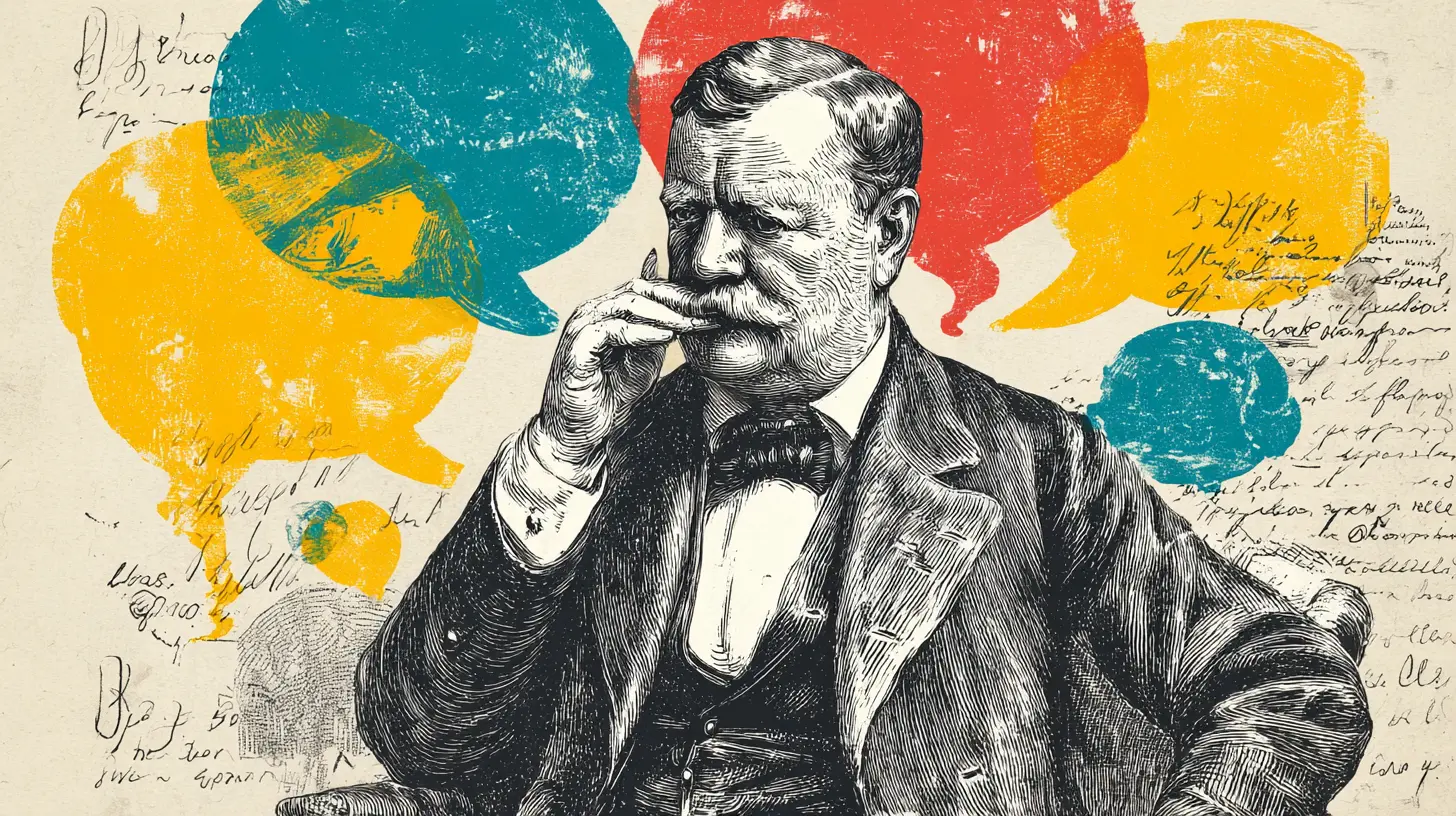
Dominar um novo idioma não precisa ser uma batalha exaustiva contra regras gramaticais e listas de memorização que parecem evaporar da mente no momento em que precisamos falar. Este vídeo nos revela os segredos dos maiores poliglotas da história e da atualidade, mostrando que a verdadeira fluência nasce da aquisição e não do simples estudo burocrático. Ao adotar hábitos práticos, como a imersão cultural apaixonada, o uso da expressão corporal e a mudança da própria identidade, você descobre que qualquer adulto pode integrar uma nova língua de forma natural e profunda. Descubra como transformar o aprendizado em um estilo de vida e descubra como fazer o idioma deixar de ser um dado na sua cabeça para se tornar parte de quem você é.
| Audio | |
|---|---|
Normal | Slow |
| English Transcript | Tradução |
| The habits geniuses use to speak multiple languages fluently | Os hábitos que gênios usam para falar múltiplos idiomas fluentemente |
| You've been learning a language for years. Apps, books, grammar rules, vocabulary lists. Then someone asks you a simple question. Your mind goes blank. Your mouth freezes. Why do years of learning still leave you speechless? A few years ago, I started studying people called polyglots. A polyglot is someone who speaks multiple languages fluently. | Você vem aprendendo um idioma há anos. Aplicativos, livros, regras gramaticais, listas de vocabulário. Então, alguém lhe faz uma pergunta simples. Sua mente dá um branco. Sua boca trava. Por que anos de aprendizado ainda deixam você sem fala? Há alguns anos, comecei a estudar pessoas chamadas poliglotas. Um poliglota é alguém que fala múltiplos idiomas fluentemente. |
| Sometimes six, 8, even 20. Thinkers like Gerta and Nze were multilingual using languages to sharpen their thinking. Even modern polyglotss like Steve Kaufman, he learned most of his languages after 40 and now speaks over 20. Luca Lampereelloo speaks more than 10 languages. Alexander Argues mastered multiple languages, and you'll see how in this video. | Às vezes seis, 8, até 20. Pensadores como Goethe e Nietzsche eram multilíngues, usando idiomas para afiar seu raciocínio. Mesmo poliglotas modernos como Steve Kaufmann; ele aprendeu a maioria de seus idiomas após os 40 e agora fala mais de 20. Luca Lampariello fala mais de 10 idiomas. Alexander Arguelles dominou múltiplas línguas, e você verá como neste vídeo. |
| Benny Lewis, the fluent in three months guy, speaks boldly from day one. Different people, different times. All of this is possible with the habits and principles you'll learn in this video. Habits that let you acquire multiple languages quickly, naturally, with love, and without forgetting. Languages that don't just live in your head, but become a part of who you are. | Benny Lewis, o cara do "fluente em três meses", fala com ousadia desde o primeiro dia. Pessoas diferentes, tempos diferentes. Tudo isso é possível com os hábitos e princípios que você aprenderá neste vídeo. Hábitos que permitem adquirir múltiplos idiomas de forma rápida, natural, com amor e sem esquecer. Idiomas que não vivem apenas na sua cabeça, mas se tornam parte de quem você é. |
| But before we dive into the habits, one key insight. Polyglots don't just learn a language, they acquire it. Learning equals memorizing. Acquisition equals living the language. It's how children learn through context, emotion, repetition, and real use. That's why apps and vocab lists alone often fail. They don't create real acquisition. | Mas antes de mergulharmos nos hábitos, uma percepção fundamental. Poliglotas não apenas aprendem um idioma, eles o adquirem. Aprendizado é igual a memorizar. Aquisição é igual a viver o idioma. É como as crianças aprendem através do contexto, emoção, repetição e uso real. É por isso que aplicativos e listas de vocabulário sozinhos frequentemente falham. Eles não criam uma aquisição real. |
| All right, let's go straight to polyglot habits. | Tudo bem, vamos direto aos hábitos dos poliglotas. |
| Habit one, fall in love with the culture first. Polyglots never separate language from culture. Luca Lampariello says, "If you don't love the culture, the language won't stick." Listen to songs, watch movies, read short stories, learn about traditions. Action. Pick one language. Spend 30 minutes daily immersed in its culture without thinking about grammar or rules. | Hábito um: apaixone-se pela cultura primeiro. Poliglotas nunca separam o idioma da cultura. Luca Lampariello diz: "Se você não amar a cultura, o idioma não vai fixar". Ouça músicas, assista a filmes, leia contos, aprenda sobre tradições. Ação. Escolha um idioma. Passe 30 minutos diários imerso em sua cultura sem pensar em gramática ou regras. |
| Habit two, use your voice and body. Polyglots don't whisper or mumble. They speak out loud with exaggerated pronunciation. Don't be shy. Practice in front of a mirror if needed. Make the sounds big and clear. Alexander Arguas reads aloud while walking, repeating poems and dialogues. This trains rhythm, intonation, and memory. Action. Speak, read, or sing out loud daily. Move while practicing. Make the language live in your body, not just your head. | Hábito dois: use sua voz e seu corpo. Poliglotas não sussurram ou murmuram. Eles falam em voz alta com pronúncia exagerada. Não seja tímido. Pratique na frente de um espelho, se necessário. Faça os sons grandes e claros. Alexander Arguelles lê em voz alta enquanto caminha, repetindo poemas e diálogos. Isso treina o ritmo, a entonação e a memória. Ação. Fale, leia ou cante em voz alta diariamente. Movimente-se enquanto pratica. Faça o idioma viver no seu corpo, não apenas na sua cabeça. |
| Habit three, connect words to meaning, not translation. Polyglots avoid constant translation. Each word or phrase is linked to images, feelings, experiences, or situations, not your native language. Action. Create mental pictures, many stories, or emotional hooks for new words. | Hábito três: conecte palavras ao significado, não à tradução. Poliglotas evitam a tradução constante. Cada palavra ou frase é ligada a imagens, sentimentos, experiências ou situações, não à sua língua nativa. Ação. Crie imagens mentais, minihistórias ou ganchos emocionais para palavras novas. |
| Habit four, input before output. Steve Kaufman reads books and listens to podcasts long before he speaks. Confusion is normal. Mistakes are invisible at this stage. Action. Spend 30 to 60 minutes daily consuming content in the language. Don't worry about speaking perfectly yet. Let your brain absorb patterns naturally. | Hábito quatro: entrada antes da saída. Steve Kaufmann lê livros e ouve podcasts muito antes de falar. A confusão é normal. Erros são invisíveis nesta fase. Ação. Passe de 30 a 60 minutos diariamente consumindo conteúdo no idioma. Não se preocupe em falar perfeitamente ainda. Deixe seu cérebro absorver padrões naturalmente. |
| Habit five, identity shift. Polyglots stop saying, "I'm learning Spanish." They say, "I'm a Spanish speaker in progress." Identity changes behavior. What feels like effort becomes habit. Action. Define yourself as a speaker, even imperfect. Make your language part of your identity. | Hábito cinco: mudança de identidade. Poliglotas param de dizer: "Estou aprendendo espanhol". Eles dizem: "Sou um falante de espanhol em progresso". A identidade muda o comportamento. O que parece esforço torna-se hábito. Ação. Defina-se como um falante, mesmo que imperfeito. Faça do seu idioma parte da sua identidade. |
| Habit six, daily contact beats intensity. Polyglots don't cram. They interact with the language every day. 20 to 30 minutes daily beats 3 hours once a week. Action. Create many routines. Read a paragraph. Listen to a song. Speak a few sentences. Small but consistent. | Hábito seis: contato diário vence a intensidade. Poliglotas não se sobrecarregam de estudar. Eles interagem com o idioma todos os dias. 20 a 30 minutos diários vencem 3 horas uma vez por semana. Ação. Crie minirotinas. Leia um parágrafo. Ouça uma música. Fale algumas frases. Pequeno, mas consistente. |
| Habit seven. Focus on meaningful repetition. Polyglots repeat what matters. Songs, stories, phrases, and content they enjoy. Random flash cards don't work. Context and emotion do. Action. Pick favorite content. Repeat daily. Over time, repetition builds fluency without forcing memorization. | Hábito sete: foque na repetição significativa. Poliglotas repetem o que importa. Músicas, histórias, frases e conteúdos que eles gostam. Cartões de memória aleatórios não funcionam. Contexto e emoção sim. Ação. Escolha o conteúdo favorito. Repita diariamente. Com o tempo, a repetição constrói a fluência sem forçar a memorização. |
| Habit eight. Adults can acquire languages effectively. Many think learning languages is too hard after 30. Polyglots prove this wrong. Adults learn more deeply when they use meaning, context, and culture. Action. Embrace your adult brain. Focus on understanding, immersion, and habits, not speed. Stop trying to learn a language. Start acquiring it. Immerse in the culture. Make the language part of who you are. No matter when you start, you can still become fluent. | Hábito oito: adultos podem adquirir idiomas de forma eficaz. Muitos pensam que aprender idiomas é difícil demais depois dos 30. Poliglotas provam que isso está errado. Adultos aprendem mais profundamente quando usam significado, contexto e cultura. Ação. Aceite seu cérebro adulto. Foque na compreensão, imersão e hábitos, não na velocidade. Pare de tentar aprender um idioma. Comece a adquiri-lo. Mergulhe na cultura. Faça do idioma parte de quem você é. Não importa quando você comece, você ainda pode se tornar fluente. |
| What about you? Which culture do you love and wish you could speak its language? | E você? Qual cultura você ama e gostaria de poder falar o idioma dela? |
Contagem de palavras
A tabela abaixo exibe as palavras encontradas neste vídeo, bem como o número de vezes em que aparecem.
Veja também: Para que serve esta tabela?
| Freq. | Palavra | Freq. | Palavra | Freq. | Palavra |
|---|---|---|---|---|---|
| 17 | and | 14 | you | 14 | the |
| 14 | not | 14 | language | 14 | a |
| 12 | do | 11 | your | 11 | to |
| 11 | in | 10 | languages | 9 | polyglots |
| 9 | habit | 8 | action | 7 | they |
| 7 | of | 7 | is | 7 | culture |
| 6 | this | 6 | or | 6 | learn |
| 6 | habits | 6 | daily | 5 | with |
| 5 | speaks | 5 | speak | 5 | learning |
| 4 | use | 4 | one | 4 | multiple |
| 4 | make | 4 | love | 4 | about |
| 3 | years | 3 | without | 3 | will |
| 3 | who | 3 | what | 3 | that |
| 3 | stories | 3 | repetition | 3 | read |
| 3 | part | 3 | minutes | 3 | many |
| 3 | like | 3 | let | 3 | just |
| 3 | it | 3 | identity | 3 | I |
| 3 | even | 3 | create | 3 | context |
| 3 | content | 3 | but | 3 | before |
| 3 | are | 3 | acquire | 2 | words |
| 2 | why | 2 | while | 2 | when |
| 2 | video | 2 | translation | 2 | three |
| 2 | thinking | 2 | stop | 2 | still |
| 2 | steve | 2 | start | 2 | spend |
| 2 | speaker | 2 | spanish | 2 | songs |
| 2 | someone | 2 | six | 2 | rules |
| 2 | repeat | 2 | real | 2 | reads |
| 2 | polyglot | 2 | pick | 2 | people |
| 2 | over | 2 | out | 2 | on |
| 2 | naturally | 2 | more | 2 | meaning |
| 2 | luca | 2 | loud | 2 | live |
| 2 | lists | 2 | listen | 2 | kaufman |
| 2 | its | 2 | if | 2 | how |
| 2 | head | 2 | he | 2 | grammar |
| 2 | from | 2 | for | 2 | focus |
| 2 | fluently | 2 | fluent | 2 | few |
| 2 | equals | 2 | emotion | 2 | different |
| 2 | day | 2 | can | 2 | brain |
| 2 | books | 2 | body | 2 | become |
| 2 | beats | 2 | apps | 2 | am |
| 2 | all | 2 | alexander | 2 | after |
| 2 | adults | 2 | acquisition | 1 | yourself |
| 1 | yet | 1 | wrong | 1 | worry |
| 1 | work | 1 | word | 1 | wish |
| 1 | whisper | 1 | which | 1 | were |
| 1 | week | 1 | we | 1 | watch |
| 1 | walking | 1 | voice | 1 | vocabulary |
| 1 | vocab | 1 | using | 1 | us |
| 1 | understanding | 1 | two | 1 | trying |
| 1 | trains | 1 | traditions | 1 | too |
| 1 | times | 1 | time | 1 | through |
| 1 | thinkers | 1 | think | 1 | then |
| 1 | their | 1 | than | 1 | studying |
| 1 | straight | 1 | stick | 1 | started |
| 1 | stage | 1 | speed | 1 | speechless |
| 1 | speaking | 1 | sounds | 1 | song |
| 1 | sometimes | 1 | small | 1 | situations |
| 1 | sing | 1 | simple | 1 | shy |
| 1 | short | 1 | shift | 1 | sharpen |
| 1 | seven | 1 | separate | 1 | sentences |
| 1 | see | 1 | says | 1 | saying |
| 1 | say | 1 | routines | 1 | right |
| 1 | rhythm | 1 | repeating | 1 | random |
| 1 | quickly | 1 | question | 1 | prove |
| 1 | pronunciation | 1 | progress | 1 | principles |
| 1 | practicing | 1 | practice | 1 | possible |
| 1 | polyglotss | 1 | poems | 1 | podcasts |
| 1 | pictures | 1 | phrases | 1 | phrase |
| 1 | perfectly | 1 | patterns | 1 | paragraph |
| 1 | output | 1 | once | 1 | often |
| 1 | nze | 1 | now | 1 | normal |
| 1 | no | 1 | new | 1 | never |
| 1 | needed | 1 | native | 1 | mumble |
| 1 | multilingual | 1 | movies | 1 | move |
| 1 | mouth | 1 | most | 1 | months |
| 1 | modern | 1 | mistakes | 1 | mirror |
| 1 | mind | 1 | mental | 1 | memory |
| 1 | memorizing | 1 | memorization | 1 | meaningful |
| 1 | matters | 1 | matter | 1 | mastered |
| 1 | long | 1 | living | 1 | listens |
| 1 | linked | 1 | lewis | 1 | leave |
| 1 | learned | 1 | lampereelloo | 1 | lampariello |
| 1 | key | 1 | invisible | 1 | intonation |
| 1 | into | 1 | interact | 1 | intensity |
| 1 | insight | 1 | input | 1 | imperfect |
| 1 | immersion | 1 | immersed | 1 | immerse |
| 1 | images | 1 | hours | 1 | hooks |
| 1 | his | 1 | have | 1 | hard |
| 1 | guy | 1 | goes | 1 | go |
| 1 | gerta | 1 | geniuses | 1 | front |
| 1 | freezes | 1 | four | 1 | forgetting |
| 1 | forcing | 1 | fluency | 1 | flash |
| 1 | five | 1 | first | 1 | feels |
| 1 | feelings | 1 | favorite | 1 | fall |
| 1 | fail | 1 | experiences | 1 | exaggerated |
| 1 | every | 1 | enjoy | 1 | emotional |
| 1 | embrace | 1 | eight | 1 | effort |
| 1 | effectively | 1 | each | 1 | dive |
| 1 | dialogues | 1 | define | 1 | deeply |
| 1 | cram | 1 | could | 1 | contact |
| 1 | consuming | 1 | constant | 1 | consistent |
| 1 | connect | 1 | confusion | 1 | clear |
| 1 | children | 1 | changes | 1 | cards |
| 1 | called | 1 | builds | 1 | boldly |
| 1 | blank | 1 | big | 1 | benny |
| 1 | behavior | 1 | been | 1 | becomes |
| 1 | be | 1 | avoid | 1 | at |
| 1 | asks | 1 | as | 1 | argues |
| 1 | arguas | 1 | aloud | 1 | alone |
| 1 | ago | 1 | adult | 1 | acquiring |
| 1 | absorb |