
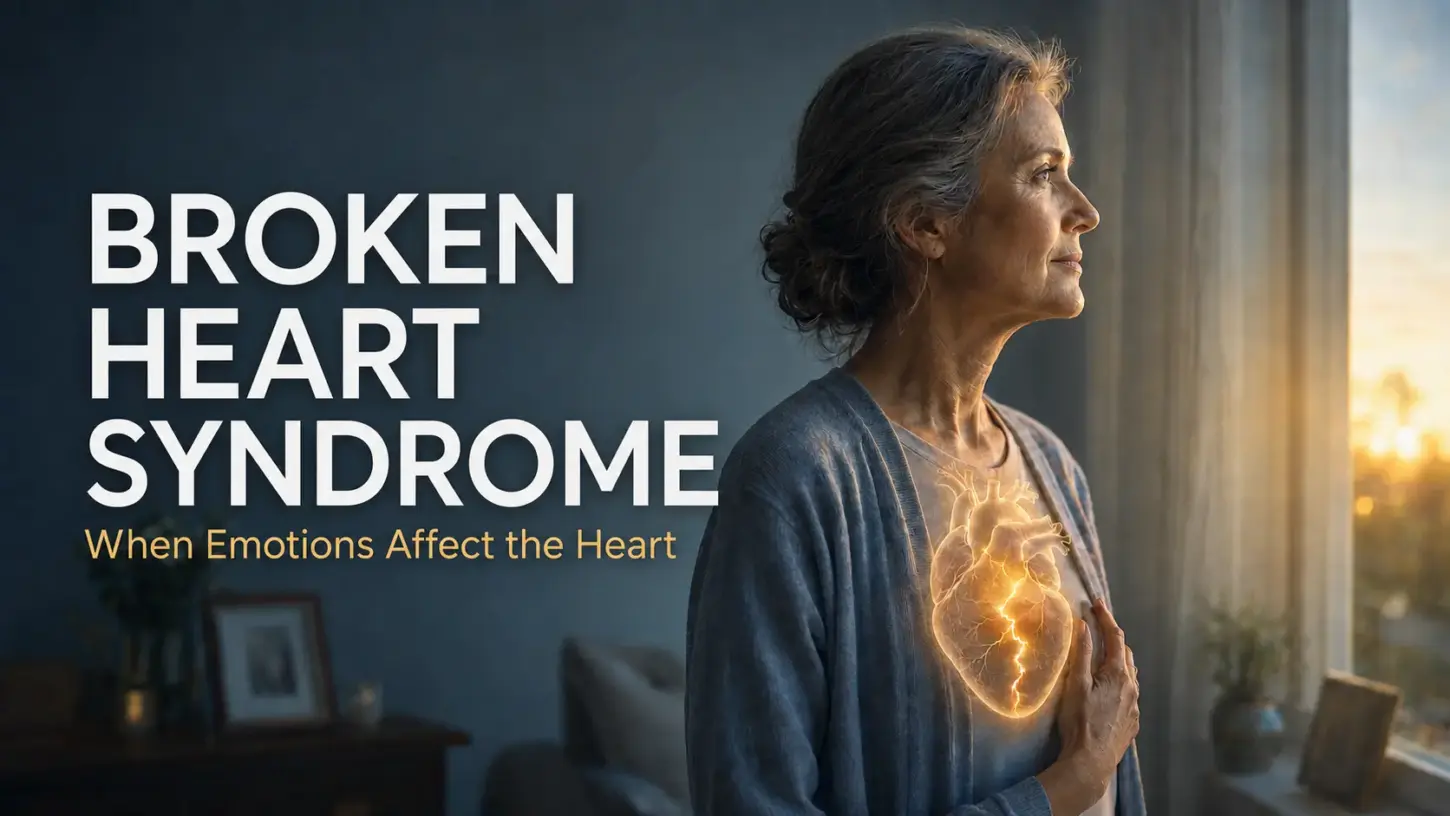
Vídeo | How a broken heart affects your body
É realmente possível morrer de coração partido? Conheça a síndrome de Takotsubo, uma condição provocada por emoções intensas que imita os sintomas de um ataque cardíaco, e descubra como o luto, o estresse e as alterações hormonais podem afetar profundamente o funcionamento do coração.
| Audio | |
|---|---|
Normal | Slow |
| English Transcript | Tradução |
| How a broken heart affects your body | Como um coração partido afeta o seu corpo |
| Losing a loved one can be one of the most traumatic experiences of a person’s life. Grief brings on a whole host of strong emotions that impact both our mental and physical health. But is it possible for these powerful feelings to endanger your life? In other words, can you actually die from a broken heart? | Perder alguém que amamos pode ser uma das experiências mais traumáticas da vida de uma pessoa. O luto provoca uma série de emoções intensas que afetam tanto a nossa saúde mental quanto a física. Mas será possível que esses sentimentos poderosos coloquem a sua vida em risco? Em outras palavras, é realmente possível morrer de coração partido? |
| One of the most widely documented medical phenomena addressing this question is the widowhood effect. Studies of elderly couples have found that a person’s risk of dying can increase by up to 90% over the three months following their spouse’s death, leading a significant number of couples to pass away months, weeks, or even days apart. | Um dos fenômenos médicos mais amplamente documentados que procuram responder a essa pergunta é o efeito da viuvez. Estudos realizados com casais idosos constataram que o risco de uma pessoa morrer pode aumentar em até 90% durante os três meses seguintes à morte de seu cônjuge, levando um número significativo de casais a falecer com meses, semanas ou até mesmo dias de diferença. |
| There are a lot of theories explaining this effect. One study found that severe grief and depression were associated with higher levels of inflammatory proteins in the blood, potentially impairing the immune system. And depression, combined with the loss of a supporting partner, can make it hard for a person to keep up with their daily health needs. Similarly, chronic stress can alter hormone levels, impair digestion, and dysregulate the immune system. | Existem muitas teorias para explicar esse efeito. Um estudo constatou que o luto intenso e a depressão estavam associados a níveis mais elevados de proteínas inflamatórias no sangue, o que poderia prejudicar o sistema imunológico. Além disso, a depressão, combinada com a perda de um companheiro que oferecia apoio, pode dificultar que uma pessoa continue cuidando de suas necessidades diárias de saúde. Da mesma forma, o estresse crônico pode alterar os níveis hormonais, prejudicar a digestão e desregular o sistema imunológico. |
| But while all these factors can reduce life expectancy, there’s another condition where powerful emotions can directly endanger someone’s life: Takotsubo cardiomyopathy, also known as stress cardiomyopathy or broken heart syndrome. This was originally labeled by Japanese doctors in 1990, who named the condition after the Japanese word for an octopus trap. | Embora todos esses fatores possam reduzir a expectativa de vida, existe outra condição na qual emoções intensas podem colocar diretamente a vida de uma pessoa em risco: a cardiomiopatia de Takotsubo, também conhecida como cardiomiopatia por estresse ou síndrome do coração partido. Essa condição foi identificada originalmente por médicos japoneses em 1990, que a batizaram com a palavra japonesa usada para designar uma armadilha para polvos. |
| In Takotsubo cardiomyopathy, the left ventricle, one of the heart’s four chambers, pools with blood and balloons outward, giving it a distinctively takotsubo-like shape. And while most patients can recover over several weeks, roughly 5% will experience a potentially lethal cardiac arrest. | Na cardiomiopatia de Takotsubo, o ventrículo esquerdo, uma das quatro câmaras do coração, acumula sangue e se dilata para fora, adquirindo um formato característico semelhante ao de um takotsubo. Embora a maioria dos pacientes consiga se recuperar ao longo de algumas semanas, aproximadamente 5% sofrerão uma parada cardíaca potencialmente fatal. |
| While the exact cause of Takotsubo cardiomyopathy is still being studied, the condition often appears after a sudden traumatic event. And since cases have been triggered by both shocking grief and unexpected happiness, it’s likely not the nature of the emotion that matters, but the intensity. | Embora a causa exata da cardiomiopatia de Takotsubo ainda esteja sendo estudada, a condição geralmente surge após um acontecimento traumático repentino. Como já houve casos desencadeados tanto por um luto devastador quanto por uma felicidade inesperada, é provável que o fator determinante não seja a natureza da emoção, e sim a sua intensidade. |
| Intense emotional events lead to a sudden increase in two hormones: epinephrine, also known as adrenaline, and norepinephrine. Both these hormones interact with beta-adrenergic receptors, which have a high concentration in the left ventricle. So, during Takotsubo cardiomyopathy, researchers believe epinephrine and norepinephrine flood the left ventricle, triggering it to contract rapidly and repeatedly. | Acontecimentos emocionalmente intensos provocam um aumento repentino de dois hormônios: a epinefrina, também conhecida como adrenalina, e a norepinefrina. Esses dois hormônios interagem com os receptores beta-adrenérgicos, encontrados em grande concentração no ventrículo esquerdo. Por isso, durante a cardiomiopatia de Takotsubo, os pesquisadores acreditam que a epinefrina e a norepinefrina inundam o ventrículo esquerdo, fazendo com que ele se contraia rápida e repetidamente. |
| Within minutes, this activity exhausts the ventricle, and since it’s unable to pump effectively, blood begins to pool. This hormonal spike can also cause spasms in the blood vessels that supply the heart with oxygen and nutrients. So, despite all the blood inside the heart, the muscle tissue itself may not be getting enough blood flow to function. | Em poucos minutos, essa atividade esgota o ventrículo e, como ele não consegue bombear o sangue de maneira eficaz, o sangue começa a se acumular. Esse aumento hormonal também pode provocar espasmos nos vasos sanguíneos que fornecem oxigênio e nutrientes ao coração. Assim, apesar de todo o sangue presente no interior do coração, é possível que o próprio tecido muscular não esteja recebendo fluxo sanguíneo suficiente para funcionar. |
| The result of all this is something that often feels like a heart attack without actually being one. People undergoing Takotsubo cardiomyopathy often experience intense chest pain and shortness of breath, even though their arteries aren’t blocked like they would be during a heart attack. This similarity in symptoms also makes the condition difficult to diagnose, and it’s easily confused with more common cardiac conditions. | O resultado de tudo isso é uma condição que muitas vezes se parece com um ataque cardíaco, embora não seja realmente um. As pessoas que sofrem de cardiomiopatia de Takotsubo frequentemente sentem dor intensa no peito e falta de ar, embora suas artérias não estejam obstruídas como estariam durante um ataque cardíaco. Essa semelhança entre os sintomas também torna a condição difícil de diagnosticar, fazendo com que seja facilmente confundida com problemas cardíacos mais comuns. |
| Fortunately, the initial treatment for Takotsubo cardiomyopathy and a heart attack is the same. Doctors may prescribe blood thinners to prevent clotting in the heart and beta blockers to slow the heart’s contractions. Beyond that, patients might take blood thinners and blood pressure medications to protect their hearts in the long run. But there currently aren’t any specific treatments for Takotsubo cardiomyopathy. | Felizmente, o tratamento inicial para a cardiomiopatia de Takotsubo e para um ataque cardíaco é o mesmo. Os médicos podem prescrever anticoagulantes para impedir a formação de coágulos no coração e betabloqueadores para desacelerar as contrações cardíacas. Além disso, os pacientes podem tomar anticoagulantes e medicamentos para controlar a pressão arterial, a fim de proteger o coração a longo prazo. No entanto, atualmente não existem tratamentos específicos para a cardiomiopatia de Takotsubo. |
| We also don’t know exactly when it will strike. The population that appears most at risk is postmenopausal women, perhaps because estrogen helps prevent cardiovascular disease and menopause decreases estrogen production. But, obviously, anyone can experience traumatic emotions. | Também não sabemos exatamente quando ela se manifestará. O grupo aparentemente mais vulnerável é o das mulheres após a menopausa, talvez porque o estrogênio ajude a prevenir doenças cardiovasculares e a menopausa reduza a produção desse hormônio. Evidentemente, porém, qualquer pessoa pode vivenciar emoções traumáticas. |
| The good news is that, in most cases, patients make a full recovery. Because while our bodies are sensitive to the ups and downs of our emotions, they’re also resilient. And much like a broken bone, even a broken heart can heal with time and care. | A boa notícia é que, na maioria dos casos, os pacientes se recuperam completamente. Embora o nosso corpo seja sensível aos altos e baixos de nossas emoções, ele também é resiliente. Assim como acontece com um osso quebrado, até mesmo um coração partido pode se recuperar com tempo e cuidados. |
| Do you ever feel like you don’t know enough about your own body? Subscribe to this channel to learn about everything from baldness and muscle growth to why we have hair in such random places. Stay tuned and stay curious! | Você já teve a sensação de não conhecer o suficiente sobre o próprio corpo? Inscreva-se neste canal para aprender sobre assuntos que vão da calvície e do crescimento muscular às razões pelas quais temos pelos em lugares tão inesperados. Continue acompanhando e mantenha a curiosidade! |
Contagem de palavras
A tabela abaixo exibe as palavras encontradas neste vídeo, bem como o número de vezes em que aparecem.
Veja também: Para que serve esta tabela?
| Freq. | Palavra | Freq. | Palavra | Freq. | Palavra |
|---|---|---|---|---|---|
| 35 | the | 24 | and | 21 | a |
| 17 | to | 16 | of | 12 | in |
| 12 | heart | 11 | can | 9 | that |
| 9 | blood | 8 | with | 8 | this |
| 8 | takotsubo | 8 | it | 8 | cardiomyopathy |
| 7 | is | 6 | one | 6 | also |
| 5 | most | 5 | like | 5 | for |
| 5 | but | 5 | broken | 4 | while |
| 4 | ventricle | 4 | their | 4 | life |
| 4 | have | 4 | emotions | 4 | condition |
| 3 | your | 3 | you | 3 | traumatic |
| 3 | these | 3 | there | 3 | person |
| 3 | patients | 3 | our | 3 | often |
| 3 | left | 3 | grief | 3 | experience |
| 3 | even | 3 | by | 3 | both |
| 3 | be | 3 | attack | 3 | all |
| 2 | will | 2 | weeks | 2 | we |
| 2 | up | 2 | thinners | 2 | they |
| 2 | system | 2 | sudden | 2 | stress |
| 2 | stay | 2 | so | 2 | since |
| 2 | risk | 2 | prevent | 2 | powerful |
| 2 | potentially | 2 | over | 2 | or |
| 2 | not | 2 | norepinephrine | 2 | muscle |
| 2 | months | 2 | may | 2 | make |
| 2 | levels | 2 | known | 2 | know |
| 2 | japanese | 2 | intense | 2 | increase |
| 2 | immune | 2 | hormones | 2 | health |
| 2 | from | 2 | found | 2 | estrogen |
| 2 | epinephrine | 2 | enough | 2 | endanger |
| 2 | effect | 2 | during | 2 | don |
| 2 | doctors | 2 | depression | 2 | couples |
| 2 | cause | 2 | cases | 2 | cardiac |
| 2 | body | 2 | beta | 2 | being |
| 2 | because | 2 | as | 2 | aren |
| 2 | are | 2 | appears | 2 | after |
| 2 | actually | 2 | about | 1 | would |
| 1 | words | 1 | word | 1 | women |
| 1 | without | 1 | within | 1 | widowhood |
| 1 | widely | 1 | why | 1 | whole |
| 1 | who | 1 | which | 1 | where |
| 1 | when | 1 | were | 1 | was |
| 1 | vessels | 1 | ups | 1 | unexpected |
| 1 | undergoing | 1 | unable | 1 | two |
| 1 | tuned | 1 | triggering | 1 | triggered |
| 1 | treatments | 1 | treatment | 1 | trap |
| 1 | tissue | 1 | time | 1 | three |
| 1 | though | 1 | theories | 1 | take |
| 1 | syndrome | 1 | symptoms | 1 | supporting |
| 1 | supply | 1 | such | 1 | subscribe |
| 1 | study | 1 | studies | 1 | studied |
| 1 | strong | 1 | strike | 1 | still |
| 1 | spouse | 1 | spike | 1 | specific |
| 1 | spasms | 1 | something | 1 | someone |
| 1 | slow | 1 | similarly | 1 | similarity |
| 1 | significant | 1 | shortness | 1 | shocking |
| 1 | shape | 1 | severe | 1 | several |
| 1 | sensitive | 1 | same | 1 | run |
| 1 | roughly | 1 | result | 1 | resilient |
| 1 | researchers | 1 | repeatedly | 1 | reduce |
| 1 | recovery | 1 | recover | 1 | receptors |
| 1 | re | 1 | rapidly | 1 | random |
| 1 | question | 1 | pump | 1 | proteins |
| 1 | protect | 1 | production | 1 | pressure |
| 1 | prescribe | 1 | postmenopausal | 1 | possible |
| 1 | population | 1 | pools | 1 | pool |
| 1 | places | 1 | physical | 1 | phenomena |
| 1 | perhaps | 1 | people | 1 | pass |
| 1 | partner | 1 | pain | 1 | oxygen |
| 1 | own | 1 | outward | 1 | other |
| 1 | originally | 1 | on | 1 | octopus |
| 1 | obviously | 1 | nutrients | 1 | number |
| 1 | news | 1 | needs | 1 | nature |
| 1 | named | 1 | much | 1 | more |
| 1 | minutes | 1 | might | 1 | mental |
| 1 | menopause | 1 | medications | 1 | medical |
| 1 | matters | 1 | makes | 1 | loved |
| 1 | lot | 1 | loss | 1 | losing |
| 1 | long | 1 | likely | 1 | lethal |
| 1 | learn | 1 | leading | 1 | lead |
| 1 | labeled | 1 | keep | 1 | itself |
| 1 | interact | 1 | intensity | 1 | inside |
| 1 | initial | 1 | inflammatory | 1 | impairing |
| 1 | impair | 1 | impact | 1 | how |
| 1 | host | 1 | hormone | 1 | hormonal |
| 1 | higher | 1 | high | 1 | helps |
| 1 | hearts | 1 | heal | 1 | hard |
| 1 | happiness | 1 | hair | 1 | growth |
| 1 | good | 1 | giving | 1 | getting |
| 1 | function | 1 | full | 1 | four |
| 1 | fortunately | 1 | following | 1 | flow |
| 1 | flood | 1 | feels | 1 | feelings |
| 1 | feel | 1 | factors | 1 | explaining |
| 1 | experiences | 1 | expectancy | 1 | exhausts |
| 1 | exactly | 1 | exact | 1 | everything |
| 1 | ever | 1 | events | 1 | event |
| 1 | emotional | 1 | emotion | 1 | elderly |
| 1 | effectively | 1 | easily | 1 | dysregulate |
| 1 | dying | 1 | downs | 1 | documented |
| 1 | do | 1 | distinctively | 1 | disease |
| 1 | directly | 1 | digestion | 1 | difficult |
| 1 | die | 1 | diagnose | 1 | despite |
| 1 | decreases | 1 | death | 1 | days |
| 1 | daily | 1 | currently | 1 | curious |
| 1 | contractions | 1 | contract | 1 | confused |
| 1 | conditions | 1 | concentration | 1 | common |
| 1 | combined | 1 | clotting | 1 | chronic |
| 1 | chest | 1 | channel | 1 | chambers |
| 1 | care | 1 | cardiovascular | 1 | brings |
| 1 | breath | 1 | bone | 1 | bodies |
| 1 | blockers | 1 | blocked | 1 | beyond |
| 1 | believe | 1 | begins | 1 | been |
| 1 | balloons | 1 | baldness | 1 | away |
| 1 | at | 1 | associated | 1 | arteries |
| 1 | arrest | 1 | apart | 1 | anyone |
| 1 | any | 1 | another | 1 | an |
| 1 | alter | 1 | affects | 1 | adrenergic |
| 1 | adrenaline | 1 | addressing | 1 | activity |