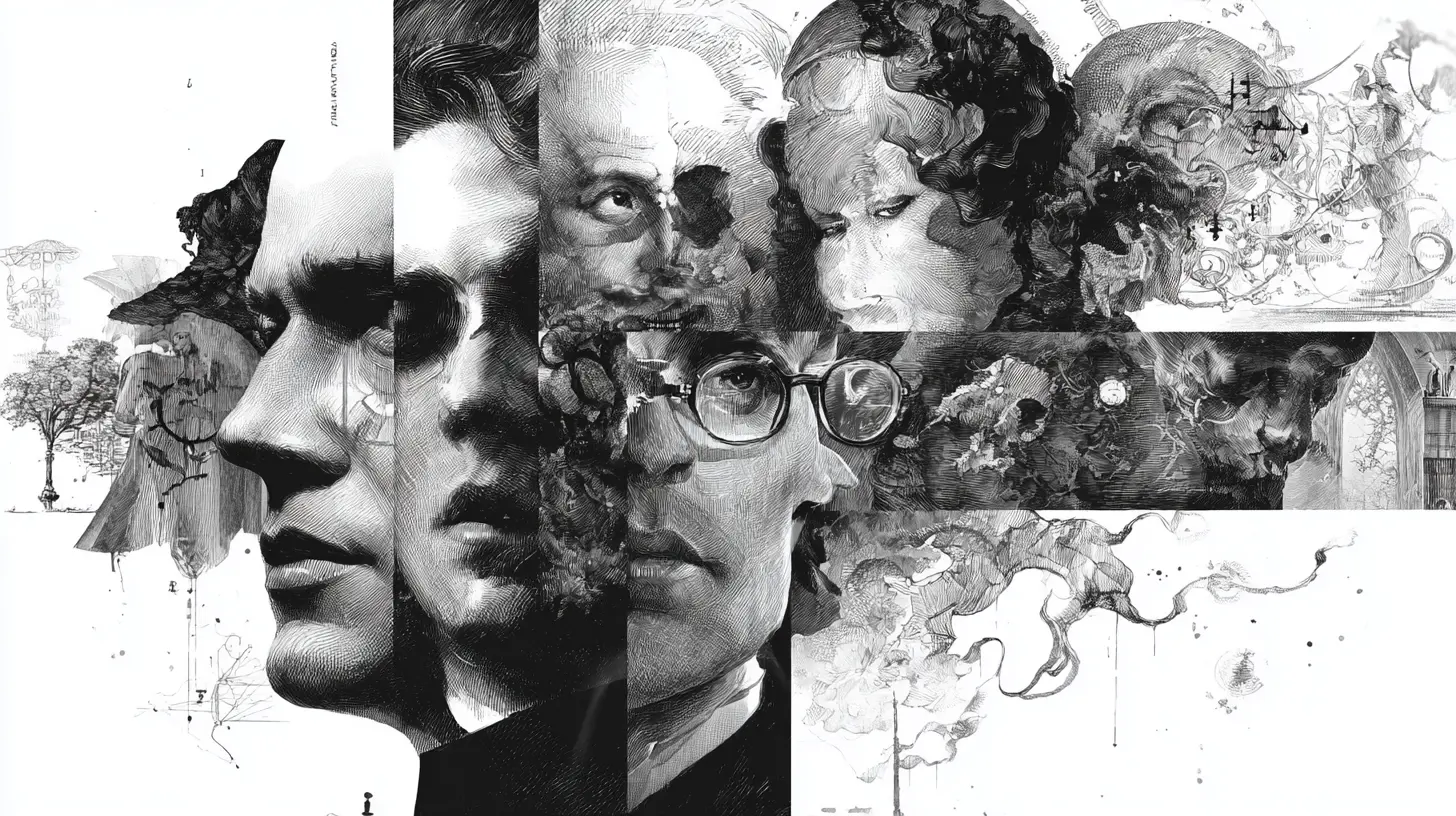
Vídeo | Psychopaths, Sociopaths, Narcissists, Dark Empaths – Who’s More Mentally harmful
Eles caminham entre nós, escondidos por trás de sorrisos charmosos ou silêncios calculados. Mas quem é realmente o mais perigoso? O sociopata explosivo, o psicopata gélido, o narcisista sugador de energia ou o empata sombrio, que usa a própria empatia como arma? Prepare-se para um mergulho profundo na mente humana. Este vídeo desmascara os traços que tornam essas personalidades tão devastadoras e revela qual delas representa a maior ameaça à sua saúde mental.
| Audio | |
|---|---|
Normal | Slow |
| English Transcript | Tradução |
| Psychopaths, Sociopaths, Narcissists, Dark Empaths - Who's More Mentally harmful? | Psicopatas, Sociopatas, Narcisistas, Empatas Sombrios – Quem é mais prejudicial à mente? |
| Have you ever met a sociopath, psychopath, narcissist, or dark empath before? Well, this video could be the ultimate duel between super characters to determine who wins the title of "most harmful." These personality disorders have dark traits or characteristics that make them dangerous to the people around them in varying degrees. Some personalities are more aggressive than others; some conceal themselves better than others, but what they all have in common is their manipulative traits. While they all manipulate people to get what they want, each has their unique way and reason behind why they do it. | Você já conheceu um sociopata, psicopata, narcisista ou empata sombrio antes? Bem, este vídeo pode ser o duelo definitivo entre "superpersonagens" para determinar quem ganha o título de "mais prejudicial". Esses transtornos de personalidade possuem traços sombrios ou características que os tornam perigosos para as pessoas ao seu redor em graus variados. Algumas personalidades são mais agressivas que outras; algumas se escondem melhor que outras, mas o que todas têm em comum são seus traços manipuladores. Embora todos manipulem as pessoas para conseguir o que desejam, cada um tem sua maneira única e uma razão por trás do porquê o fazem. |
| So, let's explore each dark personality type briefly before going into which one could be the most harmful to your mental health. | Então, vamos explorar cada tipo de personalidade sombria brevemente antes de entrar em qual deles pode ser o mais prejudicial para a sua saúde mental. |
| Number one: Sociopaths. | Número um: Sociopatas. |
| Sociopaths—hailing from the spectrum of antisocial personality disorder (which, by the way, is not just preferring pizza over people) and weighing in with a weak conscience coupled with a weak sense of empathy—we have the sociopath. They know they're wrong, yet find justifications instead of being good. Sociopathy is characterized by, but not limited to: clearly don't care how others feel, attachment issues, and unpredictable, hot-tempered behavior. Their low empathy and weak conscience makes lying and disregarding others in pursuit of their own needs easier. When confronted with consequences of their actions, they react negatively by showing spitefulness and recklessness. Sociopathy is a chronic condition that can be acquired by harsh family dynamics, such as parental instability or sexual abuse. | Sociopatas — vindos do espectro do transtorno de personalidade antissocial (que, a propósito, não é apenas preferir pizza em vez de pessoas) e chegando com uma consciência fraca aliada a um senso de empatia fraco — nós temos o sociopata. Eles sabem que estão errados, mas encontram justificativas em vez de serem bons. A sociopatia é caracterizada por, mas não se limita a: claramente não se importar com como os outros se sentem, problemas de apego e comportamento imprevisível e temperamental. Sua baixa empatia e consciência fraca tornam mentir e desconsiderar os outros em busca de suas próprias necessidades algo mais fácil. Quando confrontados com as consequências de suas ações, eles reagem negativamente, mostrando rancor e imprudência. A sociopatia é uma condição crônica que pode ser adquirida por dinâmicas familiares severas, como instabilidade parental ou abuso sexual. |
| Psychopaths. | Psicopatas. |
| Let's look at our next contender: psychopaths. Also hailing from the spectrum of anti-social personality disorder and weighing in with zero empathy is the psychopath. Any outward justification for their actions is for performative purposes only. Psychopathy does have some different specs from its brethren, sociopathy. Where the sociopath is an erratic volcano, the psychopath is a silent, black, frozen abyss. The sociopath will show they don't care, but the psychopath will convince you they do when they really don't. Spotting a sociopath is easy; a psychopath makes it a point to appear as normal as possible while hiding in plain sight. The pros say that to diagnose a sociopath, look for what's showing on the outside; to diagnose a psychopath, it's much more based on what's happening on the inside and why. Psychopathic qualities like recklessness and aggressiveness are caused by a chemical imbalance in the brain, not upbringing. One of their weapons is a non-automatic emotional response to others; they can choose to understand how someone feels if it benefits them. While they, like sociopaths, are not necessarily violent, they lack the regular restraints and protections of empathy and conscience to prevent them from becoming violent. | Vamos olhar para o nosso próximo competidor: psicopatas. Também vindo do espectro do transtorno de personalidade antissocial e chegando com zero empatia, está o psicopata. Qualquer justificativa externa para suas ações serve apenas para fins performáticos. A psicopatia tem algumas especificações diferentes de sua irmã, a sociopatia. Onde o sociopata é um vulcão errático, o psicopata é um abismo silencioso, negro e congelado. O sociopata mostrará que não se importa, mas o psicopata o convencerá de que se importa quando, na verdade, não se importa. Identificar um sociopata é fácil; um psicopata faz questão de parecer o mais normal possível enquanto se esconde à vista de todos. Os profissionais dizem que, para diagnosticar um sociopata, deve-se olhar para o que aparece por fora; para diagnosticar um psicopata, é muito mais baseado no que está acontecendo por dentro e o porquê. Qualidades psicopáticas como imprudência e agressividade são causadas por um desequilíbrio químico no cérebro, não pela criação. Uma de suas armas é uma resposta emocional não automática aos outros; eles podem optar por entender como alguém se sente se isso os beneficiar. Embora eles, como os sociopatas, não sejam necessariamente violentos, eles carecem das restrições e proteções regulares da empatia e da consciência para impedi-los de se tornarem violentos. |
| Narcissists. | Narcisistas. |
| Number three: narcissists. The narcissist is the diva with the most ego. They believe everything is about and for them, but snarking "you're such a narcissist" when someone acts kind of douchey doesn't mean they have the disorder. To a true narcissist, confidence, limits, and basic affection are now self-superiority, self-entitlement, and the expectation of praise and servitude. In their minds, they get extra because they are extra. Everyone else is a tool, toy, or toaster to be used until they're no benefit to the narcissist—then they're discarded. According to one clinically confirmed case, narcissism is self-defense in the pursuit of four primary goals: control, character traits, and residual advantages. The fuel is whatever emotion they can evoke from you. Emotion vampires, narcissists savor every ounce. They enjoy having control over how you [feel]; they steal character traits, co-opting aspects of another person and passing them off as their own. Money, sex, and contacts are all residual benefits from their supply. This exploitative behavior stems from childhood trauma; it could have been formed by being smothered in protection and placed on a pedestal, or by being in an unstable environment. | Número três: narcisistas. O narcisista é a diva com o maior ego. Eles acreditam que tudo é sobre e para eles, mas resmungar "você é tão narcisista" quando alguém age de forma meio babaca não significa que a pessoa tenha o transtorno. Para um verdadeiro narcisista, confiança, limites e afeição básica tornam-se agora autossuperioridade, autorreferência e a expectativa de elogios e servidão. Em suas mentes, eles recebem a mais porque eles *são* a mais. Todos os outros são uma ferramenta, brinquedo ou torradeira para serem usados até que não tenham mais benefício para o narcisista — então eles são descartados. De acordo com um caso clinicamente confirmado, o narcisismo é autodefesa na busca de quatro objetivos primários: controle, traços de caráter e vantagens residuais. O combustível é qualquer emoção que eles possam evocar de você. Vampiros emocionais, os narcisistas saboreiam cada gota. Eles gostam de ter controle sobre como você [se sente]; eles roubam traços de caráter, cooptando aspectos de outra pessoa e passando-os como se fossem seus. Dinheiro, sexo e contatos são todos benefícios residuais de seu suprimento. Esse comportamento explorador decorre de traumas de infância; pode ter sido formado por ser sufocado em proteção e colocado em um pedestal, ou por estar em um ambiente instável. |
| Dark Empath. | Empata Sombrio. |
| And now, the surprising fourth: dark empaths. This term, introduced in a 2021 study, marks this contestant as a yet untested newcomer. In this study, it was discovered that these people tend to score high on empathy, but also high on dark triad traits like narcissism, Machiavellianism, and psychopathy. The dark empath could be described as a black mirror version of ourselves. They have everything the other personalities lack, especially empathy. Yes, empathy. But the dark empath's empathy is cognitive only. Empathy means "if you hurt, I hurt." The dark empath's cognitive empathy means they fully understand the pain they cause—they just don't feel it. Even if they've been directly hurt in the past, they intuitively get how others work and feel. So, like a thief with all the blueprints and passwords, their manipulations are devastating. For them, with great power comes great wrongness. | E agora, o surpreendente quarto: empatas sombrios. Este termo, introduzido em um estudo de 2021, marca este competidor como um recém-chegado ainda não testado. Neste estudo, descobriu-se que essas pessoas tendem a pontuar alto em empatia, mas também alto em traços da tríade sombria, como narcisismo, maquiavelismo e psicopatia. O empata sombrio poderia ser descrito como uma versão "espelho negro" de nós mesmos. Eles têm tudo o que as outras personalidades carecem, especialmente empatia. Sim, empatia. Mas a empatia do empata sombrio é apenas cognitiva. Empatia significa "se você sofre, eu sofro". A empatia cognitiva do empata sombrio significa que eles entendem perfeitamente a dor que causam — eles apenas não a sentem. Mesmo que tenham sido diretamente feridos no passado, eles entendem intuitivamente como os outros funcionam e se sentem. Então, como um ladrão com todas as plantas e senhas, suas manipulações são devastadoras. Para eles, com grandes poderes vêm grandes maldades. |
| Conclusion. | Conclusão. |
| There's the bell to the round, and the disorder that wins the title of "most harmful to your mental health" is honestly between the psychopath and the dark empath. It's a toss-up. Or is it? The psychopath has the zero empathy attack; they have no restraints of conscious or empathy and take advantage of others without remorse. They relax your defenses by acting outwardly normal. That's dangerous. What about the dark empath then? This could be the most dangerous personality type because the dark empath can intuit, as opposed to study, what other people are feeling. This makes accurate manipulation far easier. For if you don't believe dark empaths are a thing, the singular type of personality that is most dangerous would be the psychopath, who is unshackled by conscience. However, if you believe that the dark empath is an entity unto itself, then this is the winner. Beware their machinations, as they have the ability to tune in and focus attack through empathy. | Toca o sino para a rodada, e o transtorno que ganha o título de "mais prejudicial para a sua saúde mental" está, honestamente, entre o psicopata e o empata sombrio. É um empate. Ou será que é? O psicopata tem o ataque de zero empatia; eles não têm restrições de consciência ou empatia e tiram vantagem dos outros sem remorso. Eles relaxam suas defesas agindo exteriormente de forma normal. Isso é perigoso. E quanto ao empata sombrio, então? Este poderia ser o tipo de personalidade mais perigoso porque o empata sombrio consegue intuir, em vez de estudar, o que as outras pessoas estão sentindo. Isso torna a manipulação precisa muito mais fácil. Pois, se você não acredita que empatas sombrios existam, o tipo singular de personalidade mais perigoso seria o psicopata, que não tem as amarras da consciência. No entanto, se você acredita que o empata sombrio é uma entidade por si só, então este é o vencedor. Cuidado com suas maquinações, pois eles têm a habilidade de sintonizar e focar o ataque através da empatia. |
| Comment down below with your thoughts on which is the most harmful and why you believe it is so. Always remember, too, that despite these personalities being a psychological phenomenon which may or may not be conscious choices, if you are the target, you are never under any obligation to accept abuse. Stay safe and we'll see you soon. | Comente abaixo com seus pensamentos sobre qual é o mais prejudicial e por que você acredita nisso. Lembre-se sempre, também, que apesar de essas personalidades serem um fenômeno psicológico que pode ou não ser fruto de escolhas conscientes, se você for o alvo, você nunca tem qualquer obrigação de aceitar o abuso. Fique seguro e nos vemos em breve. |
Contagem de palavras
A tabela abaixo exibe as palavras encontradas neste vídeo, bem como o número de vezes em que aparecem.
Veja também: Para que serve esta tabela?
| Freq. | Palavra | Freq. | Palavra | Freq. | Palavra |
|---|---|---|---|---|---|
| 52 | the | 31 | is | 30 | they |
| 29 | and | 23 | a | 21 | to |
| 18 | of | 15 | in | 15 | dark |
| 15 | are | 12 | you | 12 | their |
| 12 | empathy | 11 | not | 11 | have |
| 10 | it | 9 | that | 9 | psychopath |
| 9 | empath | 9 | by | 8 | with |
| 8 | this | 8 | or | 8 | be |
| 8 | as | 7 | them | 7 | others |
| 7 | on | 7 | most | 7 | from |
| 7 | do | 6 | what | 6 | sociopath |
| 6 | personality | 6 | if | 6 | for |
| 6 | but | 5 | traits | 5 | people |
| 5 | harmful | 5 | could | 4 | your |
| 4 | which | 4 | one | 4 | narcissists |
| 4 | narcissist | 4 | like | 4 | how |
| 4 | feel | 4 | disorder | 4 | dangerous |
| 4 | conscience | 4 | can | 4 | believe |
| 4 | being | 4 | all | 3 | will |
| 3 | why | 3 | who | 3 | while |
| 3 | when | 3 | weak | 3 | type |
| 3 | these | 3 | study | 3 | some |
| 3 | sociopathy | 3 | sociopaths | 3 | so |
| 3 | self | 3 | psychopaths | 3 | personalities |
| 3 | more | 3 | makes | 3 | hurt |
| 3 | get | 3 | empaths | 3 | an |
| 2 | zero | 2 | yet | 2 | wins |
| 2 | weighing | 2 | way | 2 | violent |
| 2 | us | 2 | understand | 2 | title |
| 2 | then | 2 | than | 2 | such |
| 2 | spectrum | 2 | someone | 2 | showing |
| 2 | restraints | 2 | residual | 2 | recklessness |
| 2 | pursuit | 2 | psychopathy | 2 | own |
| 2 | over | 2 | other | 2 | only |
| 2 | number | 2 | now | 2 | normal |
| 2 | no | 2 | narcissism | 2 | mental |
| 2 | means | 2 | may | 2 | look |
| 2 | let | 2 | lack | 2 | just |
| 2 | high | 2 | health | 2 | has |
| 2 | great | 2 | extra | 2 | everything |
| 2 | emotion | 2 | easier | 2 | each |
| 2 | does | 2 | diagnose | 2 | control |
| 2 | conscious | 2 | cognitive | 2 | character |
| 2 | care | 2 | black | 2 | between |
| 2 | benefits | 2 | behavior | 2 | before |
| 2 | been | 2 | because | 2 | attack |
| 2 | any | 2 | also | 2 | actions |
| 2 | abuse | 2 | about | 1 | yes |
| 1 | wrongness | 1 | wrong | 1 | would |
| 1 | work | 1 | without | 1 | winner |
| 1 | where | 1 | whatever | 1 | well |
| 1 | weapons | 1 | we | 1 | was |
| 1 | want | 1 | volcano | 1 | video |
| 1 | version | 1 | varying | 1 | vampires |
| 1 | used | 1 | upbringing | 1 | up |
| 1 | unto | 1 | until | 1 | untested |
| 1 | unstable | 1 | unshackled | 1 | unpredictable |
| 1 | unique | 1 | under | 1 | ultimate |
| 1 | tune | 1 | true | 1 | triad |
| 1 | trauma | 1 | toy | 1 | toss |
| 1 | tool | 1 | too | 1 | toaster |
| 1 | through | 1 | three | 1 | thoughts |
| 1 | thing | 1 | thief | 1 | there |
| 1 | themselves | 1 | term | 1 | tend |
| 1 | tempered | 1 | target | 1 | take |
| 1 | surprising | 1 | supply | 1 | superiority |
| 1 | super | 1 | stems | 1 | steal |
| 1 | stay | 1 | spotting | 1 | spitefulness |
| 1 | specs | 1 | soon | 1 | sociopathshailing |
| 1 | social | 1 | snarking | 1 | smothered |
| 1 | singular | 1 | silent | 1 | sight |
| 1 | show | 1 | sexual | 1 | sex |
| 1 | servitude | 1 | sense | 1 | see |
| 1 | score | 1 | say | 1 | savor |
| 1 | safe | 1 | round | 1 | response |
| 1 | remorse | 1 | remember | 1 | relax |
| 1 | regular | 1 | reason | 1 | really |
| 1 | react | 1 | qualities | 1 | purposes |
| 1 | psychopathic | 1 | psychological | 1 | protections |
| 1 | protection | 1 | pros | 1 | primary |
| 1 | prevent | 1 | preferring | 1 | praise |
| 1 | power | 1 | possible | 1 | point |
| 1 | plain | 1 | placed | 1 | pizza |
| 1 | phenomenon | 1 | person | 1 | performative |
| 1 | pedestal | 1 | past | 1 | passwords |
| 1 | passing | 1 | parental | 1 | pain |
| 1 | outwardly | 1 | outward | 1 | outside |
| 1 | ourselves | 1 | our | 1 | ounce |
| 1 | opting | 1 | opposed | 1 | off |
| 1 | obligation | 1 | non | 1 | next |
| 1 | newcomer | 1 | never | 1 | negatively |
| 1 | needs | 1 | necessarily | 1 | narcissistthen |
| 1 | much | 1 | money | 1 | mirror |
| 1 | minds | 1 | met | 1 | mentally |
| 1 | mean | 1 | marks | 1 | manipulative |
| 1 | manipulations | 1 | manipulation | 1 | manipulate |
| 1 | make | 1 | machinations | 1 | machiavellianism |
| 1 | lying | 1 | low | 1 | limits |
| 1 | limited | 1 | know | 1 | kind |
| 1 | justifications | 1 | justification | 1 | itself |
| 1 | its | 1 | issues | 1 | intuitively |
| 1 | intuit | 1 | introduced | 1 | into |
| 1 | instead | 1 | instability | 1 | inside |
| 1 | imbalance | 1 | i | 1 | however |
| 1 | hot | 1 | honestly | 1 | hiding |
| 1 | having | 1 | harsh | 1 | happening |
| 1 | hailing | 1 | good | 1 | going |
| 1 | goals | 1 | fully | 1 | fuel |
| 1 | frozen | 1 | fourth | 1 | four |
| 1 | formed | 1 | focus | 1 | find |
| 1 | feels | 1 | feeling | 1 | far |
| 1 | family | 1 | explore | 1 | exploitative |
| 1 | expectation | 1 | evoke | 1 | everyone |
| 1 | every | 1 | ever | 1 | even |
| 1 | especially | 1 | erratic | 1 | environment |
| 1 | entity | 1 | entitlement | 1 | enjoy |
| 1 | empathywe | 1 | emotional | 1 | else |
| 1 | ego | 1 | easy | 1 | dynamics |
| 1 | duel | 1 | down | 1 | douchey |
| 1 | diva | 1 | disregarding | 1 | disorders |
| 1 | discovered | 1 | discarded | 1 | directly |
| 1 | different | 1 | devastating | 1 | determine |
| 1 | despite | 1 | described | 1 | degrees |
| 1 | defenses | 1 | defense | 1 | coupled |
| 1 | convince | 1 | contestant | 1 | contender |
| 1 | contacts | 1 | consequences | 1 | confronted |
| 1 | confirmed | 1 | confidence | 1 | condition |
| 1 | conclusion | 1 | conceal | 1 | common |
| 1 | comment | 1 | comes | 1 | co |
| 1 | clinically | 1 | clearly | 1 | chronic |
| 1 | choose | 1 | choices | 1 | childhood |
| 1 | chemical | 1 | characters | 1 | characterized |
| 1 | characteristics | 1 | causethey | 1 | caused |
| 1 | case | 1 | briefly | 1 | brethren |
| 1 | brain | 1 | blueprints | 1 | beware |
| 1 | better | 1 | benefit | 1 | below |
| 1 | bell | 1 | behind | 1 | becoming |
| 1 | basic | 1 | based | 1 | automatic |
| 1 | attachment | 1 | at | 1 | aspects |
| 1 | around | 1 | appear | 1 | antisocial |
| 1 | anti | 1 | another | 1 | always |
| 1 | aggressiveness | 1 | aggressive | 1 | affection |
| 1 | advantages | 1 | advantage | 1 | acts |
| 1 | acting | 1 | acquired | 1 | accurate |
| 1 | according | 1 | accept | 1 | abyss |
| 1 | ability |