
Vídeo | Do you really need to take 10,000 steps a day?
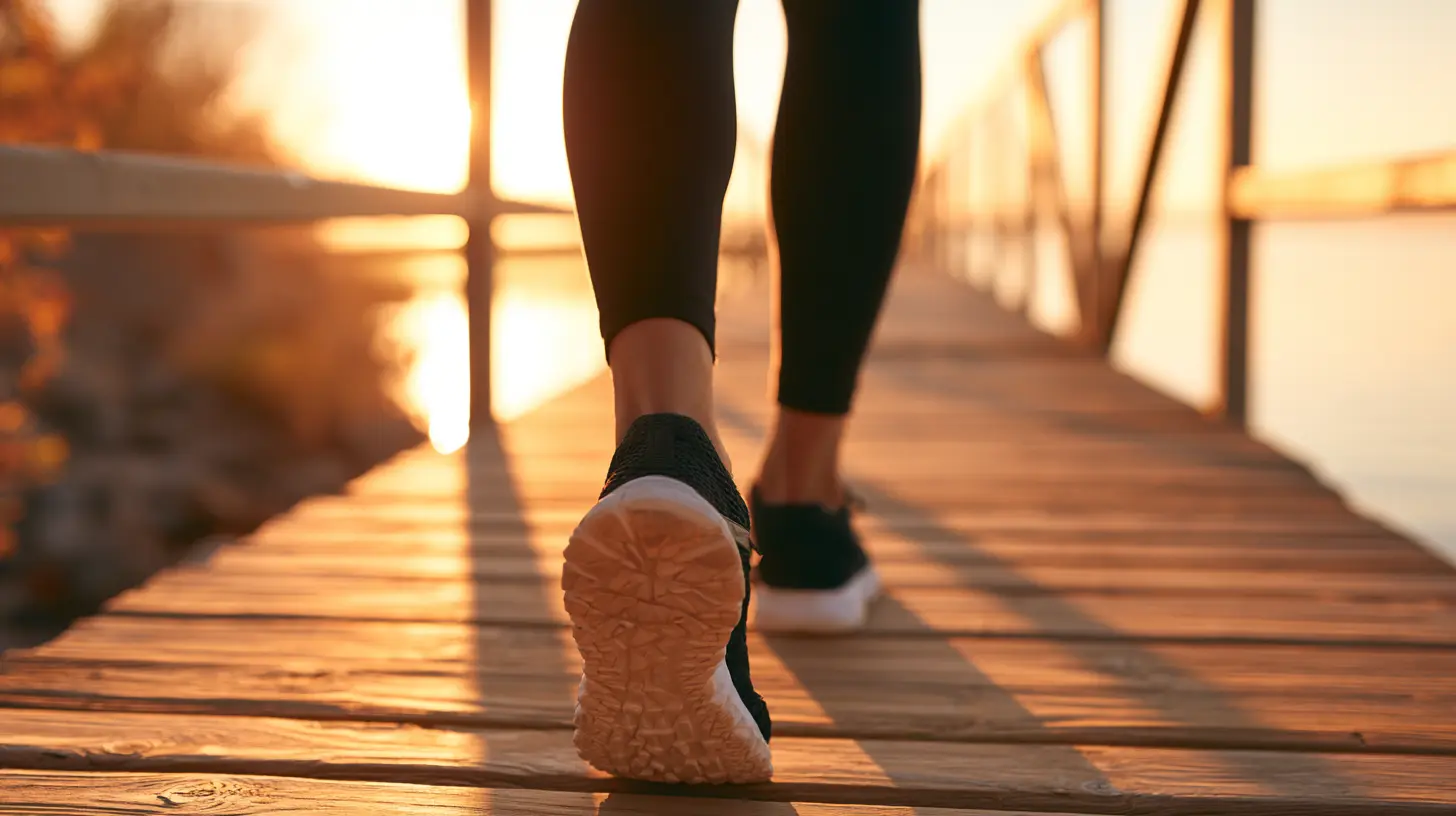
Você realmente precisa caminhar 10.000 passos por dia para transformar sua saúde? Enquanto o aventureiro Jean Béliveau levou o hábito ao extremo, cruzando 75.000 quilômetros e chegando a passar uma noite na cadeia para dar a volta ao mundo a pé, a ciência revela que os benefícios reais da caminhada são muito mais acessíveis e imediatos do que imaginamos. Este vídeo explora como pequenas caminhadas diárias agem diretamente no seu corpo, combatendo a ansiedade em minutos, fortalecendo os ossos e protegendo o coração a longo prazo, além de discutir como a estrutura das nossas cidades impacta diretamente nossa longevidade e bem-estar social. Descubra por que você não precisa de uma jornada épica para revolucionar sua saúde física e mental através do exercício mais democrático do mundo.
| Audio | |
|---|---|
Normal | Slow |
| English Transcript | Tradução |
| Do you really need to take 10,000 steps a day? | Você realmente precisa caminhar 10.000 passos ao dia? |
| While most people avoid spending the night in jail, Jean Bello jumped at the opportunity. For the past 3 years, Bello had been walking from country to country with the goal of circumnavigating the globe on foot. This required sleeping in tents, strangers' homes, and the occasional jail cell along the way. But this morning, as Bello was ready to leave, the police chief, who had agreed to his sleeping arrangement, was nowhere to be found, and the guards weren't buying his story. | Enquanto a maioria das pessoas evitam passar a noite na cadeia, Jean Béliveau aproveitou essa oportunidade. Nos últimos três anos, Béliveau andou a pé de país em país, com o objetivo de dar a volta ao globo a pé. Isso exigia dormir em tendas, em casas de estranhos, ocasionalmente numa cela de prisão ao longo do caminho. Mas naquela manhã, quando Béliveau estava prestes a sair, o chefe de polícia, que tinha concordado com o pedido dele para lá dormir, estava ausente, e os guardas não acreditaram na sua história. |
| Few people have the time or desire to walk such extreme lengths. However, research shows that adding even a modest amount of walking to your daily routine can dramatically improve your health. So, what exactly happens to your body when you increase your daily step count? | Poucas pessoas têm tempo ou vontade de andar tanto tempo. No entanto, as pesquisas mostram que incluir mesmo uma curta caminhada na nossa rotina diária pode melhorar drasticamente a nossa saúde. O que acontece realmente no nosso corpo quando aumentamos a quantidade de passos diários? |
| A single afternoon stroll can improve your mood and ease symptoms of anxiety and depression. Walking, especially at a brisk pace, is thought to trigger the release of pain-relieving endorphins and curb the release of the stress hormone, cortisol. | Um único passeio à tarde pode melhorar o nosso humor e aliviar os sintomas de ansiedade e depressão. Caminhar, especialmente a um ritmo acelerado, desencadeia endorfinas que aliviam a dor e impede a libertação da hormona do stress, o cortisol. |
| Within weeks of adding more steps to your routine, your body adapts. While it may seem simple, walking requires the coordination and effort of many muscles in your legs, torso, and back. To keep up with the increase in energy demand, the vessels around these muscles are remodeled to deliver more oxygen. At the same time, your heart becomes more efficient at pumping blood. In a few months, these changes can lower your blood pressure and reduce your risk of heart attack and stroke. | Semanas depois de incluir mais passos na nossa rotina, o corpo adapta-se. Embora pareça simples, caminhar requer coordenação e esforço dos muitos músculos das pernas, do tronco e das costas. Para acompanhar o aumento da necessidade de energia, os vasos à volta destes músculos modificam-se para fornecer mais oxigénio. Além disso, o coração torna-se mais eficiente no bombeamento do sangue. Em poucos meses, essas alterações podem baixar a pressão arterial e reduzir o risco de ataque cardíaco e de AVC. |
| Carrying the weight of your body as you walk places stress on the bones, but this stress actually makes the bones stronger as it stimulates the absorption of calcium and minerals. That's why years of consistent walking can help retain bone density, which usually declines with age. | Carregar o peso do corpo enquanto andamos coloca pressão sobre os ossos. Mas essa pressão torna os ossos mais fortes, pois estimula a absorção do cálcio e de minerais. Anos de caminhada consistente podem ajudar a reter a densidade óssea, que normalmente diminui com a idade. |
| Building a lifelong walking habit comes with many other benefits, from aiding in weight management to reducing your risk for type 2 diabetes, numerous cancers, and dementia. | Criar o hábito de caminhar ao longo da vida tem muitos outros benefícios, como ajudar na gestão do peso ou reduzir o risco de diabetes tipo 2, de vários cancros e de demência. |
| Simply put, walking is exercise. Unlike other forms, it doesn't require equipment and is often more accessible to people of varying ages and fitness levels. While activity trackers usually build 10,000 steps as the ideal benchmark, studies show that any increase in steps per day can yield health benefits. | Resumindo, caminhar é um exercício. Ao contrário de outros desportos, não requer equipamento e é acessível a pessoas de diferentes idades e níveis de aptidão física. Embora os monitores de atividade definam 10 000 passos como a meta ideal, estudos mostram que um aumento gradual de passos por dia pode ter benefícios para a saúde. |
| And these steps don't need to be taken continuously. For those who live in walkable neighborhoods, steps are easily accumulated throughout the day: walking to work, to pick up groceries, or to meet with friends. Living where shops and amenities are easy to get to on foot comes with its own set of perks. Residents in these communities are often less reliant on vehicles, which translates to improved air quality and reduced local greenhouse gas emissions. | E não é preciso andar tudo duma só vez. Para quem vive em bairros onde é fácil andar a pé, é fácil acumular os passos ao longo do dia: ir para o trabalho a pé, ir às compras a pé ou encontrar-se com amigos. E viver onde as lojas e comodidades são acessíveis a pé tem as suas vantagens. Os residentes nessas coletividades são menos dependentes dos veículos, o que contribui para a melhoria da qualidade do ar e para a redução das emissões de gases com efeito de estufa. |
| It can even change the way you see the world. One study of seniors in Hong Kong found that those living in more walkable neighborhoods reported feeling less loneliness and more life satisfaction than those living in less walkable neighborhoods. | Pode até mudar a nossa perspetiva do mundo. Um estudo com idosos em Hong Kong descobriu que os que vivem em bairros onde é mais fácil caminhar relataram sentir menos solidão e maior satisfação com a vida do que os que vivem em bairros onde caminhar não é fácil. |
| So, why doesn't everyone just walk more? One big reason is that many people don't have access to safe, well-maintained places to stroll. Despite the known benefits of walking, many cities and towns have been designed with only driving in mind. State and local governments across the globe often prioritize funding for highways and roads over sidewalks and public parks. Even when walkable spaces exist, the routes to get to them aren't always pedestrian-friendly. In the US, residential and commercial areas are typically zoned separately, and often only connected by busy roadways. | Então, porque é que não andamos mais? Uma das razões é que muitos não têm acesso a lugares seguros e bem tratados para passear. Apesar dos conhecidos benefícios da caminhada, muitas cidades foram planeadas pensando apenas nos veículos. No mundo inteiro, muitos governos dão prioridade ao financiamento de rodovias e estradas em vez de calçadas e parques públicos. E até quando existem espaços onde caminhar é fácil, os caminhos para lá chegar nem sempre são adequados aos peões. Nos EUA, as áreas residenciais e comerciais normalmente estão situadas longe umas das outras e muitas vezes só estão ligadas por estradas movimentadas. |
| But there are ways to make places more foot-friendly. In 2013, Vancouver city officials opened the Comox-Helmcken Greenway, taking a 2 km road and converting it into a walkable and bikable space. Studies found that, after opening, people living close to the greenway got more exercise, reduced their daily car trips by 23%, and cut their personal greenhouse gas emissions by 21%. | Mas há formas de tornar os locais mais adequados para andar a pé. Em 2013, as autoridades da cidade de Vancouver abriram o Comox-Helmcken Greenway, aproveitando uma estrada de dois quilómetros e convertendo-a num espaço onde se pode caminhar e andar de bicicleta. Estudos concluíram que, após a inauguração, as pessoas que viviam perto do Greenway fazia mais exercício, reduziram as viagens diárias de carro em 23% e reduziram as emissões de gases com efeito de estufa em 21%. |
| Even small measures can help. In places like Bethel, Vermont, for example, community members have improved the walkability of their downtowns by adding simple features like painted crosswalks and curb extensions. | Até pequenas ações podem ajudar. Em sítios como Betel ou Vermont, os membros da coletividade melhoraram a facilidade de locomoção nos centros urbanos com coisas simples, como passadeiras pintadas e extensões dos passeios. |
| As for Bello, the guards eventually let him out. He'd walked over 75,000 km in total to complete his journey, but it's clear you don't have to take quite this many steps to see an impact. | Quanto a Béliveau, os guardas acabaram por o deixar sair. Tinha caminhado mais de 75 000 quilómetros no total para acabar a viagem. Mas é claro que não é preciso dar tantos passos para ter resultados. |
Contagem de palavras
A tabela abaixo exibe as palavras encontradas neste vídeo, bem como o número de vezes em que aparecem.
Veja também: Para que serve esta tabela?
| Freq. | Palavra | Freq. | Palavra | Freq. | Palavra |
|---|---|---|---|---|---|
| 33 | the | 30 | to | 27 | and |
| 17 | in | 16 | of | 13 | your |
| 9 | walking | 9 | more | 8 | a |
| 7 | with | 7 | steps | 7 | not |
| 7 | can | 7 | are | 6 | that |
| 6 | it | 6 | is | 6 | for |
| 5 | you | 5 | walkable | 5 | people |
| 5 | many | 5 | have | 5 | as |
| 4 | this | 4 | these | 4 | places |
| 4 | on | 4 | often | 4 | living |
| 4 | even | 4 | do | 4 | by |
| 4 | but | 4 | bello | 4 | at |
| 3 | while | 3 | walk | 3 | those |
| 3 | their | 3 | stress | 3 | neighborhoods |
| 3 | less | 3 | increase | 3 | his |
| 3 | found | 3 | foot | 3 | day |
| 3 | daily | 3 | body | 3 | benefits |
| 3 | adding | 2 | years | 2 | why |
| 2 | who | 2 | which | 2 | when |
| 2 | weight | 2 | way | 2 | was |
| 2 | usually | 2 | up | 2 | time |
| 2 | take | 2 | studies | 2 | stroll |
| 2 | so | 2 | sleeping | 2 | simple |
| 2 | see | 2 | routine | 2 | risk |
| 2 | release | 2 | reduced | 2 | over |
| 2 | other | 2 | or | 2 | only |
| 2 | one | 2 | need | 2 | muscles |
| 2 | local | 2 | like | 2 | km |
| 2 | jail | 2 | improved | 2 | improve |
| 2 | help | 2 | heart | 2 | health |
| 2 | had | 2 | guards | 2 | greenway |
| 2 | greenhouse | 2 | globe | 2 | get |
| 2 | gas | 2 | from | 2 | friendly |
| 2 | few | 2 | exercise | 2 | emissions |
| 2 | does | 2 | curb | 2 | country |
| 2 | comes | 2 | bones | 2 | blood |
| 2 | been | 2 | be | 1 | zoned |
| 1 | yield | 1 | would | 1 | world |
| 1 | work | 1 | within | 1 | where |
| 1 | what | 1 | were | 1 | well |
| 1 | weeks | 1 | ways | 1 | walked |
| 1 | walkability | 1 | vessels | 1 | vermont |
| 1 | vehicles | 1 | varying | 1 | vancouver |
| 1 | us | 1 | unlike | 1 | typically |
| 1 | type | 1 | trips | 1 | trigger |
| 1 | translates | 1 | trackers | 1 | towns |
| 1 | total | 1 | torso | 1 | throughout |
| 1 | thought | 1 | there | 1 | them |
| 1 | than | 1 | tents | 1 | taking |
| 1 | taken | 1 | symptoms | 1 | such |
| 1 | study | 1 | stronger | 1 | stroke |
| 1 | strangers | 1 | story | 1 | stimulates |
| 1 | step | 1 | state | 1 | spending |
| 1 | spaces | 1 | space | 1 | small |
| 1 | single | 1 | simply | 1 | sidewalks |
| 1 | shows | 1 | show | 1 | shops |
| 1 | set | 1 | separately | 1 | seniors |
| 1 | seem | 1 | satisfaction | 1 | same |
| 1 | safe | 1 | routes | 1 | roadways |
| 1 | roads | 1 | road | 1 | retain |
| 1 | residents | 1 | residential | 1 | research |
| 1 | requires | 1 | required | 1 | require |
| 1 | reported | 1 | remodeled | 1 | relieving |
| 1 | reliant | 1 | reducing | 1 | reduce |
| 1 | reason | 1 | really | 1 | ready |
| 1 | quite | 1 | quality | 1 | put |
| 1 | pumping | 1 | public | 1 | prioritize |
| 1 | pressure | 1 | police | 1 | pick |
| 1 | personal | 1 | perks | 1 | per |
| 1 | pedestrian | 1 | past | 1 | parks |
| 1 | painted | 1 | pain | 1 | pace |
| 1 | oxygen | 1 | own | 1 | out |
| 1 | opportunity | 1 | opening | 1 | opened |
| 1 | officials | 1 | occasional | 1 | numerous |
| 1 | nowhere | 1 | night | 1 | most |
| 1 | morning | 1 | mood | 1 | months |
| 1 | modest | 1 | minerals | 1 | mind |
| 1 | members | 1 | meet | 1 | measures |
| 1 | may | 1 | management | 1 | makes |
| 1 | make | 1 | maintained | 1 | lower |
| 1 | loneliness | 1 | live | 1 | lifelong |
| 1 | life | 1 | levels | 1 | let |
| 1 | lengths | 1 | legs | 1 | leave |
| 1 | kong | 1 | known | 1 | keep |
| 1 | just | 1 | jumped | 1 | journey |
| 1 | jean | 1 | its | 1 | into |
| 1 | impact | 1 | ideal | 1 | however |
| 1 | hormone | 1 | hong | 1 | homes |
| 1 | him | 1 | highways | 1 | helmcken |
| 1 | he | 1 | happens | 1 | habit |
| 1 | groceries | 1 | governments | 1 | got |
| 1 | goal | 1 | funding | 1 | friends |
| 1 | forms | 1 | fitness | 1 | feeling |
| 1 | features | 1 | extreme | 1 | extensions |
| 1 | exist | 1 | example | 1 | exactly |
| 1 | everyone | 1 | eventually | 1 | especially |
| 1 | equipment | 1 | energy | 1 | endorphins |
| 1 | effort | 1 | efficient | 1 | easy |
| 1 | easily | 1 | ease | 1 | driving |
| 1 | dramatically | 1 | downtowns | 1 | diabetes |
| 1 | despite | 1 | desire | 1 | designed |
| 1 | depression | 1 | density | 1 | dementia |
| 1 | demand | 1 | deliver | 1 | declines |
| 1 | cut | 1 | crosswalks | 1 | count |
| 1 | cortisol | 1 | coordination | 1 | converting |
| 1 | continuously | 1 | consistent | 1 | connected |
| 1 | complete | 1 | comox | 1 | community |
| 1 | communities | 1 | commercial | 1 | close |
| 1 | clear | 1 | city | 1 | cities |
| 1 | circumnavigating | 1 | chief | 1 | changes |
| 1 | change | 1 | cell | 1 | carrying |
| 1 | car | 1 | cancers | 1 | calcium |
| 1 | buying | 1 | busy | 1 | building |
| 1 | build | 1 | brisk | 1 | bone |
| 1 | bikable | 1 | big | 1 | bethel |
| 1 | benchmark | 1 | becomes | 1 | back |
| 1 | avoid | 1 | attack | 1 | arrangement |
| 1 | around | 1 | areas | 1 | any |
| 1 | anxiety | 1 | an | 1 | amount |
| 1 | amenities | 1 | always | 1 | along |
| 1 | air | 1 | aiding | 1 | agreed |
| 1 | ages | 1 | age | 1 | afternoon |
| 1 | after | 1 | adapts | 1 | actually |
| 1 | activity | 1 | across | 1 | accumulated |
| 1 | accessible | 1 | access | 1 | absorption |