Vídeo | Why Socrates Hated Democracy
Este vídeo provocativo explora a visão cética de Sócrates sobre o pilar fundamental da civilização ocidental: a democracia. Através da famosa analogia do navio e do dilema entre o médico e o confeiteiro, o filósofo alerta que o direito ao voto, quando desvinculado de uma educação racional e sistêmica, abre as portas para a demagogia e o populismo. Ao revisitar o trágico julgamento de Sócrates e as lições da Atenas Antiga, somos confrontados com a desconfortável realidade de que uma democracia só é tão forte quanto a sabedoria de seus eleitores, sugerindo que, na ausência de discernimento, o sistema tende a favorecer promessas fáceis em detrimento de curas necessárias.
| Audio | |
|---|---|
Normal | Slow |
| English Transcript | Tradução |
| Why Socrates Hated Democracy. | Por que Sócrates Odiava a Democracia. |
| We are used to thinking very highly of democracy – and by extension, of Ancient Athens, the civilisation that gave rise to it. The Parthenon has become almost a byword for democratic values, which is why so many leaders of democracies like to be photographed there. It’s therefore very striking to discover that one of Ancient Greece’s great achievements, Philosophy, was highly suspicious of its other achievement, Democracy. | Estamos acostumados a pensar muito bem da democracia – e, por extensão, da Atenas Antiga, a civilização que a originou. O Partenon tornou-se quase um sinônimo de valores democráticos, razão pela qual tantos líderes de democracias gostam de ser fotografados lá. É, portanto, muito impressionante descobrir que uma das grandes conquistas da Grécia Antiga, a Filosofia, era altamente suspeita de sua outra conquista, a Democracia. |
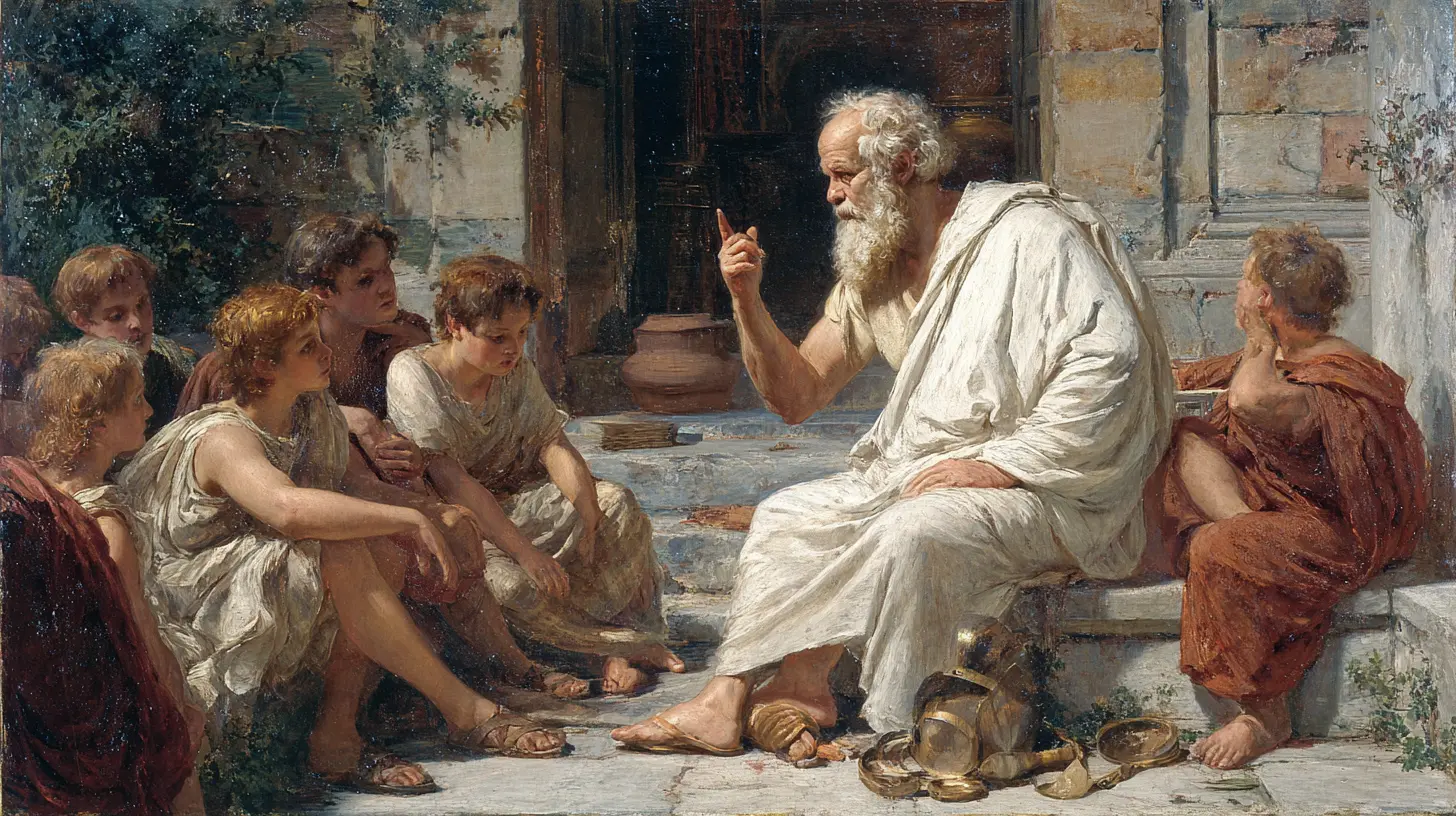
| The founding father of Greek Philosophy – Socrates – is portrayed, in the dialogues of Plato, as hugely pessimistic about the whole business of democracy. In Book Six of The Republic, Plato describes Socrates falling into conversation with a character called Adeimantus and trying to get him to see the flaws of democracy by comparing a society to a ship. | O pai fundador da Filosofia grega – Sócrates – é retratado, nos diálogos de Platão, como imensamente pessimista em relação a todo o negócio da democracia. No Livro Seis de "A República", Platão descreve Sócrates entabulando conversa com um personagem chamado Adimanto e tentando fazê-lo ver as falhas da democracia ao comparar uma sociedade a um navio. |
| If you were heading out on a journey by sea, asks Socrates, who would you ideally want deciding who was in charge of the vessel? Just anyone or people educated in the rules and demands of seafaring? The latter of course, says Adeimantus, so why then, responds Socrates, do we keep thinking that any old person should be fit to judge who should be a ruler of a country? Socrates’s point is that voting in an election is a skill, not a random intuition. | Se você estivesse partindo em uma viagem pelo mar, pergunta Sócrates, quem você idealmente quereria decidindo quem estaria no comando da embarcação? Apenas qualquer um ou pessoas educadas nas regras e exigências da navegação? O último, é claro, diz Adimanto, então por que, responde Sócrates, continuamos pensando que qualquer pessoa deveria estar apta a julgar quem deveria ser o governante de um país? O ponto de Sócrates é que votar em uma eleição é uma habilidade, não uma intuição aleatória. |
| And like any skill, it needs to be taught systematically to people. Letting the citizenry vote without an education is as irresponsible as putting them in charge of a trireme sailing to Samos in a storm. Socrates was to have first hand, catastrophic experience of the foolishness of voters. In 399 BC, the philosopher was put on trial on trumped up charges of corrupting the youth of Athens. | E como qualquer habilidade, ela precisa ser ensinada sistematicamente às pessoas. Deixar a cidadania votar sem educação é tão irresponsável quanto colocá-la no comando de uma trireme navegando para Samos em uma tempestade. Sócrates teria uma experiência catastrófica e de primeira mão com a tolice dos eleitores. Em 399 a.C., o filósofo foi levado a julgamento sob acusações forjadas de corromper a juventude de Atenas. |
| A jury of 500 Athenians was invited to weigh up the case and decided by a narrow margin that the philosopher was guilty. He was put to death by hemlock in a process which is, for thinking people, every bit as tragic as Jesus’s condemnation has been for Christians. Crucially, Socrates was not elitist in the normal sense. He didn’t believe that a narrow few should only ever vote. | Um júri de 500 atenienses foi convidado a avaliar o caso e decidiu por uma margem estreita que o filósofo era culpado. Ele foi condenado à morte por cicuta em um processo que é, para pessoas pensantes, tão trágico quanto a condenação de Jesus foi para os cristãos. Crucialmente, Sócrates não era elitista no sentido normal. Ele não acreditava que apenas alguns poucos deveriam votar. |
| He did, however, insist that only those who had thought about issues rationally and deeply should be let near a vote. We have forgotten this distinction between an intellectual democracy and a democracy by birthright. We have given the vote to all without connecting it to wisdom. And Socrates knew exactly where that would lead: to a system the Greeks feared above all, demagoguery. | Ele insistia, no entanto, que apenas aqueles que tivessem refletido sobre as questões de forma racional e profunda deveriam ser deixados perto de um voto. Esquecemos essa distinção entre uma democracia intelectual e uma democracia por direito de nascimento. Demos o voto a todos sem conectá-lo à sabedoria. E Sócrates sabia exatamente onde isso levaria: a um sistema que os gregos temiam acima de tudo, a demagogia. |
| Ancient Athens had painful experience of demagogues, for example, the louche figure of Alcibiades, a rich, charismatic, smooth-talking wealthy man who eroded basic freedoms and helped to push Athens to its disastrous military adventures in Sicily. Socrates knew how easily people seeking election could exploit our desire for easy answers. | A Atenas Antiga teve uma experiência dolorosa com demagogos, por exemplo, a figura debochada de Alcibíades, um homem rico, carismático e de fala mansa que corroeu liberdades básicas e ajudou a empurrar Atenas para suas desastrosas aventuras militares na Sicília. Sócrates sabia com que facilidade as pessoas que buscam a eleição poderiam explorar nosso desejo por respostas fáceis. |
| He asked us to imagine an election debate between two candidates, one who was like a doctor and the other who was like a sweet shop owner. The sweet shop owner would say of his rival: 'Look, this person here has worked many evils on you. He hurts you, gives you bitter potions and tells you he not to eat and drink whatever you like. He’ll never serve you feasts of many and varied pleasant things like I will.' | Ele nos pediu para imaginar um debate eleitoral entre dois candidatos, um que fosse como um médico e outro que fosse como o dono de uma loja de doces. O dono da loja de doces diria de seu rival: 'Vejam, esta pessoa aqui causou muitos males a vocês. Ele os machuca, lhes dá poções amargas e lhes diz para não comerem e beberem o que quiserem. Ele nunca lhes servirá banquetes de muitas e variadas coisas agradáveis como eu farei.' |
| Socrates asks us to consider the audience response: Do you think the doctor would be able to reply effectively? The true answer – ‘I cause you trouble, and go against you desires in order to help you’ would cause an uproar among the voters, don’t you think? We have forgotten all about Socrates’s salient warnings against democracy. | Sócrates nos pede para considerar a resposta do público: Você acha que o médico seria capaz de responder de forma eficaz? A resposta verdadeira – ‘Eu lhes causo problemas e vou contra seus desejos para ajudá-los’ causaria um alvoroço entre os eleitores, não acha? Esquecemos completamente os avisos salientes de Sócrates contra a democracia. |
| We have preferred to think of democracy as an unambiguous good – rather than as something that is only ever as effective as the education system that surrounds it. As a result, we have elected many sweet shop owners, and very few doctors. | Preferimos pensar na democracia como um bem inequívoco – em vez de algo que é apenas tão eficaz quanto o sistema educacional que a cerca. Como resultado, elegemos muitos donos de lojas de doces e pouquíssimos médicos. |
Contagem de palavras
A tabela abaixo exibe as palavras encontradas neste vídeo, bem como o número de vezes em que aparecem.
Veja também: Para que serve esta tabela?
| Freq. | Palavra | Freq. | Palavra | Freq. | Palavra |
|---|---|---|---|---|---|
| 27 | the | 25 | to | 25 | of |
| 22 | a | 15 | and | 13 | you |
| 12 | socrates | 12 | in | 10 | was |
| 10 | that | 10 | as | 9 | democracy |
| 7 | who | 7 | we | 7 | is |
| 7 | he | 6 | like | 6 | have |
| 6 | by | 6 | be | 6 | an |
| 5 | would | 5 | it | 5 | for |
| 4 | vote | 4 | should | 4 | people |
| 4 | on | 4 | many | 4 | athens |
| 3 | why | 3 | very | 3 | thinking |
| 3 | think | 3 | sweet | 3 | shop |
| 3 | only | 3 | not | 3 | has |
| 3 | election | 3 | ancient | 3 | all |
| 3 | about | 2 | without | 2 | which |
| 2 | voters | 2 | us | 2 | up |
| 2 | this | 2 | system | 2 | so |
| 2 | skill | 2 | put | 2 | plato |
| 2 | philosophy | 2 | philosopher | 2 | person |
| 2 | owner | 2 | other | 2 | one |
| 2 | narrow | 2 | knew | 2 | its |
| 2 | I | 2 | highly | 2 | had |
| 2 | forgotten | 2 | few | 2 | experience |
| 2 | ever | 2 | education | 2 | doctor |
| 2 | do | 2 | charge | 2 | cause |
| 2 | between | 2 | asks | 2 | any |
| 2 | against | 2 | adeimantus | 1 | youth |
| 1 | worked | 1 | with | 1 | wisdom |
| 1 | will | 1 | whole | 1 | where |
| 1 | whatever | 1 | were | 1 | weigh |
| 1 | wealthy | 1 | warnings | 1 | want |
| 1 | voting | 1 | vessel | 1 | varied |
| 1 | values | 1 | used | 1 | uproar |
| 1 | unambiguous | 1 | two | 1 | trying |
| 1 | trumped | 1 | true | 1 | trouble |
| 1 | trireme | 1 | trial | 1 | tragic |
| 1 | thought | 1 | those | 1 | things |
| 1 | therefore | 1 | there | 1 | then |
| 1 | them | 1 | than | 1 | tells |
| 1 | taught | 1 | talking | 1 | systematically |
| 1 | suspicious | 1 | surrounds | 1 | striking |
| 1 | storm | 1 | something | 1 | society |
| 1 | smooth | 1 | six | 1 | sicily |
| 1 | ship | 1 | serve | 1 | sense |
| 1 | seeking | 1 | see | 1 | seafaring |
| 1 | sea | 1 | says | 1 | say |
| 1 | samos | 1 | salient | 1 | sailing |
| 1 | rules | 1 | ruler | 1 | rival |
| 1 | rise | 1 | rich | 1 | result |
| 1 | response | 1 | responds | 1 | republic |
| 1 | reply | 1 | rationally | 1 | rather |
| 1 | random | 1 | putting | 1 | push |
| 1 | process | 1 | preferred | 1 | potions |
| 1 | portrayed | 1 | point | 1 | pleasant |
| 1 | photographed | 1 | pessimistic | 1 | parthenon |
| 1 | painful | 1 | owners | 1 | out |
| 1 | our | 1 | order | 1 | or |
| 1 | old | 1 | normal | 1 | never |
| 1 | needs | 1 | near | 1 | military |
| 1 | margin | 1 | man | 1 | louche |
| 1 | look | 1 | ll | 1 | letting |
| 1 | let | 1 | leaders | 1 | lead |
| 1 | latter | 1 | keep | 1 | just |
| 1 | jury | 1 | judge | 1 | journey |
| 1 | jesus | 1 | issues | 1 | irresponsible |
| 1 | invited | 1 | intuition | 1 | into |
| 1 | intellectual | 1 | insist | 1 | imagine |
| 1 | if | 1 | ideally | 1 | hurts |
| 1 | hugely | 1 | however | 1 | how |
| 1 | his | 1 | him | 1 | here |
| 1 | hemlock | 1 | helped | 1 | help |
| 1 | heading | 1 | hated | 1 | hand |
| 1 | guilty | 1 | greeks | 1 | greek |
| 1 | greece | 1 | great | 1 | good |
| 1 | go | 1 | gives | 1 | given |
| 1 | get | 1 | gave | 1 | freedoms |
| 1 | founding | 1 | foolishness | 1 | flaws |
| 1 | fit | 1 | first | 1 | figure |
| 1 | feasts | 1 | feared | 1 | father |
| 1 | falling | 1 | extension | 1 | exploit |
| 1 | example | 1 | exactly | 1 | evils |
| 1 | every | 1 | eroded | 1 | elitist |
| 1 | elected | 1 | effectively | 1 | effective |
| 1 | educated | 1 | eat | 1 | easy |
| 1 | easily | 1 | drink | 1 | don |
| 1 | doctors | 1 | distinction | 1 | discover |
| 1 | disastrous | 1 | didn | 1 | did |
| 1 | dialogues | 1 | desires | 1 | desire |
| 1 | describes | 1 | democratic | 1 | democracies |
| 1 | demands | 1 | demagogues | 1 | demagoguery |
| 1 | deeply | 1 | deciding | 1 | decided |
| 1 | debate | 1 | death | 1 | crucially |
| 1 | course | 1 | country | 1 | could |
| 1 | corrupting | 1 | conversation | 1 | consider |
| 1 | connecting | 1 | condemnation | 1 | comparing |
| 1 | civilisation | 1 | citizenry | 1 | christians |
| 1 | charismatic | 1 | charges | 1 | character |
| 1 | catastrophic | 1 | case | 1 | candidates |
| 1 | called | 1 | byword | 1 | business |
| 1 | book | 1 | bitter | 1 | bit |
| 1 | birthright | 1 | believe | 1 | been |
| 1 | become | 1 | bc | 1 | basic |
| 1 | audience | 1 | athenians | 1 | asked |
| 1 | are | 1 | anyone | 1 | answers |
| 1 | answer | 1 | among | 1 | almost |
| 1 | alcibiades | 1 | adventures | 1 | achievements |
| 1 | achievement | 1 | above | 1 | able |