
Vídeo | How inventions change history
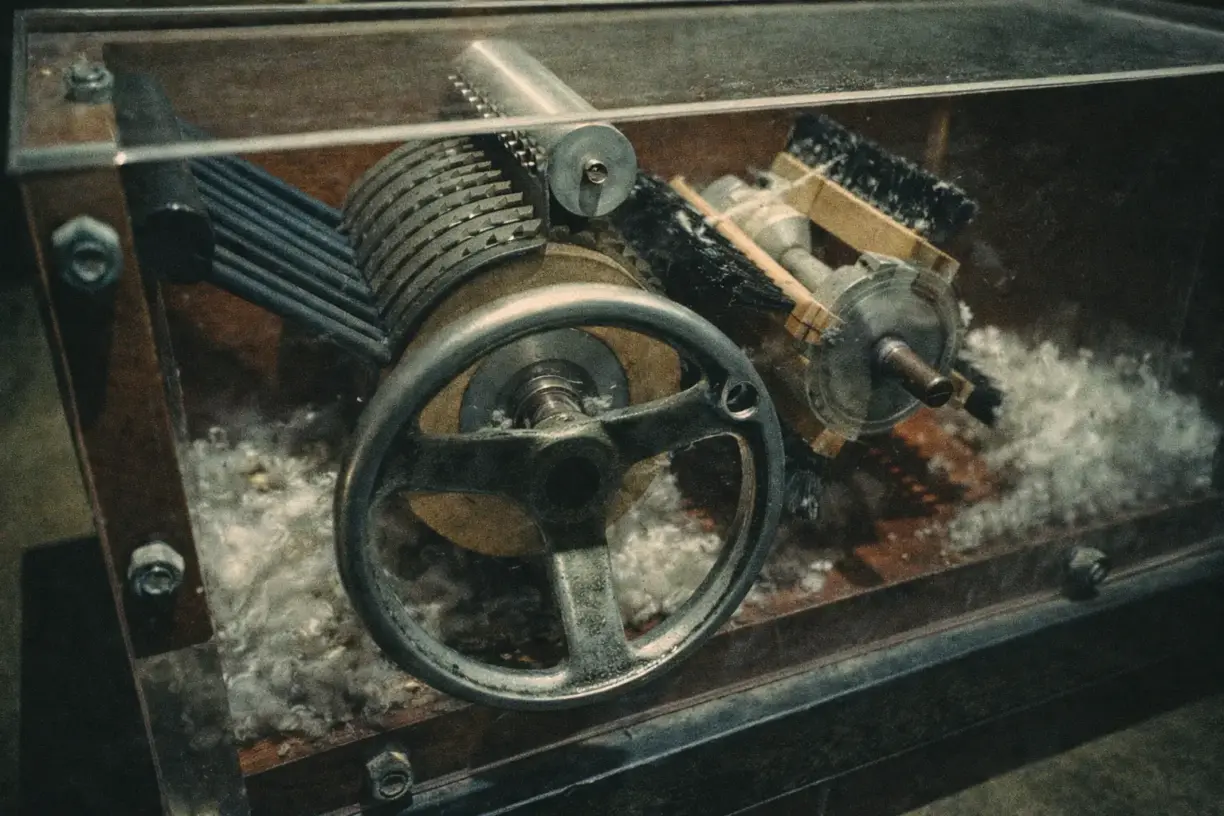
Este vídeo explora a trajetória irônica do descaroçador de algodão de Eli Whitney, uma invenção que, embora projetada para aumentar a eficiência, acabou por cimentar e expandir a escravidão na América do século XIX. Através de uma análise histórica que vai do “momento eureka” de Whitney às consequências econômicas monumentais para a jovem república, o relato utiliza esse marco tecnológico como um ponto de partida para uma reflexão mais profunda sobre como grandes inovações — de fraldas descartáveis à física de Einstein — carregam o peso inevitável de consequências não intencionais e dilemas éticos.
| Audio | |
|---|---|
Normal | Slow |
| English Transcript | Tradução |
| How Inventions Change History | Como as Invenções Mudam a História |
| This is the story of an invention that changed the world. Imagine a machine that could cut 10 hours of work down to one—a machine so efficient that it would free up people to do other things, kind of like the personal computer. But the machine I'm going to tell you about did none of this. | Esta é a história de uma invenção que mudou o mundo. Imagine uma máquina que pudesse reduzir 10 horas de trabalho para apenas uma — uma máquina tão eficiente que libertaria as pessoas para fazerem outras coisas, tal como o computador pessoal. Mas a máquina de que vou falar não fez nada disso. |
| In fact, it accomplished just the opposite. In the late 1700s, just as America was getting on its feet as a republic under the new U.S. Constitution, slavery was a tragic American fact of life. George Washington and Thomas Jefferson both became President while owning slaves, knowing that this "peculiar institution" contradicted the ideals and principles for which they fought a revolution. | Na verdade, ela realizou exatamente o oposto. No final dos anos 1700, no momento em que a América se estabelecia como uma república sob a nova Constituição dos EUA, a escravidão era um trágico fato da vida americana. George Washington e Thomas Jefferson tornaram-se presidentes sendo proprietários de escravos, sabendo que essa "instituição peculiar" contradizia os ideais e princípios pelos quais lutaram em uma revolução. |
| But both men believed that slavery was going to die out as the 19th century dawned. They were, of course, tragically mistaken. The reason was an invention, a machine they probably told you about in elementary school: Mr. Eli Whitney's cotton gin. A Yale graduate, 28-year-old Whitney had come to South Carolina to work as a tutor in 1793. | Mas ambos acreditavam que a escravidão iria desaparecer com o despontar do século XIX. Eles estavam, é claro, tragicamente enganados. O motivo foi uma invenção, uma máquina sobre a qual provavelmente lhe falaram na escola primária: o descaroçador de algodão de Eli Whitney. Formado em Yale, Whitney, aos 28 anos, tinha ido para a Carolina do Sul para trabalhar como tutor em 1793. |
| Supposedly, he was told by some local planters about the difficulty of cleaning cotton. Separating the seeds from the cotton lint was tedious and time-consuming. Working by hand, a slave could clean about a pound of cotton a day. But the Industrial Revolution was underway, and the demand was increasing; large mills in Great Britain and New England were hungry for cotton to mass-produce cloth. | Supostamente, alguns plantadores locais lhe falaram sobre a dificuldade de limpar o algodão. Separar as sementes da fibra do algodão era tedioso e demorado. Trabalhando à mão, um escravo conseguia limpar cerca de meio quilo de algodão por dia. Mas a Revolução Industrial estava em curso e a demanda aumentava; grandes fábricas na Grã-Bretanha e na Nova Inglaterra estavam famintas por algodão para produzir tecidos em massa. |
| As the story was told, Whitney had a "eureka moment" and invented the gin (short for engine). The truth is that the cotton gin had already existed for centuries in small but inefficient forms. In 1794, Whitney simply improved upon the existing gins and then patented his "invention": a small machine that employed a set of cones that could separate seeds from lint mechanically as a crank was turned. | Conforme a história é contada, Whitney teve um "momento eureka" e inventou o *gin*, abreviação de *engine* (máquina). A verdade é que o descaroçador de algodão já existia há séculos em formas pequenas, porém ineficientes. Em 1794, Whitney simplesmente aperfeiçoou os descaroçadores existentes e patenteou sua "invenção": uma pequena máquina que utilizava um conjunto de cones que podiam separar as sementes da fibra mecanicamente conforme uma manivela era girada. |
| With it, a single worker could eventually clean from 300 to 1,000 pounds of cotton a day. In 1790, about 3,000 bales of cotton were produced in America each year. A bale was equal to about 500 pounds. By 1801, with the spread of the cotton gin, cotton production grew to 100,000 bales a year. After the destructions of the War of 1812, production reached 400,000 bales a year. | Com ela, um único trabalhador poderia, eventualmente, limpar de 136 a 450 quilos de algodão por dia. Em 1790, cerca de 3.000 fardos de algodão eram produzidos na América a cada ano. Um fardo equivalia a cerca de 226 quilos. Em 1801, com a disseminação do descaroçador, a produção de algodão cresceu para 100.000 fardos por ano. Após as destruições da Guerra de 1812, a produção atingiu 400.000 fardos anuais. |
| As America was expanding through the land acquired in the Louisiana Purchase of 1803, yearly production exploded to four million bales. Cotton was king. It exceeded the value of all other American products combined—about three-fifths of America's economic output. But instead of reducing the need for labor, the cotton gin propelled it, as more slaves were needed to plant and harvest King Cotton. | À medida que a América se expandia pelas terras adquiridas na Compra da Louisiana de 1803, a produção anual explodiu para quatro milhões de fardos. O algodão era o rei. Ele excedia o valor de todos os outros produtos americanos combinados — cerca de três quintos da produção econômica da América. Mas, em vez de reduzir a necessidade de mão de obra, o descaroçador de algodão a impulsionou, pois mais escravos eram necessários para plantar e colher o "Rei Algodão". |
| The cotton gin and the demand of Northern and English factories re-charted the course of American slavery. In 1790, America's first official census counted nearly 700,000 slaves. By 1810, two years after the slave trade was banned in America, the number had shot up to more than one million. During the next 50 years, that number exploded to nearly four million slaves in 1860, the eve of the Civil War. | O descaroçador de algodão e a demanda das fábricas do norte e da Inglaterra traçaram um novo curso para a escravidão americana. Em 1790, o primeiro censo oficial da América contou quase 700.000 escravos. Em 1810, dois anos após o tráfico de escravos ter sido proibido na América, o número havia saltado para mais de um milhão. Durante os 50 anos seguintes, esse número explodiu para quase quatro milhões de escravos em 1860, às vésperas da Guerra Civil. |
| As for Whitney, he suffered the fate of many an inventor. Despite his patent, other planters easily built copies of his machine or made improvements of their own. You might say his design was pirated. Whitney made very little money from the device that transformed America. | Quanto a Whitney, ele sofreu o destino de muitos inventores. Apesar de sua patente, outros plantadores construíram facilmente cópias de sua máquina ou fizeram melhorias próprias. Poder-se-ia dizer que seu design foi pirateado. Whitney ganhou muito pouco dinheiro com o dispositivo que transformou a América. |
| But to the bigger picture and the larger questions: What should we make of the cotton gin? History has proven that inventions can be double-edged swords. They often carry unintended consequences. The factories of the Industrial Revolution spurred innovation and an economic boom in America, but they also depended on child labor and led to tragedies like the Triangle Shirtwaist fire that killed more than 100 women in 1911. | Mas vamos ao cenário mais amplo e às questões maiores: o que devemos pensar do descaroçador de algodão? A história provou que as invenções podem ser facas de dois gumes. Elas frequentemente trazem consequências não intencionais. As fábricas da Revolução Industrial impulsionaram a inovação e um boom econômico na América, mas também dependiam do trabalho infantil e levaram a tragédias como o incêndio na fábrica Triangle Shirtwaist, que matou mais de 100 mulheres em 1911. |
| Disposable diapers made life easy for parents, but they killed off diaper delivery services—and do we want landfills overwhelmed by dirty diapers? And of course, Einstein's extraordinary equation opened a world of possibilities. But what if one of them is Hiroshima? | Fraldas descartáveis facilitaram a vida dos pais, mas acabaram com os serviços de entrega de fraldas — e queremos aterros sanitários sobrecarregados por fraldas sujas? E, claro, a equação extraordinária de Einstein abriu um mundo de possibilidades. Mas e se uma delas for Hiroshima? |
Contagem de palavras
A tabela abaixo exibe as palavras encontradas neste vídeo, bem como o número de vezes em que aparecem.
Veja também: Para que serve esta tabela?
| Freq. | Palavra | Freq. | Palavra | Freq. | Palavra |
|---|---|---|---|---|---|
| 45 | the | 29 | of | 20 | a |
| 16 | to | 15 | was | 15 | in |
| 15 | cotton | 14 | and | 12 | that |
| 9 | but | 9 | as | 8 | America |
| 7 | gin | 7 | for | 6 | whitney |
| 6 | they | 6 | machine | 6 | about |
| 5 | it | 5 | by | 4 | year |
| 4 | were | 4 | slaves | 4 | his |
| 4 | had | 4 | from | 4 | could |
| 4 | bales | 4 | an | 3 | you |
| 3 | told | 3 | this | 3 | slavery |
| 3 | revolution | 3 | production | 3 | other |
| 3 | more | 3 | million | 3 | made |
| 3 | is | 3 | invention | 3 | course |
| 3 | american | 2 | years | 2 | world |
| 2 | work | 2 | with | 2 | what |
| 2 | we | 2 | war | 2 | up |
| 2 | than | 2 | story | 2 | small |
| 2 | slave | 2 | seeds | 2 | s |
| 2 | pounds | 2 | planters | 2 | one |
| 2 | on | 2 | number | 2 | new |
| 2 | nearly | 2 | lint | 2 | like |
| 2 | life | 2 | labor | 2 | king |
| 2 | killed | 2 | just | 2 | inventions |
| 2 | industrial | 2 | history | 2 | he |
| 2 | going | 2 | four | 2 | factories |
| 2 | fact | 2 | exploded | 2 | economic |
| 2 | do | 2 | diapers | 2 | demand |
| 2 | day | 2 | clean | 2 | both |
| 2 | after | 1 | yearly | 1 | yale |
| 1 | would | 1 | working | 1 | worker |
| 1 | women | 1 | while | 1 | which |
| 1 | washington | 1 | want | 1 | very |
| 1 | value | 1 | upon | 1 | unintended |
| 1 | underway | 1 | under | 1 | u |
| 1 | two | 1 | tutor | 1 | turned |
| 1 | truth | 1 | triangle | 1 | transformed |
| 1 | tragically | 1 | tragic | 1 | tragedies |
| 1 | trade | 1 | time | 1 | through |
| 1 | three | 1 | thomas | 1 | things |
| 1 | then | 1 | them | 1 | their |
| 1 | th | 1 | tell | 1 | tedious |
| 1 | swords | 1 | supposedly | 1 | suffered |
| 1 | spurred | 1 | spread | 1 | south |
| 1 | some | 1 | so | 1 | single |
| 1 | simply | 1 | should | 1 | shot |
| 1 | short | 1 | shirtwaist | 1 | set |
| 1 | servicesand | 1 | separating | 1 | separate |
| 1 | school | 1 | say | 1 | republic |
| 1 | reducing | 1 | reason | 1 | reached |
| 1 | re | 1 | questions | 1 | purchase |
| 1 | proven | 1 | propelled | 1 | products |
| 1 | produced | 1 | produce | 1 | probably |
| 1 | principles | 1 | president | 1 | pound |
| 1 | possibilities | 1 | plant | 1 | pirated |
| 1 | picture | 1 | personal | 1 | people |
| 1 | peculiar | 1 | patented | 1 | patent |
| 1 | parents | 1 | owning | 1 | own |
| 1 | overwhelmed | 1 | output | 1 | out |
| 1 | or | 1 | opposite | 1 | opened |
| 1 | onea | 1 | old | 1 | often |
| 1 | official | 1 | off | 1 | northern |
| 1 | none | 1 | next | 1 | needed |
| 1 | need | 1 | mr | 1 | money |
| 1 | moment | 1 | mistaken | 1 | mills |
| 1 | might | 1 | men | 1 | mechanically |
| 1 | mass | 1 | many | 1 | make |
| 1 | louisiana | 1 | local | 1 | little |
| 1 | led | 1 | late | 1 | larger |
| 1 | large | 1 | landfills | 1 | land |
| 1 | knowing | 1 | kind | 1 | jefferson |
| 1 | its | 1 | inventor | 1 | invented |
| 1 | institution | 1 | instead | 1 | innovation |
| 1 | inefficient | 1 | increasing | 1 | improvements |
| 1 | improved | 1 | imagine | 1 | if |
| 1 | ideals | 1 | I | 1 | hungry |
| 1 | how | 1 | hours | 1 | hiroshima |
| 1 | has | 1 | harvest | 1 | hand |
| 1 | grew | 1 | great | 1 | graduate |
| 1 | gins | 1 | getting | 1 | george |
| 1 | free | 1 | fought | 1 | forms |
| 1 | first | 1 | fire | 1 | fifths |
| 1 | feet | 1 | fate | 1 | extraordinary |
| 1 | expanding | 1 | existing | 1 | existed |
| 1 | exceeded | 1 | eventually | 1 | eve |
| 1 | eureka | 1 | equation | 1 | equal |
| 1 | english | 1 | england | 1 | engine |
| 1 | employed | 1 | eli | 1 | elementary |
| 1 | einstein | 1 | efficient | 1 | edged |
| 1 | easy | 1 | easily | 1 | each |
| 1 | during | 1 | down | 1 | double |
| 1 | disposable | 1 | dirty | 1 | difficulty |
| 1 | die | 1 | did | 1 | diaper |
| 1 | device | 1 | destructions | 1 | despite |
| 1 | design | 1 | depended | 1 | delivery |
| 1 | dawned | 1 | cut | 1 | crank |
| 1 | counted | 1 | copies | 1 | contradicted |
| 1 | consuming | 1 | constitution | 1 | consequences |
| 1 | cones | 1 | computer | 1 | come |
| 1 | combinedabout | 1 | cloth | 1 | cleaning |
| 1 | civil | 1 | child | 1 | charted |
| 1 | changed | 1 | change | 1 | century |
| 1 | centuries | 1 | census | 1 | carry |
| 1 | carolina | 1 | can | 1 | built |
| 1 | britain | 1 | boom | 1 | bigger |
| 1 | believed | 1 | became | 1 | be |
| 1 | banned | 1 | bale | 1 | am |
| 1 | also | 1 | already | 1 | all |
| 1 | acquired | 1 | accomplished |