Vídeo | The jobs we’ll lose to machines – and the ones we won’t
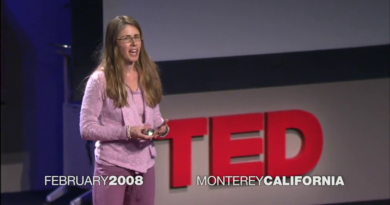
Palestra apresentada por Anthony John Goldbloom, no encontro TED 2016. Ele é o fundador e presidente da empresa Kaggle, uma startup do Vale do Silício, que tem usado modelagem preditiva para resolver problemas para a NASA, Wikipedia, Ford and Deloitte. (Fonte: Wikipedia)
O aprendizado de máquina hoje em dia não mais se resume a tarefas simples como avaliação de risco de crédito e ordenar correspondência – hoje as máquinas são capazes de tarefas muito mais complexas, como por exemplo corrigir redações de alunos e diagnosticar doenças. Com estes avanços vem à mente uma pergunta incômoda: Será que um robô fará o meu trabalho no futuro?
| Audio | |
|---|---|
Normal | Slow |
| English Transcript | Tradução |
| So this is my niece. | Essa é minha sobrinha. |
| Her name is Yahli. | O nome dela é Yahli. |
| She is nine months old. | Ela tem nove meses. |
| Her mum is a doctor, and her dad is a lawyer. | A mãe é médica; o pai, advogado. |
| By the time Yahli goes to college, the jobs her parents do are going to look dramatically different. | Quando a Yahli entrar para a faculdade, o trabalho que os pais fazem vai estar radicalmente diferente. |
| In 2013, researchers at Oxford University did a study on the future of work. | Em 2013, pesquisadores da Universidade de Oxford fizeram um estudo sobre o futuro do trabalho. |
| They concluded that almost one in every two jobs have a high risk of being automated by machines. | Concluíram que praticamente um em dois empregos possui um alto risco de ser automatizado por máquinas. |
| Machine learning is the technology that's responsible for most of this disruption. | O aprendizado de máquina é a tecnologia responsável por grande parte dessa revolução. |
| It's the most powerful branch of artificial intelligence. | É o ramo mais poderoso da inteligência artificial. |
| It allows machines to learn from data and mimic some of the things that humans can do. | Permite que máquinas aprendam com dados e imitem algumas das coisas que os humanos fazem. |
| My company, Kaggle, operates on the cutting edge of machine learning. | Tenho uma empresa de ponta no aprendizado de máquina, a Kaggle. |
| We bring together hundreds of thousands of experts to solve important problems for industry and academia. | Reunimos milhares de especialistas para resolver problemas importantes para a indústria e o mundo acadêmico. |
| This gives us a unique perspective on what machines can do, what they can't do and what jobs they might automate or threaten. | Isso nos dá uma perspectiva única sobre o que as máquinas podem fazer, o que não conseguem fazer e quais empregos elas vão automatizar ou ameaçar. |
| Machine learning started making its way into industry in the early '90s. | O aprendizado de máquina começou na indústria no início da década de 90. |
| It started with relatively simple tasks. | Começou com tarefas relativamente simples. |
| It started with things like assessing credit risk from loan applications, sorting the mail by reading handwritten characters from zip codes. | Algo como avaliar o risco creditício de empréstimos, e separar a correspondência pela leitura do número do CEP manuscrito. |
| Over the past few years, we have made dramatic breakthroughs. | Nos últimos dez anos, temos feito avanços incríveis. |
| Machine learning is now capable of far, far more complex tasks. | O aprendizado de máquina agora é capaz de tarefas bem mais complexas. |
| In 2012, Kaggle challenged its community to build an algorithm that could grade high-school essays. | Em 2012, a Kaggle desafiou sua comunidade a fazer um algoritmo que corrigisse redações do ensino médio. |
| The winning algorithms were able to match the grades given by human teachers. | Os algoritmos vencedores foram capazes de se equiparar às notas dadas por professores humanos. |
| Last year, we issued an even more difficult challenge. | No ano passado, lançamos um desafio ainda mais difícil. |
| Can you take images of the eye and diagnose an eye disease called diabetic retinopathy? | Você consegue fotografar o olho e diagnosticar uma doença chamada retinopatia diabética? |
| Again, the winning algorithms were able to match the diagnoses given by human ophthalmologists. | De novo, os algoritmos vencedores foram capazes de se equiparar aos diagnósticos dados por oftalmologistas humanos. |
| Now, given the right data, machines are going to outperform humans at tasks like this. | De posse dos dados certos, as máquinas superarão os humanos nesse tipo de tarefa. |
| A teacher might read 10,000 essays over a 40-year career. | Um professor pode ler 10 mil redações ao longo de uma carreira de 40 anos. |
| An ophthalmologist might see 50,000 eyes. | Um oftalmologista pode examinar 50 mil olhos. |
| A machine can read millions of essays or see millions of eyes within minutes. | Uma máquina pode ler milhões de redações ou examinar milhões de olhos em poucos minutos. |
| We have no chance of competing against machines on frequent, high-volume tasks. | Não temos a menor chance de competir com as máquinas em tarefas frequentes e volumosas. |
| But there are things we can do that machines can't do. | No entanto, há coisas que conseguimos fazer, mas as máquinas não. |
| Where machines have made very little progress is in tackling novel situations. | Um campo em que as máquinas têm feito pouco progresso é em lidar com situações novas. |
| They can't handle things they haven't seen many times before. | Elas não conseguem lidar com coisas que não viram muitas vezes antes. |
| The fundamental limitations of machine learning is that it needs to learn from large volumes of past data. | As limitações fundamentais do aprendizado de máquina é que ela precisa aprender através de grandes volumes de dados passados. |
| Now, humans don't. | Mas os humanos não. |
| We have the ability to connect seemingly disparate threads to solve problems we've never seen before. | Temos a habilidade de ligar pontos aparentemente díspares para resolver problemas que nunca vimos antes. |
| Percy Spencer was a physicist working on radar during World War II, when he noticed the magnetron was melting his chocolate bar. | Percy Spencer foi um físico que trabalhava com radar durante a Segunda Guerra, quando notou que o magnetron estava derretendo sua barra de chocolate. |
| He was able to connect his understanding of electromagnetic radiation with his knowledge of cooking in order to invent -- any guesses? -- the microwave oven. | Ele foi capaz de ligar seu conhecimento de radiação eletromagnética com seu conhecimento culinário para inventar -- algum palpite? O forno micro-ondas. |
| Now, this is a particularly remarkable example of creativity. | Esse é um exemplo especialmente notável de criatividade. |
| But this sort of cross-pollination happens for each of us in small ways thousands of times per day. | Mas esse tipo de polinização cruzada acontece com todos nós em pequena escala, milhares de vezes ao dia. |
| Machines cannot compete with us when it comes to tackling novel situations, and this puts a fundamental limit on the human tasks that machines will automate. | As máquinas não conseguem competir conosco quando se trata de situações novas, e isso coloca um limite fundamental nas tarefas humanas que as máquinas vão automatizar. |
| So what does this mean for the future of work? | Assim, o que isso significa para o futuro do trabalho? |
| The future state of any single job lies in the answer to a single question: To what extent is that job reducible to frequent, high-volume tasks, and to what extent does it involve tackling novel situations? | O futuro de cada emprego está na resposta a uma única questão: "Até que ponto esse emprego é reduzível a tarefas frequentes e volumosas, e até que ponto ele envolve lidar com situações novas?" |
| On frequent, high-volume tasks, machines are getting smarter and smarter. | Em tarefas frequentes e volumosas, as máquinas estão cada vez melhores. |
| Today they grade essays. | Hoje elas corrigem redações. |
| They diagnose certain diseases. | Elas diagnosticam certas doenças. |
| Over coming years, they're going to conduct our audits, and they're going to read boilerplate from legal contracts. | Nos anos vindouros, vão realizar auditorias e vão ler informações básicas de contratos legais. |
| Accountants and lawyers are still needed. | Contadores e advogados ainda serão necessários. |
| They're going to be needed for complex tax structuring, for pathbreaking litigation. | Eles serão necessários para tarefas fiscais complexas e litígios inovadores. |
| But machines will shrink their ranks and make these jobs harder to come by. | Mas as máquinas vão cortar postos e tornar mais difícil a obtenção desses empregos. |
| Now, as mentioned, machines are not making progress on novel situations. | Como mencionei, as máquinas não estão obtendo progresso em situações novas. |
| The copy behind a marketing campaign needs to grab consumers' attention. | O texto de uma campanha publicitária precisa prender a atenção do consumidor. |
| It has to stand out from the crowd. | Tem de se destacar na multidão. |
| Business strategy means finding gaps in the market, things that nobody else is doing. | Estratégia empresarial é achar lacunas no mercado, algo que ninguém esteja fazendo. |
| It will be humans that are creating the copy behind our marketing campaigns, and it will be humans that are developing our business strategy. | São seres humanos que vão criar o texto dessas campanhas publicitárias, e serão eles que vão desenvolver nossa estratégia de negócios. |
| So Yahli, whatever you decide to do, let every day bring you a new challenge. | Assim, Yahli, seja lá o que você decida ser, deixe que cada novo dia lhe traga um novo desafio. |
| If it does, then you will stay ahead of the machines. | Se trouxer, então você vai estar à frente das máquinas. |
| Thank you. | Obrigado. |
Contagem de Palavras
A tabela abaixo exibe as palavras encontradas neste vídeo bem como o número de vezes em que aparecem.
| Freq. | Palavra | Freq. | Palavra | Freq. | Palavra |
|---|---|---|---|---|---|
| 29 | the | 25 | to | 24 | of |
| 14 | a | 13 | machines | 12 | is |
| 12 | and | 10 | that | 10 | it |
| 9 | in | 8 | this | 8 | on |
| 8 | are | 7 | they | 7 | tasks |
| 7 | do | 6 | what | 6 | we |
| 6 | machine | 6 | from | 6 | for |
| 6 | by | 5 | you | 5 | will |
| 5 | things | 5 | now | 5 | learning |
| 5 | humans | 5 | high | 5 | have |
| 5 | going | 5 | can | 4 | with |
| 4 | situations | 4 | novel | 4 | jobs |
| 4 | her | 4 | essays | 4 | an |
| 3 | yahli | 3 | was | 3 | volume |
| 3 | us | 3 | they're | 3 | tackling |
| 3 | started | 3 | so | 3 | read |
| 3 | over | 3 | our | 3 | might |
| 3 | human | 3 | his | 3 | given |
| 3 | future | 3 | frequent | 3 | does |
| 3 | data | 3 | can't | 3 | but |
| 3 | be | 3 | able | 2 | years |
| 2 | year | 2 | work | 2 | winning |
| 2 | when | 2 | were | 2 | times |
| 2 | thousands | 2 | strategy | 2 | solve |
| 2 | smarter | 2 | single | 2 | seen |
| 2 | see | 2 | risk | 2 | progress |
| 2 | problems | 2 | past | 2 | or |
| 2 | needs | 2 | needed | 2 | my |
| 2 | most | 2 | more | 2 | millions |
| 2 | match | 2 | marketing | 2 | making |
| 2 | made | 2 | like | 2 | learn |
| 2 | kaggle | 2 | job | 2 | its |
| 2 | industry | 2 | he | 2 | grade |
| 2 | fundamental | 2 | far | 2 | eyes |
| 2 | eye | 2 | extent | 2 | every |
| 2 | diagnose | 2 | day | 2 | copy |
| 2 | connect | 2 | complex | 2 | challenge |
| 2 | business | 2 | bring | 2 | behind |
| 2 | before | 2 | automate | 2 | at |
| 2 | any | 2 | algorithms | 1 | zip |
| 1 | world | 1 | working | 1 | within |
| 1 | where | 1 | whatever | 1 | we've |
| 1 | ways | 1 | way | 1 | war |
| 1 | volumes | 1 | very | 1 | university |
| 1 | unique | 1 | understanding | 1 | two |
| 1 | together | 1 | today | 1 | time |
| 1 | threaten | 1 | threads | 1 | these |
| 1 | there | 1 | then | 1 | their |
| 1 | that's | 1 | thank | 1 | technology |
| 1 | teachers | 1 | teacher | 1 | tax |
| 1 | take | 1 | study | 1 | structuring |
| 1 | still | 1 | stay | 1 | state |
| 1 | stand | 1 | spencer | 1 | sorting |
| 1 | sort | 1 | some | 1 | small |
| 1 | simple | 1 | shrink | 1 | she |
| 1 | seemingly | 1 | school | 1 | s |
| 1 | right | 1 | retinopathy | 1 | responsible |
| 1 | researchers | 1 | remarkable | 1 | relatively |
| 1 | reducible | 1 | reading | 1 | ranks |
| 1 | radiation | 1 | radar | 1 | question |
| 1 | puts | 1 | powerful | 1 | pollination |
| 1 | physicist | 1 | perspective | 1 | percy |
| 1 | per | 1 | pathbreaking | 1 | particularly |
| 1 | parents | 1 | oxford | 1 | oven |
| 1 | outperform | 1 | out | 1 | order |
| 1 | ophthalmologists | 1 | ophthalmologist | 1 | operates |
| 1 | one | 1 | old | 1 | noticed |
| 1 | not | 1 | nobody | 1 | no |
| 1 | nine | 1 | niece | 1 | new |
| 1 | never | 1 | name | 1 | mum |
| 1 | months | 1 | minutes | 1 | mimic |
| 1 | microwave | 1 | mentioned | 1 | melting |
| 1 | means | 1 | mean | 1 | market |
| 1 | many | 1 | make | 1 | |
| 1 | magnetron | 1 | look | 1 | loan |
| 1 | little | 1 | litigation | 1 | limitations |
| 1 | limit | 1 | lies | 1 | let |
| 1 | legal | 1 | lawyers | 1 | lawyer |
| 1 | last | 1 | large | 1 | knowledge |
| 1 | it's | 1 | issued | 1 | involve |
| 1 | invent | 1 | into | 1 | intelligence |
| 1 | important | 1 | images | 1 | ii |
| 1 | if | 1 | hundreds | 1 | haven't |
| 1 | has | 1 | harder | 1 | happens |
| 1 | handwritten | 1 | handle | 1 | guesses |
| 1 | grades | 1 | grab | 1 | goes |
| 1 | gives | 1 | getting | 1 | gaps |
| 1 | finding | 1 | few | 1 | experts |
| 1 | example | 1 | even | 1 | else |
| 1 | electromagnetic | 1 | edge | 1 | early |
| 1 | each | 1 | during | 1 | dramatically |
| 1 | dramatic | 1 | don't | 1 | doing |
| 1 | doctor | 1 | disruption | 1 | disparate |
| 1 | diseases | 1 | disease | 1 | difficult |
| 1 | different | 1 | did | 1 | diagnoses |
| 1 | diabetic | 1 | developing | 1 | decide |
| 1 | dad | 1 | cutting | 1 | crowd |
| 1 | cross | 1 | credit | 1 | creativity |
| 1 | creating | 1 | could | 1 | cooking |
| 1 | contracts | 1 | consumers' | 1 | conduct |
| 1 | concluded | 1 | competing | 1 | compete |
| 1 | company | 1 | community | 1 | coming |
| 1 | comes | 1 | come | 1 | college |
| 1 | codes | 1 | chocolate | 1 | characters |
| 1 | chance | 1 | challenged | 1 | certain |
| 1 | career | 1 | capable | 1 | cannot |
| 1 | campaigns | 1 | campaign | 1 | called |
| 1 | build | 1 | breakthroughs | 1 | branch |
| 1 | boilerplate | 1 | being | 1 | bar |
| 1 | automated | 1 | audits | 1 | attention |
| 1 | assessing | 1 | as | 1 | artificial |
| 1 | applications | 1 | answer | 1 | almost |
| 1 | allows | 1 | algorithm | 1 | ahead |
| 1 | against | 1 | again | 1 | accountants |
| 1 | academia | 1 | ability | 1 | ' |