
Vídeo | Why SLOW IS BETTER in language learning
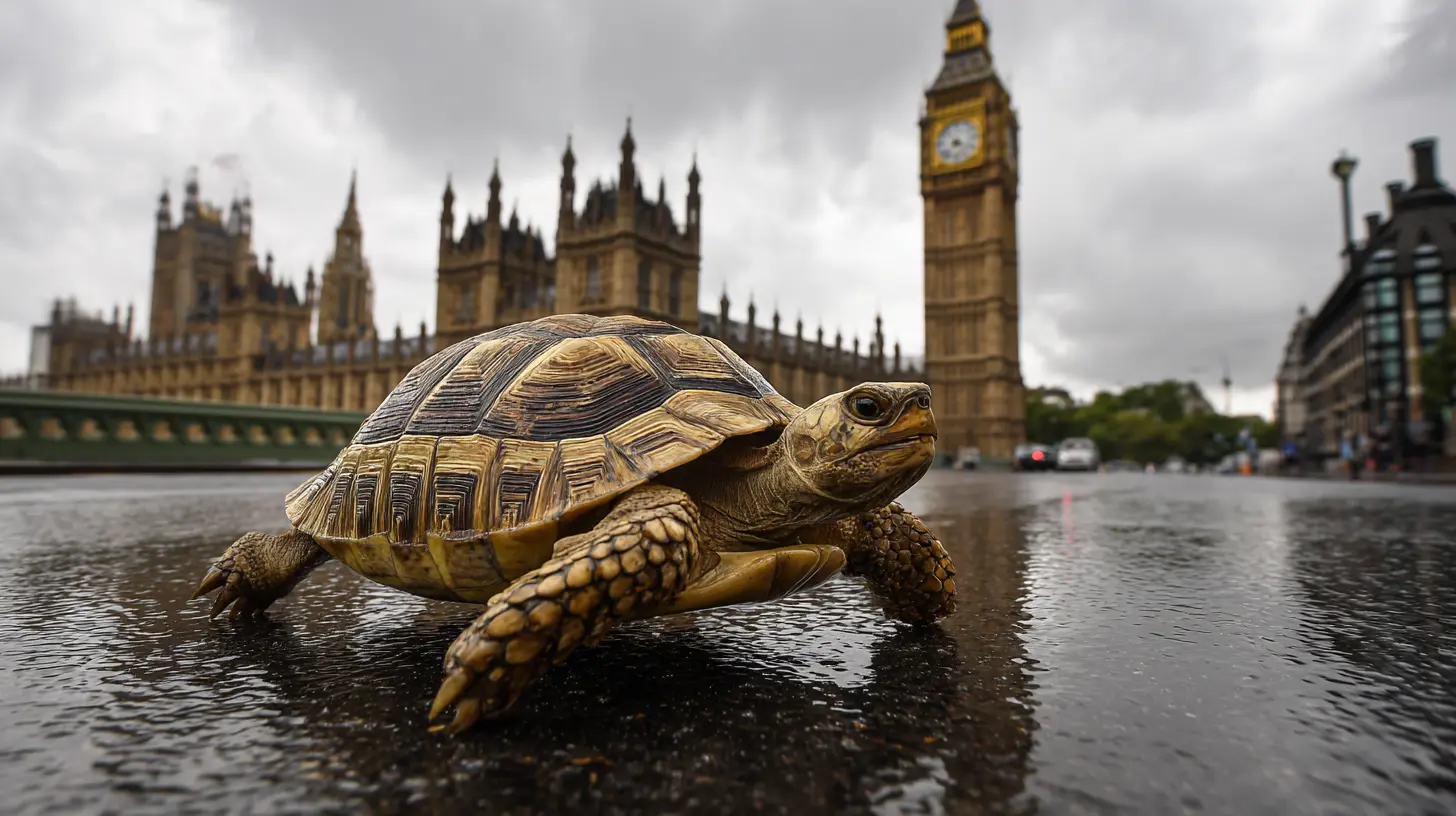
Vivemos em uma época obcecada por velocidade. Aplicativos prometem fluência em meses, influenciadores garantem atalhos milagrosos e muitos estudantes acreditam que aprender um idioma deveria ser uma corrida contra o relógio. Mas e se a verdadeira aceleração estivesse justamente em desacelerar? Neste vídeo, Steve Kaufmann defende uma ideia aparentemente contraditória: quanto mais você aceita que aprender um idioma leva tempo e passa a apreciar o processo, mais rápido e de forma mais sólida você alcança a fluência.
| Audio | |
|---|---|
Normal | Slow |
| English Transcript | Tradução |
| Why SLOW IS BETTER in language learning | Porque devagar é melhor no aprendizado de idiomas |
| Today I want to talk about learning slowly, or rather, why, if you accept the fact that learning a language is a process that takes time, learning slowly will, in effect, help you learn more quickly. | Hoje quero falar sobre aprender devagar ou, mais precisamente, sobre por que, se você aceitar o fato de que aprender um idioma é um processo que leva tempo, aprender devagar fará com que, na prática, você aprenda mais rapidamente. |
| I was reminded the other day of an internet influencer by the name of Tim Ferriss, who commented some years ago that he could deconstruct any language with 10 or 12 sentences and achieve fluency in record time by using this method. | Outro dia me lembrei de um influenciador da internet chamado Tim Ferriss, que comentou, há alguns anos, que conseguia desconstruir qualquer idioma com 10 ou 12 frases e alcançar fluência em tempo recorde usando esse método. |
| Of course, that's not true. In fact, I have made a few videos where I present the counterargument to his suggestion that you can learn any language quickly by mastering, you know, 10 sentences. The gist of his argument is that if you understand how pronouns, direct objects, and indirect objects work, then you've got the essence of the language and will learn very quickly. | É claro que isso não é verdade. Na verdade, já fiz alguns vídeos apresentando argumentos contrários à sua sugestão de que é possível aprender qualquer idioma rapidamente dominando apenas umas 10 frases. A essência do argumento dele é que, se você entender como funcionam os pronomes, os objetos diretos e os objetos indiretos, então já terá compreendido a essência do idioma e aprenderá muito rapidamente. |
| In fact, even with very similar languages like Spanish and Portuguese, where all of those pronouns and genders are essentially the same, or French, for that matter, it still takes a long time to get used to the other language. The same applies to Mandarin and Cantonese. Many Mandarin speakers cannot speak Cantonese, even though they claim to understand it. | Na prática, porém, mesmo com idiomas muito parecidos, como espanhol e português, em que esses pronomes e gêneros são praticamente os mesmos, ou mesmo o francês, ainda leva bastante tempo para se acostumar com a outra língua. O mesmo acontece com o mandarim e o cantonês. Muitos falantes de mandarim não conseguem falar cantonês, embora afirmem compreendê-lo. |
| The similarity of language structures, and even the similarity of vocabulary, doesn't mean that you can pick up a language in a short period of time. In fact, it takes quite a while, which is actually a good thing, and I'll explain why. | A semelhança entre as estruturas dos idiomas, e até mesmo entre seus vocabulários, não significa que você conseguirá aprender uma língua em um curto espaço de tempo. Na verdade, isso leva bastante tempo, o que é algo positivo, e vou explicar por quê. |
| Now, I have never made claims that I can learn a language in three months, six months, or any similarly short period. I'm often asked to estimate how long it takes to learn a language, and of course, it depends on many different factors. However, I don't make those claims. | Nunca afirmei que consigo aprender um idioma em três meses, seis meses ou qualquer outro período curto. Frequentemente me perguntam quanto tempo leva para aprender um idioma e, naturalmente, isso depende de muitos fatores diferentes. Mas eu não faço esse tipo de promessa. |
| I have, on several occasions, claimed that on LingQ I can learn 100 words a day, but that applies only to specific languages. For example, having learned Russian, where 50% or 60% of the vocabulary is similar to Czech, I can very quickly increase my known-word count on LingQ because many of the words that appear don't require me to look them up. As a result, they accumulate rapidly in my known-word total, provided that I continue reading extensively. | Já afirmei, em várias ocasiões, que consigo aprender 100 palavras por dia usando o LingQ. Mas isso se aplica apenas a determinados idiomas. Por exemplo, depois de aprender russo, onde 50% ou 60% do vocabulário é semelhante ao tcheco, consigo aumentar rapidamente minha contagem de palavras conhecidas no LingQ. Isso acontece porque muitas das palavras que aparecem não exigem consulta ao dicionário. Como resultado, elas se acumulam rapidamente na minha lista de palavras conhecidas, desde que eu continue lendo bastante. |
| In some languages, especially those with a great deal of inflection, such as Turkish, I can also increase my known-word count rather quickly if I set that as a goal. However, that doesn't mean I'm fluent in the language. It merely provides a solid foundation from which to begin. You still need to invest the time required to truly learn the language and, hopefully, enjoy the process. | Em alguns idiomas, especialmente aqueles com muita flexão, como o turco, também consigo aumentar rapidamente minha contagem de palavras conhecidas se esse for meu objetivo. Mas isso não significa que eu seja fluente naquele idioma. Isso apenas fornece uma base sólida para começar. Ainda é necessário dedicar o tempo necessário para realmente aprender o idioma e, espero, aproveitar o processo. |
| This brings me to my next point. There is something valuable about going slowly. We live in an age where everything has to happen quickly. About 20 years ago, Carl Honoré wrote a book called *In Praise of Slow*, in which he presented the many advantages of doing things more slowly, enjoying life, and remaining present in the moment. | Isso me leva ao próximo ponto. Existe algo de muito valioso em fazer as coisas devagar. Vivemos numa época em que tudo precisa acontecer rapidamente. Há cerca de vinte anos, Carl Honoré escreveu um livro chamado *Devagar*, no qual apresentou as muitas vantagens de fazer as coisas com mais calma, aproveitar a vida e permanecer presente no momento. |
| Apparently, he was inspired by an Italian named Carlo Petrini, who promoted the idea of "slow food" as a response to fast food culture. The concept is simple: if you take the time to eat slowly with friends in a pleasant social environment, savoring the food, then the act of eating itself becomes enjoyable. Why should we rush through something that can be such a rewarding experience? | Ao que parece, ele foi inspirado por um italiano chamado Carlo Petrini, que promoveu a ideia do movimento Slow Food como uma resposta à cultura do fast food. O conceito é simples. Se você dedicar tempo para comer devagar com amigos em um ambiente agradável, apreciando a comida, então o próprio ato de comer se torna prazeroso. Por que deveríamos ter pressa em algo que pode ser tão gratificante? |
| That is exactly how I approach language learning. | É exatamente assim que eu encaro o aprendizado de idiomas. |
| I learn better when I enjoy the language. My fondest memories of learning languages include, for example, listening to a wonderful series on Český rozhlas called *Toulky českou minulostí*, about the history of Czechia. It was available in both audio and text form and explored the country's history through its various periods under different empires. | Aprendo melhor quando gosto do idioma. Minhas melhores lembranças de aprendizado incluem, por exemplo, ouvir uma série maravilhosa da rádio pública tcheca chamada *Toulky českou minulostí*, sobre a história da Tchéquia. Ela estava disponível em áudio e texto e explorava a história do país ao longo dos períodos em que esteve sob diferentes impérios. |
| Similarly, I listened to audiobooks about Polish, Ukrainian, and Russian history in their respective languages. I can assure you that the interpretations and perspectives varied considerably depending on the language version I was listening to. Yet that is part of the enjoyment of learning a language: you gain access to cultures through their own voices. | Da mesma forma, ouvi audiolivros sobre a história da Polônia, da Ucrânia e da Rússia em seus respectivos idiomas. Posso garantir que as interpretações e perspectivas variavam bastante dependendo do idioma em que eu estava ouvindo. E isso faz parte do prazer de aprender uma língua. Você passa a ter acesso às culturas por meio de suas próprias vozes. |
| I don't need to be in a hurry. It is our interest in the subject and our willingness to savor each moment that ultimately lead us toward a solid understanding of the language. | Não preciso ter pressa. É o nosso interesse pelo assunto e a disposição para saborear cada momento que acabam nos conduzindo a uma compreensão sólida do idioma. |
| Of course, you can encourage your progress by focusing on the things you can control. We cannot truly control how quickly we learn because that depends on many circumstances. However, we can control how active we are. Most of our statistics at LingQ, including the coin system, measure activity. We can control how much we read, listen, speak, and engage with the language, and that is what ultimately helps us reach our goals more quickly. | Claro que é possível estimular seu progresso concentrando-se naquilo que você pode controlar. Não podemos realmente controlar a velocidade com que aprendemos, porque isso depende de muitas circunstâncias. Mas podemos controlar o quanto somos ativos. A maioria das estatísticas do LingQ, incluindo o sistema de moedas, mede atividade. Podemos controlar quanto lemos, ouvimos, falamos e interagimos com o idioma. E é isso que, no final das contas, nos ajuda a alcançar nossos objetivos mais rapidamente. |
| Rather than worrying about how fast you can learn a language, focus instead on how much time you're willing to invest in learning it. | Em vez de se preocupar com a velocidade com que pode aprender um idioma, concentre-se em quanto tempo está disposto a investir nele. |
| By the way, YouTube now offers the ability to follow a course of study, track your progress, and earn rewards upon completion. As a result, I have made my approach to language learning available as a 10-video course, where I discuss listening, reading, vocabulary acquisition, and the various factors that influence success in language learning. | Aliás, o YouTube agora oferece a possibilidade de seguir um curso de estudos, acompanhar seu progresso e ganhar recompensas ao final. Por isso, disponibilizei minha abordagem para o aprendizado de idiomas em um curso composto por 10 vídeos. Nele, falo sobre escuta, leitura, aquisição de vocabulário e os diversos fatores que influenciam o sucesso no aprendizado de idiomas. |
| I'll leave a link in the description so that you can access the course. You may find the experience enjoyable and, hopefully, beneficial. It doesn't matter whether you're a beginner, intermediate, or advanced learner. I think you'll find it worthwhile. | Vou deixar um link na descrição para que você possa acessar o curso. Talvez você considere a experiência agradável e, espero, útil. Não importa se você é iniciante, intermediário ou avançado. Acredito que encontrará algo valioso ali. |
| One of the reasons I strongly favor this slower approach to language learning is that we are constantly bombarded with information. This phenomenon has been well documented, and it appears that we are becoming less capable of sustained concentration. | Uma das razões pelas quais sou tão favorável a essa abordagem mais lenta é que somos constantemente bombardeados por informações. Esse fenômeno já foi amplamente documentado. Tudo indica que estamos nos tornando cada vez menos capazes de manter a concentração por longos períodos. |
| I remember when I was learning Chinese, or even French. I had no trouble sitting down and reading a book. There were fewer distractions, and I could immerse myself completely in what I was reading. | Lembro-me de quando estava aprendendo chinês ou mesmo francês. Eu não tinha dificuldade em sentar e ler um livro. Havia menos distrações. Eu conseguia mergulhar completamente naquilo que estava lendo. |
| Nowadays, it's much more difficult. Research suggests that every time we are distracted by email, social media, or some other interruption, part of our attention remains attached to whatever distracted us, even after we return to our original task. As a result, maintaining focus becomes more challenging. | Hoje isso é muito mais difícil. Pesquisas sugerem que, sempre que somos interrompidos por um e-mail, redes sociais ou qualquer outra distração, parte da nossa atenção permanece ligada àquilo que nos desviou. Mesmo quando retornamos à tarefa original. |
| Therefore, if we can train ourselves to slow down, avoid impatience, and stop putting unnecessary pressure on ourselves, we will ultimately enjoy the language more and reach our goal of fluency faster. | Como consequência, manter o foco torna-se mais difícil. Por isso, se conseguirmos treinar nossa mente para desacelerar, evitar a impaciência e parar de nos pressionar desnecessariamente, acabaremos aproveitando mais o idioma. E chegaremos ao nosso objetivo de fluência mais rapidamente. |
| There are no shortcuts. You cannot achieve meaningful proficiency simply by learning enough to order food in a restaurant. Real language learning requires acquiring the language as a whole through sustained, enjoyable engagement. | Não existem atalhos. Você não alcança um nível significativo de domínio apenas aprendendo o suficiente para pedir comida em um restaurante. O verdadeiro aprendizado exige a aquisição do idioma como um todo. E isso acontece por meio de um envolvimento contínuo, prazeroso e paciente com a língua. |
| So when people ask me, or when I ask myself, particularly now that I am spending so much time with Persian and Arabic, "When will I get there? When will I reach the end of the journey?", the answer is simple: | Assim, quando as pessoas me perguntam, ou quando eu mesmo me pergunto, especialmente agora que estou dedicando muito tempo ao persa e ao árabe, "Quando vou chegar lá?" ou "Quando vou alcançar o fim da jornada?", a resposta é simples. |
| You're already there. | Você já chegou. |
| The journey itself is the reward. | A própria jornada é a recompensa. |
| Enjoy learning. Enjoy learning slowly. Before you know it, you will have reached the level you want to achieve in the language you're learning. | Aproveite o aprendizado. Aproveite aprender devagar. E, antes que perceba, terá alcançado o nível que deseja atingir no idioma que está aprendendo. |
| Thank you for listening. | Obrigado por ouvir. |
| Bye for now. | Até a próxima. |
Contagem de palavras
A tabela abaixo exibe as palavras encontradas neste vídeo, bem como o número de vezes em que aparecem.
Veja também: Para que serve esta tabela?
| Freq. | Palavra | Freq. | Palavra | Freq. | Palavra |
|---|---|---|---|---|---|
| 52 | the | 37 | I | 33 | to |
| 33 | a | 30 | of | 28 | that |
| 27 | and | 26 | you | 26 | language |
| 26 | in | 17 | learning | 16 | is |
| 15 | can | 14 | we | 14 | it |
| 10 | on | 10 | learn | 10 | are |
| 9 | will | 9 | time | 9 | or |
| 8 | quickly | 8 | how | 8 | by |
| 8 | as | 7 | with | 7 | our |
| 7 | not | 6 | when | 6 | was |
| 6 | slowly | 6 | my | 6 | more |
| 6 | have | 6 | course | 6 | about |
| 5 | where | 5 | there | 5 | many |
| 5 | languages | 5 | if | 5 | for |
| 5 | even | 5 | enjoy | 4 | why |
| 4 | through | 4 | this | 4 | takes |
| 4 | slow | 4 | reading | 4 | now |
| 4 | much | 4 | listening | 4 | food |
| 4 | fact | 4 | control | 3 | word |
| 3 | which | 3 | vocabulary | 3 | very |
| 3 | us | 3 | ultimately | 3 | those |
| 3 | some | 3 | so | 3 | result |
| 3 | reach | 3 | rather | 3 | other |
| 3 | me | 3 | made | 3 | lingq |
| 3 | known | 3 | however | 3 | history |
| 3 | he | 3 | enjoyable | 3 | does |
| 3 | do | 3 | cannot | 3 | approach |
| 3 | any | 3 | an | 3 | am |
| 3 | achieve | 2 | your | 2 | years |
| 2 | words | 2 | who | 2 | what |
| 2 | want | 2 | various | 2 | up |
| 2 | understand | 2 | truly | 2 | things |
| 2 | they | 2 | then | 2 | their |
| 2 | sustained | 2 | such | 2 | still |
| 2 | speak | 2 | something | 2 | solid |
| 2 | social | 2 | simple | 2 | similarly |
| 2 | similarity | 2 | similar | 2 | short |
| 2 | sentences | 2 | same | 2 | russian |
| 2 | pronouns | 2 | progress | 2 | process |
| 2 | present | 2 | period | 2 | part |
| 2 | ourselves | 2 | objects | 2 | no |
| 2 | need | 2 | myself | 2 | months |
| 2 | moment | 2 | mean | 2 | matter |
| 2 | mandarin | 2 | long | 2 | know |
| 2 | journey | 2 | itself | 2 | invest |
| 2 | increase | 2 | hopefully | 2 | his |
| 2 | has | 2 | goal | 2 | get |
| 2 | french | 2 | focus | 2 | fluency |
| 2 | find | 2 | fast | 2 | factors |
| 2 | experience | 2 | example | 2 | down |
| 2 | distracted | 2 | different | 2 | depends |
| 2 | day | 2 | count | 2 | could |
| 2 | claims | 2 | cantonese | 2 | called |
| 2 | book | 2 | better | 2 | becomes |
| 2 | because | 2 | be | 2 | available |
| 2 | ask | 2 | applies | 2 | ago |
| 2 | access | 1 | youtube | 1 | yet |
| 1 | wrote | 1 | worthwhile | 1 | worrying |
| 1 | work | 1 | wonderful | 1 | willingness |
| 1 | willing | 1 | whole | 1 | while |
| 1 | whether | 1 | whatever | 1 | were |
| 1 | well | 1 | way | 1 | voices |
| 1 | videos | 1 | video | 1 | version |
| 1 | varied | 1 | valuable | 1 | using |
| 1 | used | 1 | upon | 1 | unnecessary |
| 1 | understanding | 1 | under | 1 | ukrainian |
| 1 | turkish | 1 | true | 1 | trouble |
| 1 | train | 1 | track | 1 | toward |
| 1 | toulky | 1 | total | 1 | today |
| 1 | tim | 1 | three | 1 | though |
| 1 | think | 1 | thing | 1 | therefore |
| 1 | them | 1 | thank | 1 | than |
| 1 | text | 1 | task | 1 | talk |
| 1 | take | 1 | system | 1 | suggests |
| 1 | suggestion | 1 | success | 1 | subject |
| 1 | study | 1 | structures | 1 | strongly |
| 1 | stop | 1 | statistics | 1 | spending |
| 1 | specific | 1 | speakers | 1 | spanish |
| 1 | slower | 1 | six | 1 | sitting |
| 1 | simply | 1 | should | 1 | shortcuts |
| 1 | several | 1 | set | 1 | series |
| 1 | savoring | 1 | savor | 1 | rush |
| 1 | rozhlas | 1 | rewards | 1 | rewarding |
| 1 | reward | 1 | return | 1 | restaurant |
| 1 | response | 1 | respective | 1 | research |
| 1 | requires | 1 | required | 1 | require |
| 1 | reminded | 1 | remember | 1 | remains |
| 1 | remaining | 1 | record | 1 | reasons |
| 1 | real | 1 | read | 1 | reached |
| 1 | rapidly | 1 | quite | 1 | putting |
| 1 | provides | 1 | provided | 1 | promoted |
| 1 | proficiency | 1 | pressure | 1 | presented |
| 1 | praise | 1 | portuguese | 1 | polish |
| 1 | point | 1 | pleasant | 1 | pick |
| 1 | phenomenon | 1 | petrini | 1 | perspectives |
| 1 | persian | 1 | periods | 1 | people |
| 1 | particularly | 1 | own | 1 | original |
| 1 | order | 1 | only | 1 | one |
| 1 | often | 1 | offers | 1 | occasions |
| 1 | nowadays | 1 | next | 1 | never |
| 1 | named | 1 | name | 1 | most |
| 1 | minulostí | 1 | method | 1 | merely |
| 1 | memories | 1 | media | 1 | measure |
| 1 | meaningful | 1 | may | 1 | mastering |
| 1 | make | 1 | maintaining | 1 | look |
| 1 | live | 1 | listened | 1 | listen |
| 1 | link | 1 | like | 1 | life |
| 1 | level | 1 | less | 1 | leave |
| 1 | learner | 1 | learned | 1 | lead |
| 1 | its | 1 | italian | 1 | interruption |
| 1 | interpretations | 1 | internet | 1 | intermediate |
| 1 | interest | 1 | instead | 1 | inspired |
| 1 | information | 1 | influencer | 1 | influence |
| 1 | inflection | 1 | indirect | 1 | including |
| 1 | include | 1 | impatience | 1 | immerse |
| 1 | idea | 1 | hurry | 1 | honoré |
| 1 | helps | 1 | help | 1 | having |
| 1 | happen | 1 | had | 1 | great |
| 1 | got | 1 | good | 1 | going |
| 1 | goals | 1 | gist | 1 | genders |
| 1 | gain | 1 | from | 1 | friends |
| 1 | foundation | 1 | form | 1 | fondest |
| 1 | follow | 1 | focusing | 1 | fluent |
| 1 | fewer | 1 | few | 1 | ferriss |
| 1 | favor | 1 | faster | 1 | extensively |
| 1 | explored | 1 | explain | 1 | exactly |
| 1 | everything | 1 | every | 1 | estimate |
| 1 | essentially | 1 | essence | 1 | especially |
| 1 | environment | 1 | enough | 1 | enjoyment |
| 1 | enjoying | 1 | engagement | 1 | engage |
| 1 | end | 1 | encourage | 1 | empires |
| 1 | 1 | effect | 1 | eating | |
| 1 | eat | 1 | earn | 1 | each |
| 1 | doing | 1 | documented | 1 | distractions |
| 1 | discuss | 1 | direct | 1 | difficult |
| 1 | description | 1 | depending | 1 | deconstruct |
| 1 | deal | 1 | czechia | 1 | czech |
| 1 | cultures | 1 | culture | 1 | country |
| 1 | counterargument | 1 | continue | 1 | constantly |
| 1 | considerably | 1 | concept | 1 | concentration |
| 1 | completion | 1 | completely | 1 | commented |
| 1 | coin | 1 | claimed | 1 | claim |
| 1 | circumstances | 1 | chinese | 1 | challenging |
| 1 | Český | 1 | českou | 1 | carlo |
| 1 | carl | 1 | capable | 1 | bye |
| 1 | but | 1 | brings | 1 | both |
| 1 | bombarded | 1 | beneficial | 1 | beginner |
| 1 | begin | 1 | before | 1 | been |
| 1 | becoming | 1 | avoid | 1 | audiobooks |
| 1 | audio | 1 | attention | 1 | attached |
| 1 | at | 1 | assure | 1 | asked |
| 1 | argument | 1 | arabic | 1 | appears |
| 1 | appear | 1 | apparently | 1 | answer |
| 1 | also | 1 | already | 1 | all |
| 1 | age | 1 | after | 1 | advantages |
| 1 | advanced | 1 | actually | 1 | activity |
| 1 | active | 1 | act | 1 | acquisition |
| 1 | acquiring | 1 | accumulate | 1 | accept |
| 1 | ability |